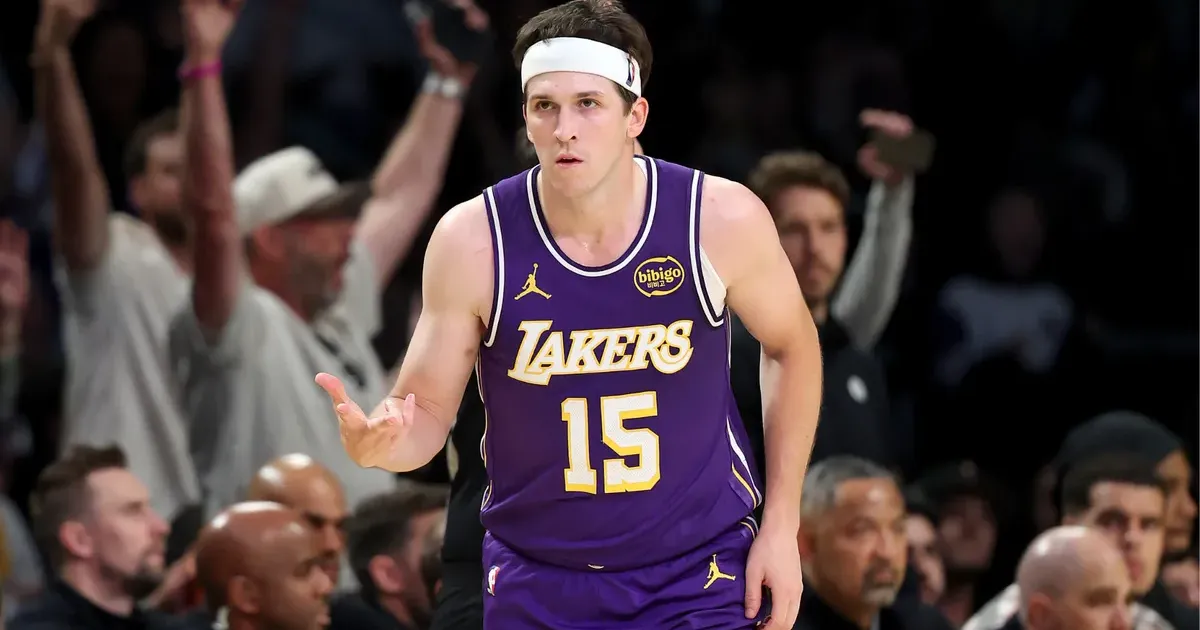
Lakers guard Austin Reaves received a diagnosis of a Grade 2 left oblique muscle injury, forcing him out of the lineup for the remainder of the regular season. Partial tearing of the muscle fibers requires sustained rest and physical rehabilitation to prevent long-term damage or chronic re-aggravation. By April 5, 2026, the injury had turned the Lakers’ final week into a depth and seeding test before the playoffs. Recovery timelines provided by the Los Angeles Lakers suggest a four to six-week hiatus from competitive basketball. Such a projection removes Reaves from the rotation through the end of the regular season and likely the entirety of the first round of the NBA playoffs.
Los Angeles now faces a post-season push without its second-leading offensive engine.
News of the ailment arrived only twenty-four hours after the organization confirmed All-Star Luka Dončić would miss the rest of the regular season with a Grade 2 hamstring strain. Losing both main scoring threats creates a major void in the offensive scheme during the most critical week of the calendar. Both players sustained their injuries during a 139-96 loss to the Oklahoma City Thunder. Reaves played 27 minutes in that contest before the discomfort became debilitating.
Medical Mismanagement and the Corrected Diagnosis
J. J. Redick expressed frustration with the diagnostic process while maintaining focus on the upcoming schedule. Despite the loss of his starting backcourt, the coach insists the internal goals for the roster remain unchanged. He believes the existing bench depth can sustain the high-tempo system implemented this year. Critics, however, point to the 23.3 points per game Reaves contributes as a nearly impossible figure to replace through rotational shifts alone.
“Our mission, it hasn’t changed. The rest of these guys and my staff, we’re going after the 3-seed, and we’re going to try to win a playoff series,” Redick said.
Lakers personnel must now prepare for a Sunday game against the Dallas Mavericks without the benefit of a full scouting report on their own health. The coaching staff spent Saturday evening reconfiguring sets that previously relied on Reaves' ability to play off-ball. His efficiency from the perimeter and his secondary playmaking were essential components of the team's fifty wins this season. Without him, the ball-handling duties fall almost exclusively on aging veterans and unproven prospects.
Statistical Impact of Sidelined Offensive Leaders
The loss of Reaves also impacts the team's defensive versatility. At 27 years old, the guard has developed into a reliable point-of-attack defender who often takes the toughest perimeter assignment to save his older teammates' energy. His absence forces smaller guards like Gabe Vincent into high-usage roles where they might be physically overmatched. Transition defense, a recurring issue for Los Angeles, typically improves when Reaves is on the floor to direct traffic and communicate rotations.
Business considerations loom over the recovery process as Reaves approaches a potential free-agency window. He holds a player option for the 2026-27 season worth approximately $12.9 million, but internal reports suggest he will decline it to seek a lucrative long-term extension. A Grade 2 oblique strain is rarely a career-altering event, yet the timing creates a cloud of uncertainty for potential suitors. Front offices typically hesitate to offer maximum contracts to players heading into the summer on crutches or in physical therapy.
Management in Los Angeles viewed Reaves as a foundation of the post-LeBron era. His rise from an undrafted free agent out of Oklahoma and Wichita State into a borderline All-Star is a central narrative for the franchise's scouting department. Negotiating a new deal while the player is sidelined for the most important games of the year complicates the valuation process. If the Lakers fail to advance past the first round because of these injuries, the pressure to overpay for Reaves might intensify to maintain continuity.
Playoff Seeding Pressure in the Western Conference
Securing the third seed requires at least three wins in the final five games without Reaves and Dončić. This scenario forces role players like Rui Hachimura and Max Christie into high-pressure minutes they have not seen all year. The schedule includes matchups against hungry teams trying to avoid the play-in tournament. Every loss now carries the potential to tumble the Lakers into a matchup with a healthy Minnesota Timberwolves or Phoenix Suns squad.
Playoff intensity usually demands a reliable eight-man rotation. J. J. Redick now has roughly six healthy players he trusts in high-leverage situations. The lack of depth was exposed during the OKC blowout and will likely be tested again in the coming days. Conditioning and fatigue will play a role as LeBron James is forced to increase his usage rate to nearly 40 percent to keep the offense afloat. History shows that high-usage stretches for players in their late thirties often lead to secondary soft-tissue injuries.
Reaves Injury Deepens Lakers Scoring Shortage
Reaves' injury deepens a scoring shortage that was already testing the Lakers rotation. The staff now has to balance short-term survival with the risk of rushing a key guard back too quickly.