Australia moved quickly because household transport costs were becoming a political problem. The pressure was visible at fuel stations before cabinet acted. Prime Minister Anthony Albanese announced on March 30, 2026, that Australia will halve its federal fuel tax to combat an energy crisis driven by the conflict in Iran. Crude oil prices climbed past $116 a barrel earlier today, forcing the federal cabinet to approve an emergency reduction in the national fuel excise. This decision reduces the tax from 44.2 cents per liter to 22.1 cents for an initial six-month period. Canberra officials designed the move to provide immediate relief to households struggling with the rapid inflation of essential goods. Logistics companies and independent truckers expect the lower excise to stabilize transportation costs for food and medical supplies. Refineries across the Asia-Pacific region have already signaled that supply constraints remain tight.
Albanese Halves Federal Fuel Excise Tax
Global energy markets reacted sharply to the news from Canberra as the Australian dollar experienced minor volatility. Prime Minister Anthony Albanese stated that the move is a direct response to external shocks that the domestic economy could not ignore. Revenue losses from the tax cut are projected to reach several billion dollars over the next two fiscal quarters. Treasury officials have already begun reallocating funds from infrastructure projects to cover the resulting budget shortfall. Private motorists in Sydney and Brisbane reported fuel prices exceeding three dollars per liter before the announcement. Petrol stations began updating their signage within hours of the federal declaration.
Economists at national banks warn that while the tax cut provides short-term relief, it may increase long-term inflationary pressure by stimulating demand. High energy costs have already pushed the consumer price index to its highest level in three decades. The federal government insists that the intervention is necessary to prevent a total stagnation of the retail sector. Supply chains across the continent rely heavily on road transport, making fuel prices a primary driver of shelf prices for groceries. National freight associations welcomed the move but cautioned that global oil volatility stays unpredictable. Fuel wholesalers must now pass these savings directly to consumers under the supervision of the competition regulator.
Victoria and Tasmania Suspend Public Transit Fares
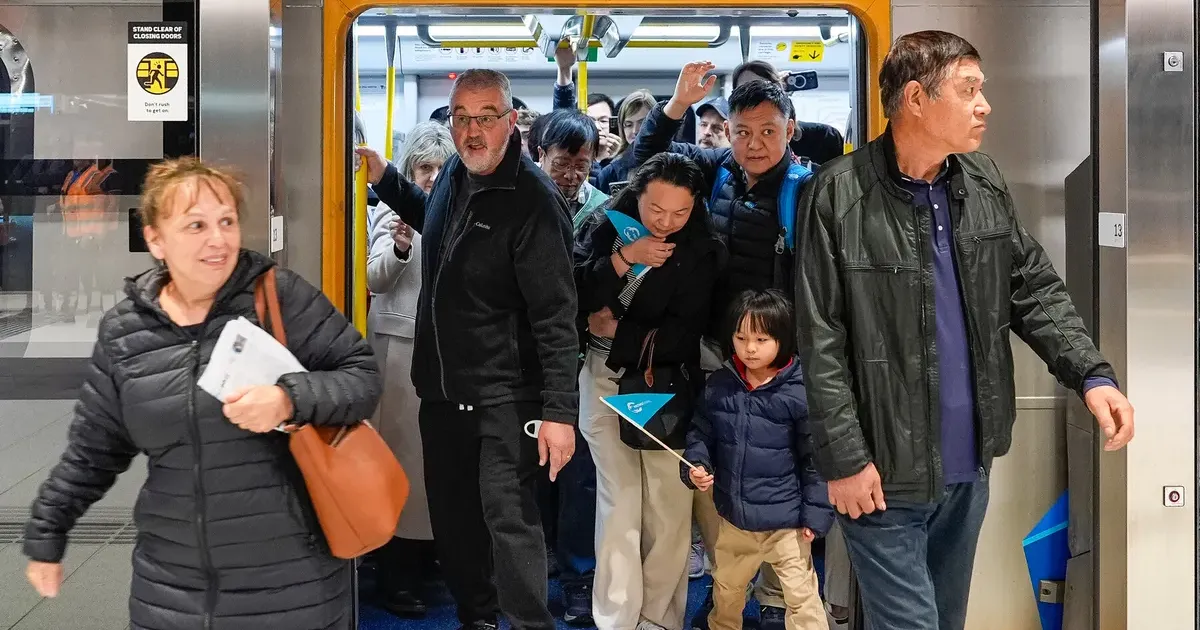
Beyond federal tax adjustments, regional governments are implementing their own emergency measures to move citizens away from expensive private vehicle use. Victoria and Tasmania announced on March 30, 2026, that they will waive all public transit fares for at least three months. Commuters in Melbourne and Hobart can now access trains, trams, and buses at no cost. State officials believe that free transit will reduce the financial burden on low-income workers who have no choice but to commute daily. Melbourne operates the largest urban tram network in the world, and the suspension of fares is an enormous logistical undertaking. Ticket inspectors have been reassigned to passenger safety and platform management roles.
"The measures in Victoria and Tasmania are temporary, but show how far and how intensely the oil shock from the war in Iran has spread," according to the New York Times.
Public transit usage in Victoria jumped by an estimated 15% in the first few hours following the policy activation. Regional rail services connecting Geelong and Ballarat to the city center also fall under the fare waiver. Tasmania faces unique challenges because of its reliance on bus networks and ferry services. Premier offices in Hobart confirmed that the state budget will absorb the lost revenue through an emergency energy relief fund. Critics of the state-level plan argue that free transit may lead to overcrowding and reduced service quality during peak hours. Maintenance crews continue to operate on standard schedules despite the surge in passenger volume.
Global Oil Markets Drive Energy Costs
Geopolitical instability in the Middle East is the primary catalyst for the current price surge. The ongoing war in Iran has effectively closed several major shipping lanes in the Persian Gulf, trapping millions of barrels of crude oil. Analysts from international energy agencies predict that prices could hit $130 a barrel if the conflict persists through the summer. Australia is particularly vulnerable to these shifts because it lacks meaningful domestic refining capacity. Most fuel consumed in the country arrives as refined product from Singapore or South Korea. Military developments in the Gulf region dictate the daily price at the pump in Australian suburbs.
Strategic reserves in the United States and Europe have failed to cool the market despite multiple coordinated releases. Brent crude, the international benchmark, continues to trade at a serious premium. Institutional investors have shifted capital into energy commodities, further driving up the cost of futures contracts. Shipping insurance rates for tankers have tripled since the start of the Iranian hostilities. These cascading costs eventually reach the Australian consumer through higher airfares and delivery surcharges. International shipping conglomerates are already adding emergency bunker surcharges to all routes serving the southern hemisphere.
Fiscal Consequences of Australia Fuel Relief
Federal budget projections for the coming year require meaningful revision to account for the lost excise revenue. Anthony Albanese faces pressure from opposition parties to explain how the government will fund the shortfall without increasing the national debt. Some political analysts suggest that the tax cut is a calculated move to maintain voter support during a period of economic uncertainty. Treasury data indicates that every cent of excise generates millions in revenue for road maintenance and safety programs. State governments in Victoria and Tasmania must also find ways to compensate their respective transit authorities. Inter-governmental agreements may be necessary to ensure the long-term viability of the transit networks.
Voters in regional areas remain skeptical that the benefits will reach them as quickly as they reach city dwellers. Rural transport costs are traditionally higher due to the vast distances between Australian townships. Small business owners in the outback report that even with the tax cut, their margins are razor-thin. National farmers' groups have requested additional subsidies for agricultural diesel to protect the autumn harvest. The federal cabinet has not yet ruled out further interventions if the Iranian conflict intensifies. Energy security has become the central theme of national policy discussions in Canberra.
Fuel Relief and Budget Pressure
Treating a global energy supply shock with a domestic tax holiday is a classic example of political expediency over economic logic. By halving the fuel excise, the Albanese administration is essentially subsidizing the very fossil fuel dependence that modern climate policy aims to dismantle. This intervention creates a dangerous precedent where the state is expected to shield the public from the inevitable volatility of a dying energy paradigm. While the immediate relief for families is undeniable, the long-term cost is a multi-billion dollar hole in the infrastructure budget that will haunt future administrations. Governments cannot continue to function as the insurer of last resort for global commodity fluctuations without risking fiscal collapse.
The simultaneous move toward free transit in Victoria and Tasmania is a far more strategic, if expensive, experiment in social engineering. It forces a conversation about the utility of public transport that a simple tax cut ignores. However, the federal and state policies are working at cross-purposes. One encourages people to stay in their cars by making petrol cheaper, while the other begs them to take the train. This lack of a unified national energy strategy reveals a government reacting in panic to the headlines from the Persian Gulf. Real energy security requires building domestic resilience, not draining the treasury to hide the true cost of a barrel of oil.