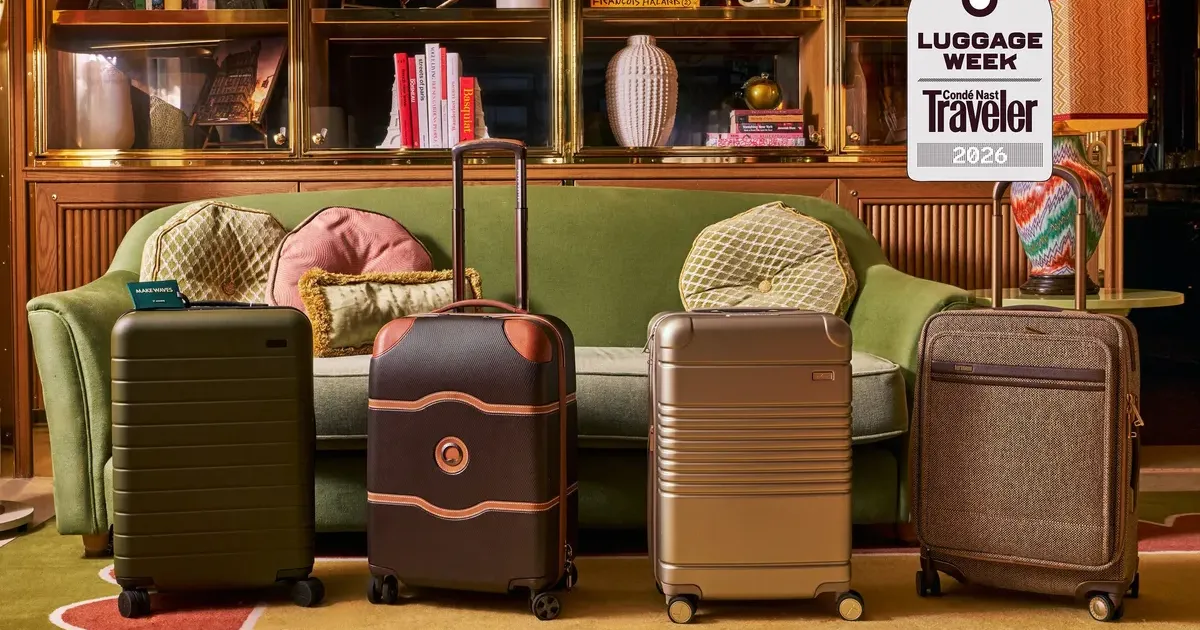
Carry-on luggage recommendations for 2026 should start with a plain question: where will the bag actually travel? A weekly business flyer, a family taking two summer trips and a budget-airline passenger are not buying the same tool, even when review lists put the same brands near the top.
Away, Travelpro, Briggs & Riley, Tumi, Rimowa, Samsonite and other familiar names still dominate many luggage roundups. Brand familiarity does not make the most expensive case the safest purchase. The better test is whether the bag fits the airline, rolls cleanly when tired, protects what needs protection and can be repaired after repeated use.
Airline Fit Comes Before Capacity
The most common mistake is trusting a capacity number while ignoring the outside dimensions. Wheels, handles, corner guards and expansion zippers count when an airline checks a bag against a sizer. A case that works on many domestic U.S. routes may still be awkward on smaller aircraft or on stricter international and budget carriers.
Expandable carry-ons deserve extra caution. The zipper can be useful on a return trip, but it can also turn a compliant bag into a checked bag at the gate. Frequent flyers should measure the packed case, not the empty shell in a product photo.
Wheels Change the Whole Bag
Four spinner wheels feel effortless across smooth airport floors and hotel lobbies. They are also exposed parts, so quality matters. Loose wheels, weak housings or poor alignment can make even a premium-looking suitcase frustrating after a few trips.
Two-wheel carry-ons still have a place for travelers who drag bags over sidewalks, train platforms or uneven streets. They take more arm effort in terminals, but the wheels are usually larger and more protected. There is no universal winner; the route decides the better design.
Weight Is a Feature
Aluminum luggage has a loyal following because it looks durable and ages with visible marks. It is also heavier and dents in a way some buyers like and others hate. Polycarbonate cases are usually more practical for travelers who want a lighter hard shell, while soft-sided luggage remains useful for exterior pockets and slightly more forgiving packing.
The empty weight matters most on trips with tight cabin limits. A beautiful case that consumes too much allowance before clothes, shoes, medicine, electronics and chargers go inside is not helping the traveler. For many people, a lighter shell with reliable hardware beats a heavier prestige case.
Interior Layout Should Match the Routine
A good carry-on does more than close. Compression panels help keep clothes stable, divided compartments can separate clean and worn items, and a laptop or toiletry access point may save time on short business trips. On the other hand, too many pockets can steal usable space and make packing slower.
The smartest layout depends on the trip length. A two-night work bag needs quick access and structure. A week-long vacation bag may need a simple open cavity, cubes and room for bulkier clothing. Buyers should be suspicious of interiors that look clever in photos but waste space in practice.
Repair Access Is Part of the Price
Handles, wheels, zippers and locks usually fail before the shell becomes useless. Common hardware failures make repair access and warranty service part of the purchase, not a footnote. A bag with replaceable parts can be a better long-term value than one that looks sharper on day one but becomes disposable after a broken wheel.
Security features should stay realistic. TSA-style locks, stronger zippers and dependable latches reduce friction, but a carry-on is not a safe. Passports, medicine, work devices and valuables still need attentive handling at lounges, taxis, hotels and security bins.
The best carry-on for 2026 is the bag whose dimensions match the airline, whose wheels match the terrain, whose weight leaves room for packing and whose parts can survive ordinary abuse. A scuffed suitcase that rolls straight and fits the sizer is doing the job. A beautiful one that fights every curb is just another travel problem.