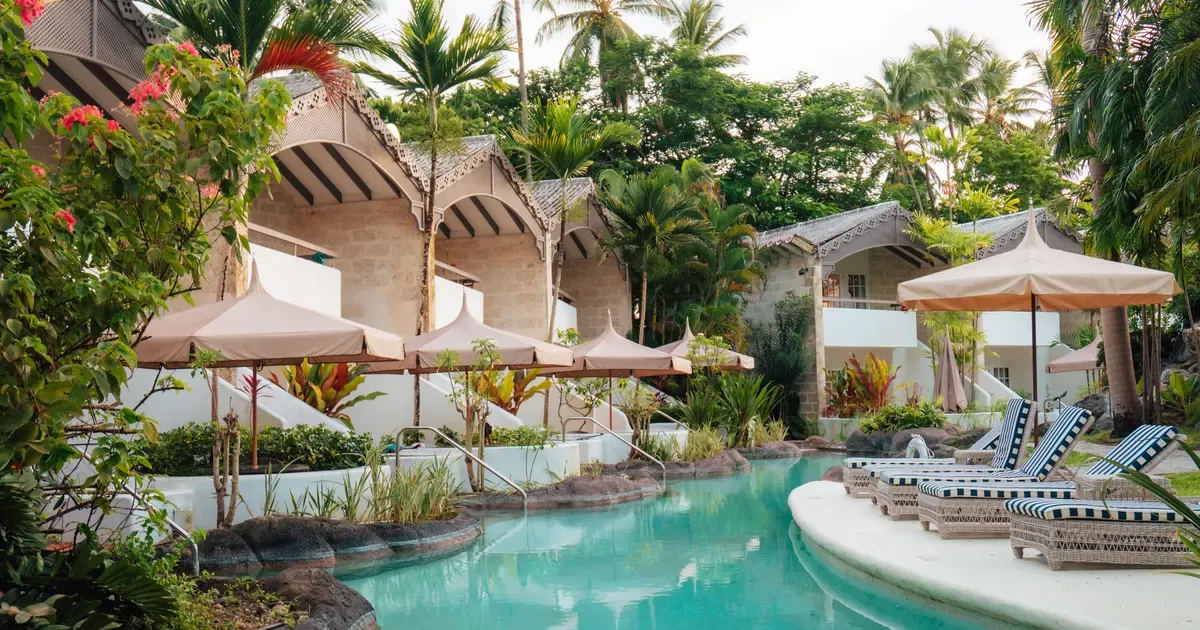
Barbados remains one of the Caribbean's clearest luxury propositions because it does not depend on one hotel style. The island has old-guard beach resorts, polished international flags, family-run properties, boutique hideaways and villas built around privacy, staff and sea views. The best stay is the property that makes service, beach access, food, architecture and local life feel connected rather than sealed off from one another.
This connection matters in 2026 because luxury travelers are harder to impress with generic polish. They know the difference between a resort that could sit on any coastline and a hotel that lets Barbados remain visible. The island's advantage is variety: the west coast for continuity and calm, the south coast for social energy, the east coast for surf and exposed Atlantic drama, and smaller hotels for a more personal sense of place.
The West Coast Still Carries the Classic Image
The Platinum Coast remains the familiar luxury anchor. Sandy Lane gives Barbados its old-school glamour, golf, scale and celebrity aura near Holetown and Paynes Bay. Coral Reef Club and The Sandpiper lean into family ownership, gardens, repeat guests and a quieter kind of continuity. Fairmont Royal Pavilion works because the beach is central rather than decorative, with the west-coast water shaping the experience from morning to dinner.
Those hotels do not sell the same mood. Sandy Lane is grander and more insulated. Coral Reef Club feels more residential and loyalist. Fairmont is easier to read as a beachfront classic with international-service polish. Together, they show why the west coast still matters: it lets travelers choose between status, tradition and calm without leaving the island's most established resort corridor.
Boutique Hotels Give the Trip More Texture
Smaller properties such as Cobblers Cove, Treasure Beach and Little Arches compete through personality instead of scale. They suit travelers who want design, service and comfort without the emotional distance of a large resort. The smaller format makes it easier to notice nearby restaurants, fishing towns, rum shops, local art and the rhythm of the neighborhood around the hotel.
Boutique texture is valuable because Barbados luxury can become too easy if it is only beach, suite and transfer car. A boutique stay asks guests to pay attention. It can still be indulgent, but the indulgence has a more specific address. A hotel that lets the island into the stay is more memorable than one that edits the island down to a view.
The South Coast Changes the Social Pace
The South Coast gives luxury travelers a livelier version of the island. It has beach access, restaurants, nightlife and a less sealed-off feel than the most polished west-coast enclaves. The setting remains premium while making the experience more social, more mobile and more connected to everyday Barbados.
This wider map is healthy for the destination. If all high-end demand gathers in one corridor, land values, employment patterns and visitor expectations narrow around a single model. A stronger luxury market spreads value across more communities and gives travelers more ways to build a trip: quiet west-coast mornings, south-coast dinners, Bridgetown history, rum tours, galleries and beach days that are not all identical.
The East Coast Is the 2026 Wild Card
The East Coast has become more important because travelers are looking beyond the obvious resort strip. Its appeal is not the same as the west coast's calm-water formula. Bathsheba, surf, cliffs, fishing villages and less polished scenery give Barbados a different kind of luxury: space, weather, texture and the sense that the island has not been flattened into resort language.
Not every luxury guest needs to sleep there. The east is better as a day, a drive, a lunch, a hike or a split-stay decision for travelers who want contrast. But it belongs in the 2026 conversation because a Barbados trip that ignores the east coast can feel too narrow. The island is richer when visitors see more than the corridor built most directly for them.
Climate and Community Are Part of the Stay
Luxury travel is changing as heat, water pressure, coastal resilience and community impact become harder to ignore. In Barbados, high-end tourism brings jobs, tax revenue and international attention. It also puts pressure on housing, beaches, roads, water systems and the workers who make five-star service possible. A strong hotel cannot treat those pressures as someone else's problem.
The better properties buy locally where they can, use local musicians and artists, send guests into the island respectfully, protect public beach culture and give staff a path that feels durable rather than seasonal. The weaker model imports the whole experience and leaves Barbados as a backdrop. For 2026 luxury travel, that is the practical test. Guests can pay for privacy, but the coastline cannot become psychologically private. Barbados is strongest when its hotels are refined without being sealed, profitable without flattening local life and confident enough to let the island lead the trip.