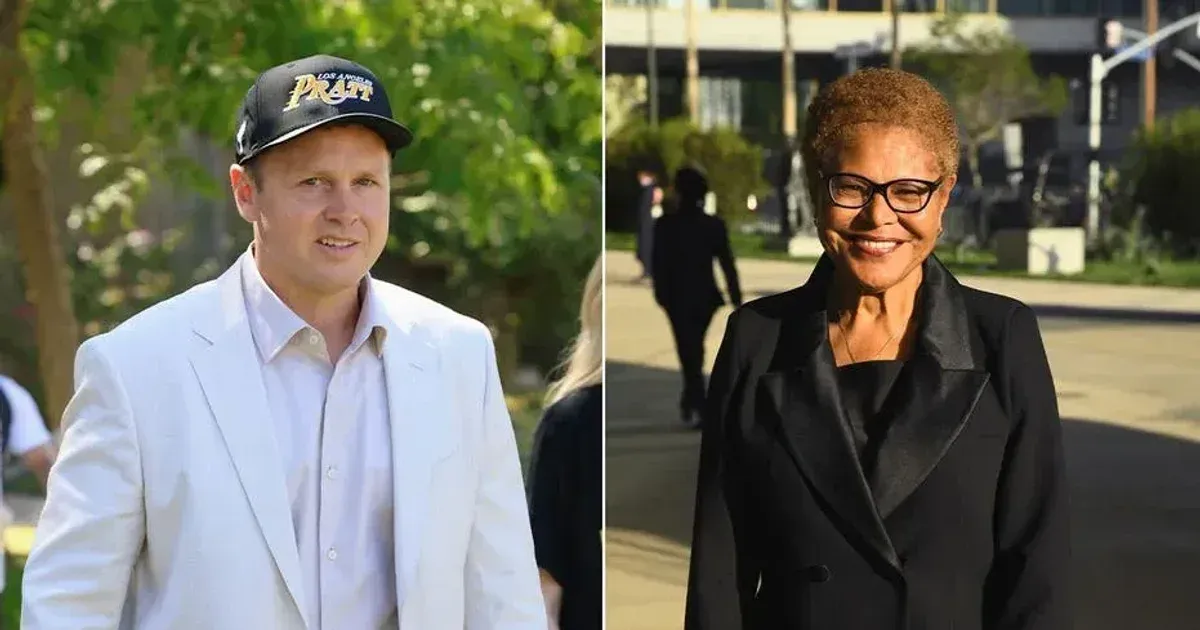
Karen Bass advanced to a November runoff in the Los Angeles mayoral race after falling short of the majority needed to win outright. Spencer Pratt, the former reality television personality, stood in second place in early returns, while Nithya Raman remained close enough to keep the final pairing unsettled. The June 3, 2026, update gave Bass a general election path while extending the fight over who will challenge her.
Voters in Los Angeles encountered a campaign where Pratt attempted to position himself as a candidate capable of representing all residents. His early second-place position indicates that his focus on public safety and urban decay connected with a solid portion of the electorate. Efforts to transition from a figure on The Hills to a serious political contender involved months of grassroots engagement. Pratt frequently highlighted the visibility of the drug crisis on city streets as a primary failure of the current leadership.
While the mayoral race moved toward a clear pairing for November, the state contest for governor remained in flux. California election officials have yet to determine which candidates will secure the top two spots required for the general election. Results currently show two Democrats and one Republican in a tight battle for the opportunity to lead the nation's most populous state. Democratic incumbents are fighting to maintain their historical dominance in Sacramento as Republican challengers see an opening in voter frustration over state-level policies.
Top Two Primary Leaves Governor Race Undecided
California utilizes a nonpartisan blanket primary system where all candidates appear on the same ballot. A voter may select any candidate regardless of their own party registration. Only the top two vote-getters advance to the general election in November. One Republican candidate is currently maintaining a narrow lead over the second-place Democrat, while a third contender remains within striking distance. Records from the Secretary of State indicate that several hundred thousand ballots are still awaiting processing in heavily populated counties.
Critics of the current system point to the length of time required to verify mail-in ballots. Legal requirements in California allow for ballots postmarked by election day to be counted even if they arrive days later. The careful signature verification process further extends the timeline for a final declaration. Local officials in Los Angeles and other major hubs have defended the pace as a necessary component of ensuring election integrity.
Counting Delays Spark Bipartisan Criticism
National observers have focused on the extended duration of the California tally. Critics from both the Republican and Democratic parties have expressed frustration with the weeks-long wait for definitive results. Instead of a quick resolution, the state often enters a period of prolonged uncertainty that complicates campaign planning for the fall. James Carville, a Democratic strategist, recently noted on a podcast that $2 billion was spent by the party without yielding the decisive victories some expected.
Federal officials are monitoring the results as they relate to broader national trends. Every update from the registrar's office shifts the narrow margins in the gubernatorial race, keeping the political establishment in a state of high alert.
In the municipal arena, a potential Pratt-Bass matchup would likely center on the execution of homelessness initiatives. Many residents have expressed impatience with the speed of temporary housing construction. Pratt has argued that the current administration has favored bureaucratic processes over immediate action. Incumbent Mayor Bass maintains that her Inside Safe program has successfully transitioned thousands of people off the streets and into stable environments.
An Outsider Runoff Bid Could Reshape Los Angeles Campaigns
Electoral outcomes in California often dictate the direction of national campaign strategies. The emergence of a non-traditional candidate like Pratt in a deep-blue stronghold suggests that quality-of-life issues can bridge traditional partisan divides. Voters are increasingly prioritizing visible urban management over ideological purity. If Pratt maintains his early momentum, his campaign could serve as a template for other outsiders looking to disrupt established political hierarchies in metropolitan areas.
State-level dynamics in the governor's race also reveal a fracture in the Democratic supermajority. Having two Democrats and one Republican in such close proximity indicates that the primary was not the coronation some expected. Future legislative priorities in Sacramento will depend on whether a Republican can break through the top-two barrier. The final count will determine if the general election becomes an intra-party debate or a standard partisan contest. Election officials expect to provide a near-final update by the end of the week.