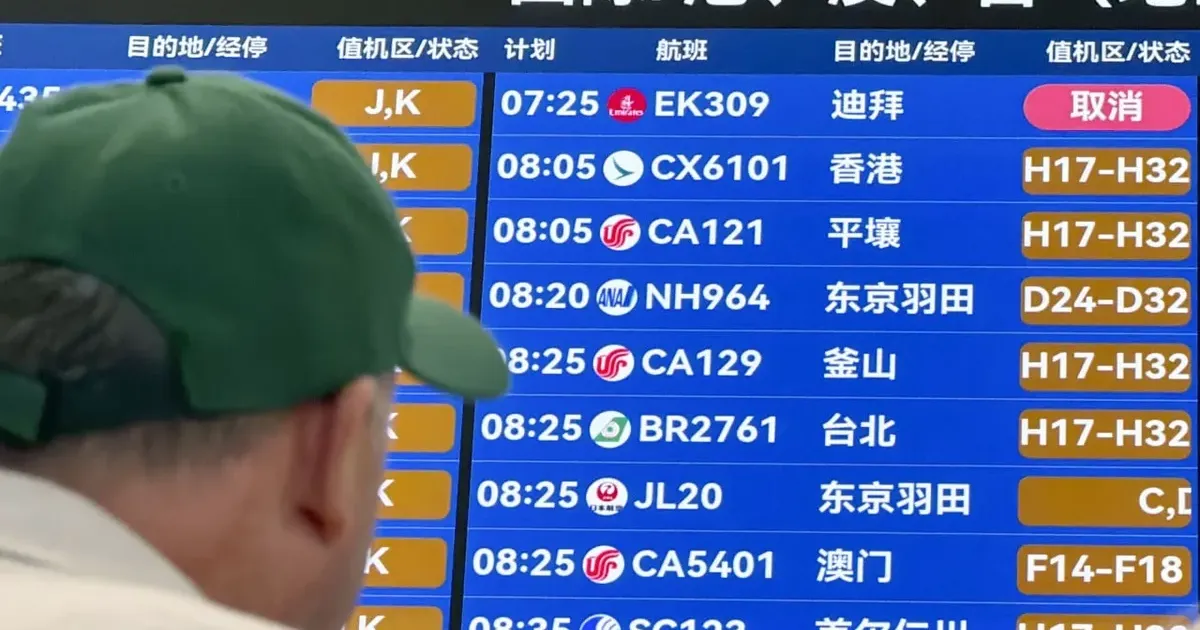
The restored route is a diplomatic signal as well as a transport update. The timing is deliberate. Beijing and Pyongyang are reopening a controlled channel. Air China flight crews touched down at Pyongyang Sunan International Airport on March 30, 2026, signaling a formal return of commercial aviation between the two neighbors. Beijing officials confirmed that the Boeing 737 aircraft arrived in the morning hours, reestablishing a link that had remained severed for a serious period. This resumption of service marks the first time the national carrier has operated the route since global health concerns prompted a total border closure. High-level diplomats stood on the tarmac to witness the landing, which many observers view as a deliberate gesture of rapprochement. Logistical coordination for the restart involved months of negotiations between civil aviation authorities in both capitals.
Ambassador Wang Yajun and several high-ranking embassy officials personally greeted the initial wave of travelers upon their arrival. Reports from Xinhua news agency detailed a scene of formal welcoming, with diplomats exchanging pleasantries with returning citizens and technical staff. China's flagship airline is currently the only major international carrier providing scheduled service into the North Korean capital. Previously, the route suffered from inconsistent scheduling due to fluctuating political tensions and shifting regional priorities. Restoring this connection enables the movement of government personnel and business delegates who are essential to maintaining the bilateral relationship.
Logistical movements between the two nations have accelerated sharply in recent months. Passengers aboard the inaugural flight included a mix of diplomatic staff and technical experts tasked with various cross-border projects. Beijing remains the primary gateway for North Korea to the outside world, making this specific flight path a critical artery for communication. Reliability of air travel is expected to improve as both nations seek to stabilize their economic cooperation after years of restricted movement. Ground crews at Sunan airport reportedly prepared for weeks to handle the technical requirements of the Chinese-operated aircraft.
"China's flagship airline resumed direct flight services to Pyongyang on Monday, a symbolic and logistical development that marks warming bilateral ties," reported the South China Morning Post.
Security at the airport was especially tight during the arrival of the first flight from Beijing. North Korean security personnel established a wide perimeter around the Boeing 737 as it taxied to the gate. Commercial activity at Sunan International Airport has been sparse for years, leaving the facility largely dormant except for occasional state-run flights. Returning passengers underwent rigorous screening processes conducted by both Chinese and North Korean health authorities. Such measures highlight the cautious approach both governments are taking as they reopen their shared borders. Embassy vehicles were seen transporting officials directly from the tarmac to the city center. This diplomatic normalization comes as Kim Jong-un continues to bolster the nation's military and missile capabilities.
Restoration of Beijing Logistics and Regional Connectivity
Aviation experts pointed out that the flight path between Beijing and Pyongyang is one of the shortest yet most politically complex routes in East Asia. Air traffic controllers in both regions had to recalibrate their coordination protocols to accommodate the sudden increase in activity. Historically, Air China has faced challenges in maintaining profitability on this route due to low passenger volumes and international sanctions. Financial considerations, however, are often secondary to the strategic necessity of maintaining a direct link to the North Korean leadership.
Operational costs for the Boeing 737 are partially offset by the high demands for cargo space on these specific flights. Freight holds often carry essential medical supplies and diplomatic pouches that cannot be sent via traditional courier services.
Beijing is the primary hub for North Koreans traveling to Europe or Southeast Asia. Resuming these flights simplifies the travel process for North Korean athletes, scholars, and officials who have been largely grounded since 2020. By contrast, the arrival of Chinese technical experts is expected to assist with infrastructure projects that have stalled due to a lack of specialized labor. Coordination between the two civil aviation authorities remains a priority for ensuring the long-term viability of the service. Schedules suggest that the airline will initially operate a limited number of flights per week, with the potential to scale up if demand persists. Ground handling services in Pyongyang are being upgraded to meet international standards as part of this broader reopening.
Warming Ties and the Six Year Railway Hiatus
Restoring air links follows a similar resumption of passenger train services that had been suspended for six years. Railway connectivity between the two nations is historically more meaningful for bulk cargo and large-scale tourism, but air travel provides the speed required for modern diplomacy. Once the train tracks were cleared for passenger use earlier this month, it became inevitable that aviation would follow. Beijing officials have signaled that these moves are part of a synchronized effort to normalize cross-border operations. Logistics companies in the border city of Dandong are also preparing for a surge in activity as physical barriers continue to fall. Movement across the Yalu River has traditionally been the lifeblood of the regional economy.
While rail travel remains the backbone of the partnership, the Air China connection offers a level of prestige that the railway cannot match. Diplomatic cables recently suggested that the restoration of these services were a top priority during recent high-level meetings. Trade volumes between the two nations fell to record lows during the isolation period, creating a sense of urgency for the current restoration. Beijing has consistently advocated for a gradual easing of restrictions to prevent economic instability in the North. Restoring transport links is a concrete step toward that goal. Every arrival and departure is data point for analysts trying to gauge the health of the alliance.
Aviation Standards and North Korean Infrastructure
Sunan International Airport recently underwent minor renovations to accommodate the Boeing 737 and other modern aircraft types. Ground crews received updated training on handling international equipment, which has been a point of concern for foreign carriers in the past. Air China maintains strict safety protocols that must be met regardless of the destination. Technical inspections of the runway and navigation systems were conducted by a joint task force prior to the March 30, 2026, flight. Modernization of the airport is a key component of North Korea's long-term plan to attract more international visitors. These efforts, while limited, show a desire to integrate more effectively with the regional aviation network.
Pilots on this route must navigate specific corridors to avoid sensitive military airspace near the border. Cooperation between civilian and military air traffic controllers is essential for the safety of every flight. Fueling and maintenance services at Sunan are being closely monitored by Chinese technicians to ensure compliance with international regulations. Reliability of ground-to-air communication has improved sharply since the last period of regular operations. Beijing remains committed to providing the technical support necessary to keep the air corridor open. Future expansion of the route could include direct flights from other Chinese cities like Shenyang or Dalian.
China North Korea Reconnection
Restoring air links gives Beijing and Pyongyang a controlled way to reopen contact without declaring a broad diplomatic reset. Transport access can carry political meaning even when schedules remain limited.
The route will be watched for volume as much as symbolism. Passenger numbers, cargo movement and official delegations will show whether the opening is narrow or part of a wider thaw.