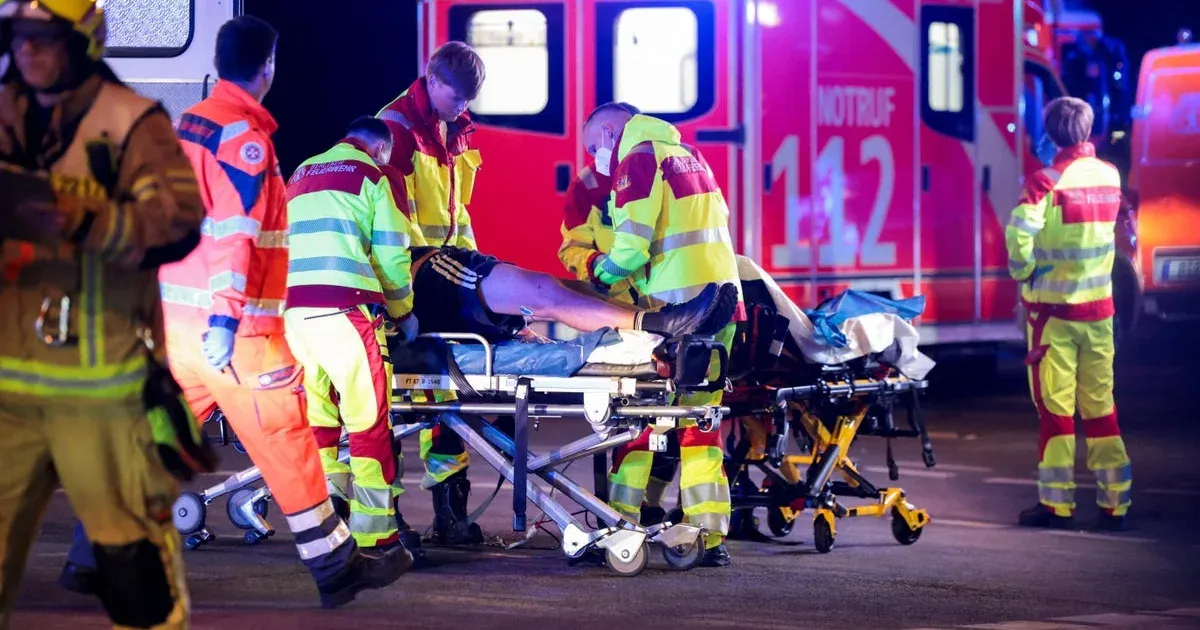
A van drove into people near Berlin's Pride celebration, leaving one person dead and 16 injured as police searched Tiergarten for whoever had been inside the vehicle. The incident unfolded shortly before 10 p.m. on July 25, 2026, after the main Christopher Street Day procession had moved through the German capital.
Several of the injured were reported to have life-threatening wounds. Police and fire crews deployed in large numbers, while organizers ended the event and told participants to leave the area calmly. Authorities found the suspected white van abandoned inside the park, but the driver had not been taken into custody in the latest source update. Police described an intensive search and asked people to leave rather than remain near the operation. Fire department spokesperson Dominik Pretz supplied the reported total of one death and 16 injuries.
Emergency teams treated victims on the ground and prepared a helicopter landing area near the Reichstag for urgent transfers to hospitals. The response turned a central public park into both a medical site and a search zone, requiring officers to move a large crowd away while keeping routes open for ambulances and investigators. Sirens were heard across the center as police officers and Berlin fire brigade personnel converged on the park. The temporary landing area gave crews a direct route for patients whose injuries could not wait for road transport.
Berlin Mayor Kai Wegner described the incident as an assault on the city's freedom and cosmopolitan identity. Chancellor Friedrich Merz also promised that those responsible would be punished. Police had not publicly established a motive in the source material used for this report, and early claims about the suspect's identity were not included. That distinction is important in the first hours of an attack, when the casualty count and the location of a vehicle may be confirmed before responsibility or intent is known.
The Celebration Was Cut Short Across Central Berlin
Hundreds of thousands of people had gathered in warm weather for one of Europe's largest LGBTQ+ events. More than 80 floats and 50 groups on foot traveled through the city center, passing Potsdamer Platz and the Victory Column before a rally near Brandenburg Gate. In Germany the annual event is known as Christopher Street Day, a name linked to the site of New York's Stonewall uprising. Berlin first held CSD in 1979, giving the abrupt cancellation particular weight for an event with nearly five decades of local history. The park was close to the earlier parade route, so the late-night response unfolded beside places that had carried crowds throughout the day.
This year's program opened on Friday night with a pro-democracy rally and continued on Saturday under a slogan chosen in response to growing hostility toward queer people. A far-right counterprotest also took place earlier in the day, where police arrested one person for resisting orders. Those details formed the political setting around the event, but officials had not tied the vehicle attack to the counterprotest. Organizers' cancellation message focused instead on immediate movement, asking participants in both German and English to leave calmly and in an orderly way.
An Abandoned Vehicle Makes the First Hours Decisive
Finding the van did not end the immediate danger assessment. Investigators still had to determine who drove it, whether anyone else was involved and where they went after leaving the vehicle. At the same time, emergency managers had to clear participants from a wide area without creating congestion around hospital routes or the police search. Tiergarten's position beside major national landmarks added pressure to keep the surrounding streets usable while officers examined a vehicle left inside the park.
The attack therefore left Berlin with two urgent tasks that cannot be separated: establish the facts without outrunning the evidence, and protect a shaken public event while the search remains active. The strength of the next security decision will depend on how quickly investigators can convert the abandoned van, witness accounts and movement through Tiergarten into a reliable chain of events. The same reconstruction will shape whether future crowd controls concentrate on vehicle access, escape routes or a wider threat. Until that evidence is assembled, restraint over motive is part of the public-safety response, not a gap to be filled by speculation.