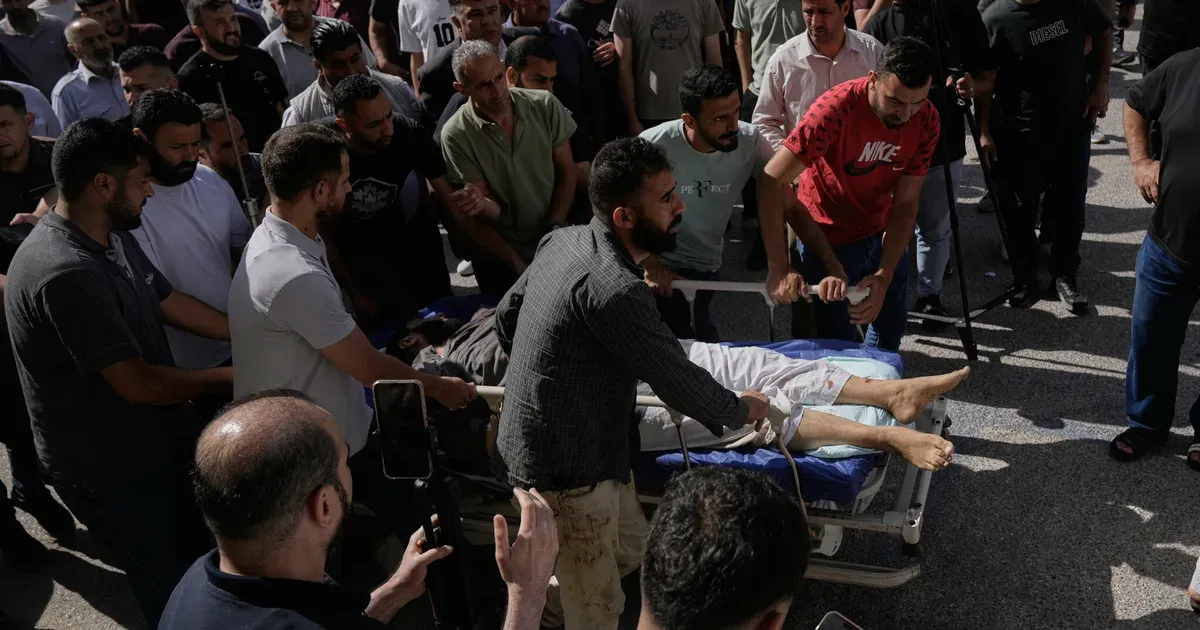
Four Palestinians and two Israelis were killed near the village of Tell in the occupied West Bank, setting off troop deployments and movement restrictions around Nablus. The deaths were confirmed on July 24, 2026, after an encounter whose opening moments remain disputed by Palestinian witnesses and the Israeli military.
The Palestinian Health Ministry said Israeli forces killed four Palestinians in Tell, southwest of Nablus. Israeli authorities said two Israelis died from gunshot wounds. The Associated Press reported that one of the Israelis was a soldier who also served in a local settlement defense squad, while Reuters and other outlets described a second Israeli death as the incident developed.
What can be established across the competing accounts is the sequence that followed: armed Israelis entered or approached the Palestinian village, a confrontation began, a weapon changed hands, gunfire killed people on both sides, and Israeli forces imposed a cordon. The unresolved issue is who initiated the violence and when soldiers opened fire.
Palestinian and Israeli Accounts Diverge at Tell
Palestinian residents and local officials said a group of settlers entered Tell, tried to reach homes and fired during the confrontation. Essam Saifi, a local Fatah official, told Reuters that roughly 25 to 30 settlers attacked the eastern side of the town before the Israeli military arrived. Palestinian accounts said soldiers and settlers then fired at residents.
The Israeli military offered a different description. It said Israeli civilians were hiking in the area when Palestinians attacked them. According to the military, a security officer from a nearby outpost arrived, a Palestinian took his weapon and opened fire on the Israelis. The army said troops were sent after the initial report and began searching for suspects.
Parts of Tell lie in Area A, where the Palestinian Authority holds civil and security responsibility under the Oslo framework, while nearby areas have different administrative arrangements. Israeli citizens are generally prohibited by Israeli military order from entering Area A. That geography is relevant because it shapes both the legal setting and the speed with which an encounter can draw armed civilians, local residents and soldiers into the same space.
“We will act forcefully,” Prime Minister Benjamin Netanyahu said in a joint statement with Defense Minister Israel Katz.
The contradictory narratives should not be blended into a single settled account. The confirmed toll and the subsequent military measures are separate from claims about who fired first. Video and witness testimony may clarify parts of the sequence, but the available reports still attribute the central claims to different parties rather than establishing one uncontested version.
Nablus Cordon Opens a Second Phase
Israel deployed additional troops across the northern West Bank, set up checkpoints and restricted access around Nablus and Tell. The military said the measures were intended to locate suspects and prevent further attacks. Residents faced blocked roads and reduced movement as the search expanded beyond the immediate site of the shooting.
Netanyahu and Katz called for reinforcements, weapons seizures, the revocation of work permits and the demolition of homes belonging to people accused in the attack. Such steps move the response from a scene investigation toward broader pressure on the village. Home demolitions and area-wide permit restrictions also affect relatives and residents who have not been accused of taking part.
The episode arrived during a period of expanding settlement activity and repeated settler attacks against Palestinians. More than 700,000 Israelis live in settlements in the West Bank and East Jerusalem, territories captured by Israel in 1967 and sought by Palestinians for a future state. Most of the international community considers the settlements illegal under international law; Israel disputes that position. AP also reported that two Palestinians were killed days earlier during a settler raid in Deir Jarir near Ramallah, placing the Tell encounter within a week of additional lethal violence rather than treating it as an isolated break from otherwise calm conditions.
Recent violence has also increased the risk of retaliation between settlements and Palestinian communities. The Palestinian Health Ministry’s figures cited by Al Jazeera put the number of Palestinians killed by Israelis in the West Bank this year at 86 after the Tell deaths. Israeli authorities have separately recorded attacks that killed or wounded Israeli civilians and security personnel.
The Cordon Will Test Whether the Violence Stays Local
The immediate security decision is now larger than the disputed shooting itself. A tightly bounded search could focus on evidence, named suspects and the weapons used. A prolonged closure, collective permit measures or new settlement moves would spread the consequences across the Nablus area and increase contact between troops, settlers and Palestinian residents at checkpoints and village entrances.
That distinction will determine the next risk channel. The six deaths created pressure for rapid action, but measures that treat the wider population as part of the attack can generate more confrontations before investigators settle the original sequence. The operational test is whether authorities can separate an evidence-based inquiry from political demands for territorial punishment. If the cordon becomes the opening stage of a larger campaign, Tell will function less as a contained crime scene and more as the trigger for another cycle of armed raids, road closures and retaliatory violence.