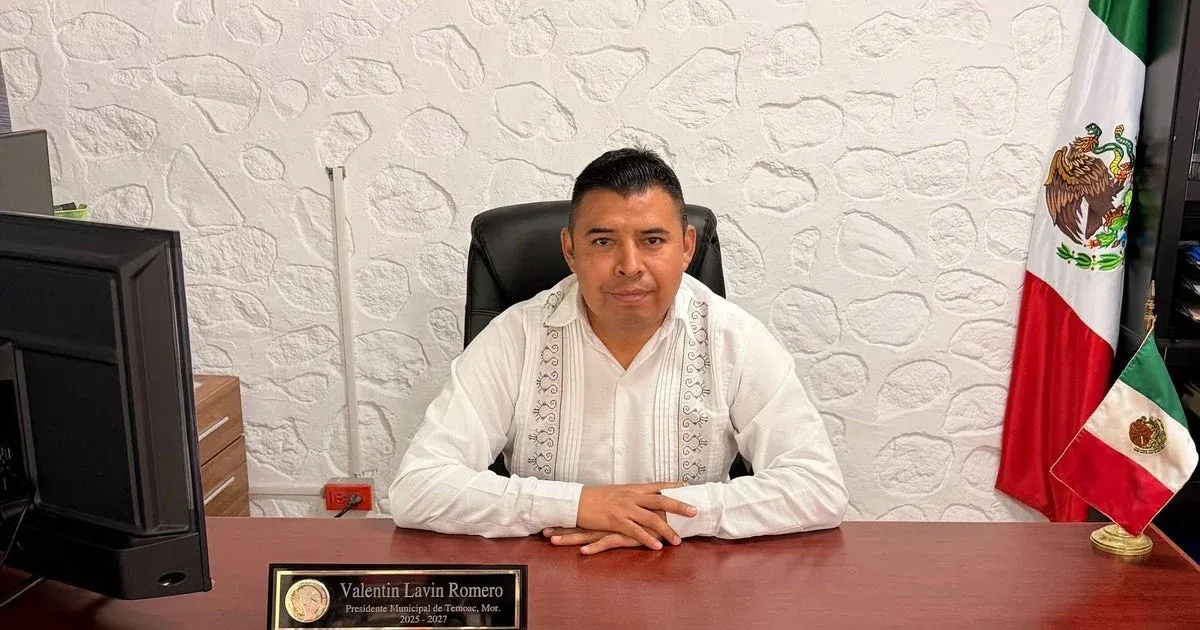
Temoac Mayor Valentín Lavín Romero was shot dead inside the municipal government building in Mexico's central state of Morelos. The attackers fled on a motorcycle, and authorities had not publicly identified a suspect or motive. The killing took place around midday on July 22, 2026.
Lavín was attacked while working inside the town hall, six months after surviving a separate shooting. He represented Mexico's Green party, which is allied nationally with President Claudia Sheinbaum's governing Morena party. State investigators said an operation to find those responsible was underway.
A January Attack Preceded the Town Hall Shooting
The earlier attempt on Lavín's life occurred at a petrol station on a highway in January. His survival left a clear unanswered question after the town hall shooting: whether the two attacks were connected. Neither report established that the same people carried out both attacks.
The investigation also begins amid unresolved allegations surrounding local politics in Temoac. The Guardian reported that Lavín's mother-in-law was arrested in September 2025 over alleged links to a group accused of kidnapping. It also noted that activists had called for Lavín to be investigated after two activists were killed, and that a banner displayed in May allegedly accused him of protecting one criminal faction from another. Those claims have not been established as the motive for his killing, and investigators have not publicly connected them to the gunmen.
Lavín's death is part of a wider pattern of attacks on municipal leaders. The Guardian counted nearly 100 Mexican mayors killed since the government launched its militarized campaign against organized crime in 2006, including 14 since Sheinbaum took office in October 2024. CBS News separately reported that three mayors had been killed in 2026 and recalled the November 2025 assassination of Uruapan Mayor Carlos Manzo during a public event.
The violence around local government has not been limited to mayors. CBS reported that gunmen killed the husband of a councilwoman in a separate Mexican municipality the week before Lavín's death, while wounding the councilwoman and her daughter. The incidents are not known to be connected, but their proximity shows the range of people exposed when local officeholders become targets.
National figures point in two directions at once. Sheinbaum said on July 14 that Mexico's homicide rate had fallen by nearly half since September 2024. Analysts cited by The Guardian said the real decline was probably smaller, partly because disappearances are not counted as homicides. Roughly 130,000 people remain missing, while CBS put the number killed since 2006 at nearly 500,000.
Morelos was also included in Operation Swarm, a multi-state anti-corruption drive that has produced 85 arrests across three states. The operation targets public officials suspected of working with criminal groups. It provides an important backdrop for Lavín's case, but authorities have not said that his death was connected to the operation.
Why Lavín's Killing Matters for Mexico's Municipal Security
The place of the attack is as consequential as its timing. The fact that armed attackers reached a mayor inside town hall shows how exposed municipal officials can remain even when national homicide numbers improve. Municipal leaders operate closest to the communities where criminal groups seek political arrangements, yet they generally have less protection than governors or federal officials.
For the national government, an arrest would resolve only the first question raised in Temoac. Investigators must still determine whether the January ambush and the town hall killing were connected, separate verified evidence from the allegations around local factions, and explain how armed attackers reached Lavín at work. Until those points are answered, the case will stand as a test of whether Mexico's security gains can reach the municipal offices where political violence is often most personal and least contained.