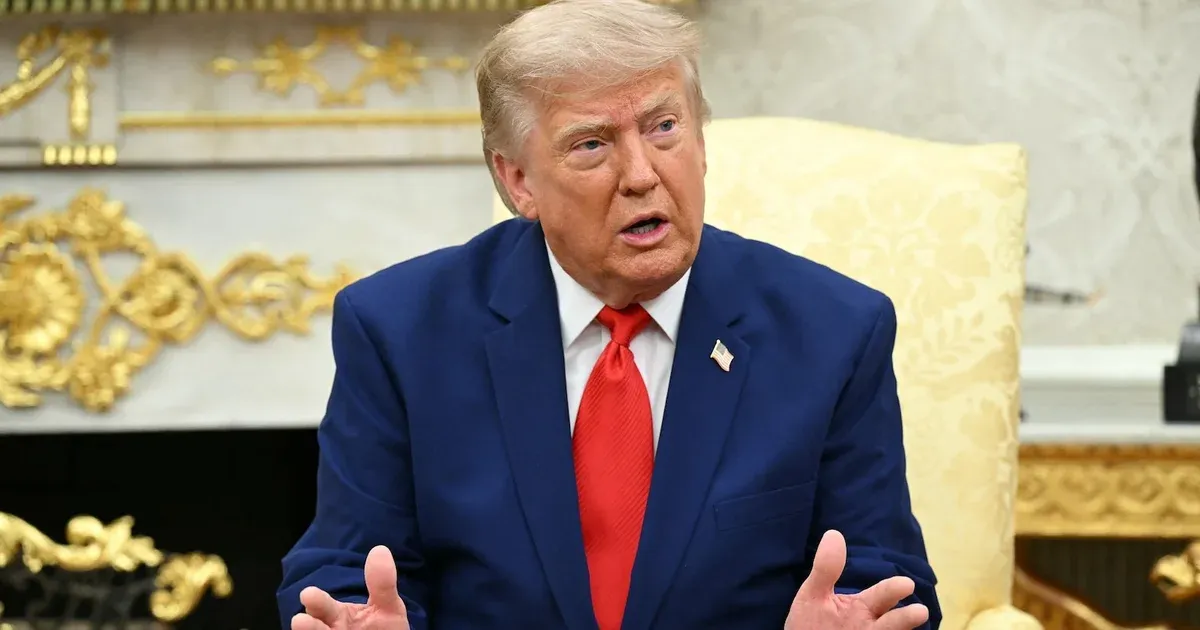
President Donald Trump has approved a long-term nuclear partnership with Saudi Arabia that would put American companies at the center of the kingdom's civilian energy program. On July 22, 2026, U.S. officials described an agreement that could eventually let Riyadh enrich its own uranium. That unresolved option makes the pact more consequential than an ordinary contract to build reactors.
The framework runs for 30 years and is valued in the tens of billions of dollars, according to officials cited by ABC News. It would connect Saudi plans for nuclear power with U.S. technology and industrial participation. Washington and Riyadh discussed the proposal during Crown Prince Mohammed bin Salman's visit to the United States last fall, but the final text and implementation timetable were not released with the approval.
Enrichment Is Possible, Not Immediately Authorized
The agreement leaves a route for Saudi Arabia to enrich uranium domestically at a later stage. Enrichment can supply fuel for civilian reactors, yet the same technical base draws proliferation scrutiny because higher levels and different configurations can support a weapons program. A country that imports finished fuel avoids building that portion of the nuclear cycle at home; Riyadh would retain the chance to pursue it. The distinction between permitting future talks and granting present authority is therefore essential: the reports describe an open door, not an operating enrichment plant or a published license to construct one.
Saudi Arabia has sought a nuclear-energy program as it invests in alternatives to oil and expands domestic electricity production. A deal with Washington could direct large orders toward American reactor suppliers, engineering companies and fuel specialists. France 24 reported that the White House expects billions of dollars in commercial activity, making industrial access one of the administration's principal arguments for the accord. The 30-year duration gives companies a horizon long enough for design, construction, fuel supply and maintenance work rather than limiting the partnership to a single plant purchase.
Commercial value does not settle the security question. Critics fear that retaining a domestic enrichment option would give the kingdom expertise and infrastructure that are harder to monitor than imported reactor fuel. Supporters can argue that a U.S.-backed program offers leverage and defined safeguards that Washington would not possess if Riyadh selected another foreign partner. The published outline does not yet show which side bears the greater practical risk.
The Safeguard Structure Sits Outside the Usual IAEA Route
Officials said the two governments agreed on measures intended to prevent the civilian program from being converted to weapons work. Those protections would be managed bilaterally rather than through the International Atomic Energy Agency, which conventionally oversees nuclear safeguards. The reporting concerns the controls created by this pact; it does not establish that every existing Saudi obligation to the agency disappears. Even so, the choice puts more responsibility on the two capitals to define access, reporting and enforcement in the agreement itself, and to show how their findings will be independently trusted.
A bilateral system can contain strict inspections, material accounting and penalties, but none of those details were included in the initial reports. Without the text, it is not possible to compare the arrangement with the monitoring normally associated with international nuclear agreements. The unanswered questions include who verifies nuclear material, what triggers a suspension and whether inspectors can reach every facility connected to the program.
Secretary of State Marco Rubio declined to describe the plan's contours when asked on Wednesday. He said the United States would not enter an agreement that created a proliferation risk and confirmed that the administration would work with lawmakers. His assurance sets the policy objective; Congress will need the precise legal language and detailed technical annexes to judge whether the safeguards can deliver it.
Congress Must Review the 30-Year Deal
Federal law requires the administration to submit the nuclear agreement to Congress. That review gives lawmakers a chance to examine enrichment conditions, the bilateral oversight model and the obligations placed on U.S. companies before the partnership is formalized. Legislators can also ask whether future enrichment needs a separate decision, how violations would affect commercial contracts and which information can be made public. The review creates a venue for details that officials have so far discussed only in broad terms.
The regional context will sharpen that scrutiny. Washington is simultaneously managing an Iran nuclear deadline, while Saudi decisions are watched by governments that may seek comparable treatment. If Riyadh receives an enrichment path without conventional international supervision, other partners could cite the precedent when negotiating their own civilian programs. Congress will evaluate this energy project alongside a wider policy choice: how much fuel-cycle autonomy Washington will tolerate among regional allies under a pact intended to last three decades.
The approval is therefore the beginning of the legal and technical process, not its conclusion. The commercial promise can be measured in contracts, but the durability of a 30-year pact will rest on enforceable inspection rights and a clear response to violations. Until those terms reach Congress, the agreement's largest benefit and its largest risk remain attached to the same unanswered enrichment clause.