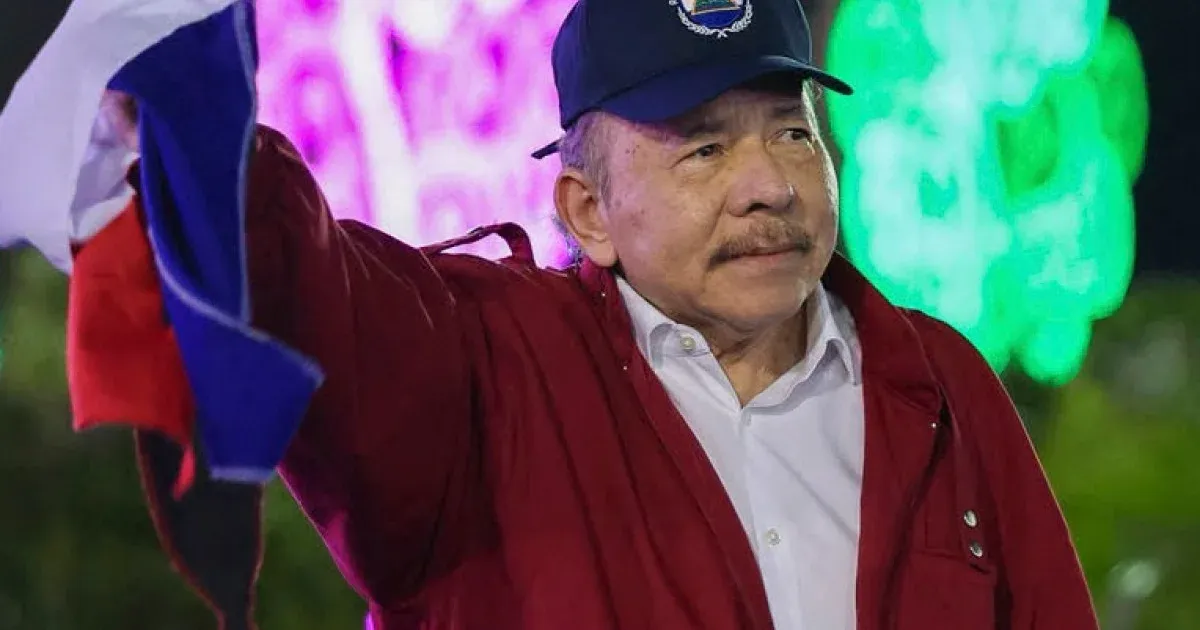
Nicaraguan President Daniel Ortega told supporters that his government would no longer hold elections, dispensing with a process that had already ceased to offer the opposition a viable route to power. He presented the decision as protection against parties he portrayed as agents of Washington. Speaking on July 19, 2026, at a commemoration of the Sandinista revolution, Ortega said those groups would never again be allowed to take control through a vote.
The declaration did not include a legal timetable or explain how the electoral provisions still embedded in Nicaragua’s political system would be removed. Its immediate force came from the speaker: Ortega has governed continuously since 2007, and state institutions have been reshaped around his authority and that of his wife, Rosario Murillo. A public promise to end voting therefore carries more weight than campaign rhetoric from an ordinary party leader.
Ortega linked his position to the struggle that overthrew the US-backed Somoza dictatorship in 1979. That historical appeal recasts present-day challengers as a return of the old order rather than citizens seeking office. It also erases a central feature of Ortega’s own career. He left the presidency after losing an election in 1990, then used later elections to return to office before steadily narrowing the field available to rivals.
Political Competition Was Dismantled Before the Declaration
Nicaragua’s last national vote, held in 2021, was widely disputed after the authorities detained opposition figures and suppressed dissent. The absence of credible challengers allowed Ortega to retain office while preserving the outward machinery of an election. His latest statement removes even that formal distinction between controlled competition and permanent rule.
The government’s campaign against opponents has extended beyond candidates. Hundreds of Nicaraguans have been stripped of citizenship, while journalists, activists and former political allies have faced detention or exile. A United Nations human rights inquiry has accused officials of arbitrary detention, torture, extrajudicial killing and persecution of civil society and the press. Ortega’s government has rejected outside criticism as foreign interference.
A constitutional overhaul approved last year lengthened the presidential term to six years and elevated Rosario Murillo to co-president. That arrangement concentrated executive power within the couple rather than preparing an institutional succession. It gave Murillo a formal position alongside the authority she had accumulated as vice president and government spokesperson. Ortega is now 80, so the distribution of power around her is central to how the system may continue if his health or capacity changes.
The record of coercion gives the announcement a sharper meaning. The 2018 crackdown on mass demonstrations left a death toll above 300. Several veterans of the Sandinista movement have since been jailed by the government they once helped bring to power. The governing project now depends less on the revolutionary coalition of 1979 than on control of courts, security forces and civic space.
Ending Elections Would Turn De Facto Control Into an Open Rule
The statement leaves practical questions for Nicaragua’s constitution, legislature and electoral authority, but none of those bodies operates as a strong counterweight to the presidency. If the government converts Ortega’s words into law, citizens would lose the scheduled moment at which power is at least nominally subject to review. If it does not, future ballots could remain ceremonial exercises conducted without genuine competition. Either route preserves the same governing center while changing its legal presentation.
Foreign governments will have to decide whether to respond to the speech as a policy declaration or wait for formal measures. Sanctions and diplomatic pressure have not restored political competition, and further isolation can impose costs without opening space for domestic opponents. Neighboring countries may instead feel the result through continued migration as people conclude that peaceful political change is unavailable.
For Ortega, abolishing elections would close the route that returned him to the presidency. For Nicaragua, the decisive issue is whether any institution can still require him to submit that decision to law. His words indicate that the government no longer considers periodic public consent necessary, while the repression of the past eight years has left few organized forces able to contest that position inside the country. Succession arrangements, rather than electoral competition, would then become the main mechanism through which national leadership could change.