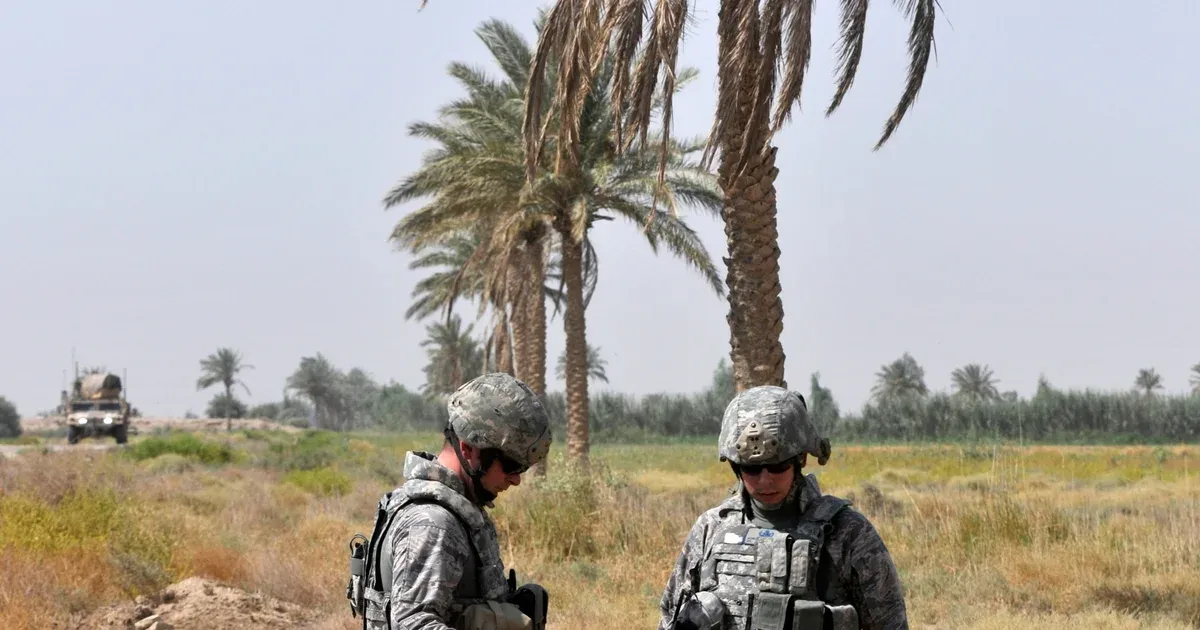
A US service member was killed while troops disposed of unexploded material from a downed Iranian attack drone in northern Iraq, Central Command said. Another service member suffered a minor injury in the same operation. The fatality came on July 18, 2026, after the drone had been brought down, distinguishing the episode from a direct hit on a US position.
The disposal unfolded amid renewed exchanges between Washington and Tehran. The fighting had entered a second week after an interim arrangement collapsed, and Iranian drones were again being launched toward locations with US personnel. Central Command did not identify the service members, disclose the location in northern Iraq or say how the drone had been intercepted. The command said information about those involved would remain withheld until their families had been notified.
Controlled Blast Turned Drone Wreckage Into a Fatal Threat
Central Command described the operation as a planned effort to destroy unexploded ordnance attached to or recovered from an Iranian one-way attack drone. The service member was killed during a controlled detonation, and the second person was receiving treatment for a minor injury. No Iraqi casualties were reported in the statement.
“Separately, a U.S. service member in northern Iraq was killed in action July 18 during a controlled detonation of unexploded ordnance from a downed Iranian one-way attack drone.”
The wording establishes a narrow sequence. US forces had already stopped the aircraft from completing its flight, but its explosive payload remained live on the ground. The death occurred during the attempt to make that wreckage safe. Central Command classified the service member as killed in action even though the immediate task was disposal rather than interception.
Military explosive-ordnance teams normally isolate a device, assess its fuzing and choose whether it can be moved or must be destroyed where it lies. Central Command has not described which step failed in Iraq. Without a site report, it is not possible to determine whether the payload detonated early, fragmented beyond the planned safety area or produced another hazard.
The Iraq Death Followed Two Losses in Jordan
The northern Iraq casualty was separate from the Jordan attack a day earlier. Central Command said two US service members were killed on July 17 while defending against Iranian ballistic missiles and drones. One service member was listed as missing, and four others were taken to hospitals in Jordan before being discharged. Personnel with lesser injuries returned to duty.
Search teams found unidentified remains at the Jordan location on July 19. Examiners were still working to identify them when Central Command issued its update, so the missing service member's status had not been resolved. The command also continued to withhold the names of the two people confirmed dead while next-of-kin notifications were under way.
The Associated Press put the Iraq fatality at 17 US military deaths since the current war began. That total places a death during post-interception disposal inside the same casualty count as personnel killed by missiles or drones reaching defended locations. It also shows why official announcements separate each event's place, time and mechanism rather than presenting one combined toll without detail.
US Strikes Reached an Eighth Consecutive Night
US forces completed another round of attacks against Iran at 11:30 p.m. Eastern time on July 18, according to a separate Central Command release. The command said the eighth consecutive night of strikes hit coastal-surveillance systems, air defenses, maritime capabilities and storage sites for missiles and drones. It also said forces connected to the July 17 attack in Jordan were targeted. Those target groups cover several stages of Iran's attack system, from detecting movement at sea to storing weapons before launch. The release did not name individual sites or provide a public battle-damage assessment, so its list describes the intended targets rather than a verified inventory of destroyed systems.
Central Command described more than 50,000 US uniformed personnel as deployed across the Middle East. That footprint spreads air-defense, logistics and recovery duties across several countries while Iran continues to launch one-way drones and missiles. The Associated Press reported that Jordan intercepted incoming projectiles without casualties or damage during the same exchange, while Kuwait said a missile hit a petrochemical plant. Every volley can generate alerts, interceptor launches, falling debris and inspections at more than one location. A successful interception can protect a base or city, yet it can also leave an armed airframe that has to be located, secured and dismantled under combat conditions.
An Intercepted Drone Can Remain Lethal on the Ground
One-way attack drones combine an aircraft, guidance components, a fuze and an explosive charge intended to be consumed in a single strike. Shooting one down changes where those parts land; it does not guarantee that the fuze has fired or the explosive has burned. Damaged batteries, propellant, broken wiring and an intact warhead can complicate the work after the air-defense engagement ends.
The Iraq statement leaves important operational facts unanswered. It does not say whether the drone fell inside a base perimeter, in open terrain or near civilian infrastructure. Nor does it identify the model, the size of the payload, the condition of its fuze or the protective distance established for the blast. Central Command also gave no timeline between interception, recovery and detonation. Those omissions limit any judgment about the operation while the military completes its review and family notifications.
The confirmed sequence still changes the accounting of drone defense. Interception prevented the aircraft from reaching its intended target, but US personnel then had to approach the remaining explosive and one of them died. For troops assigned to recovery and disposal, the danger persisted after the drone disappeared from the air picture. The northern Iraq loss therefore belongs to the same attack chain as the launch, even though it occurred during the cleanup that followed.