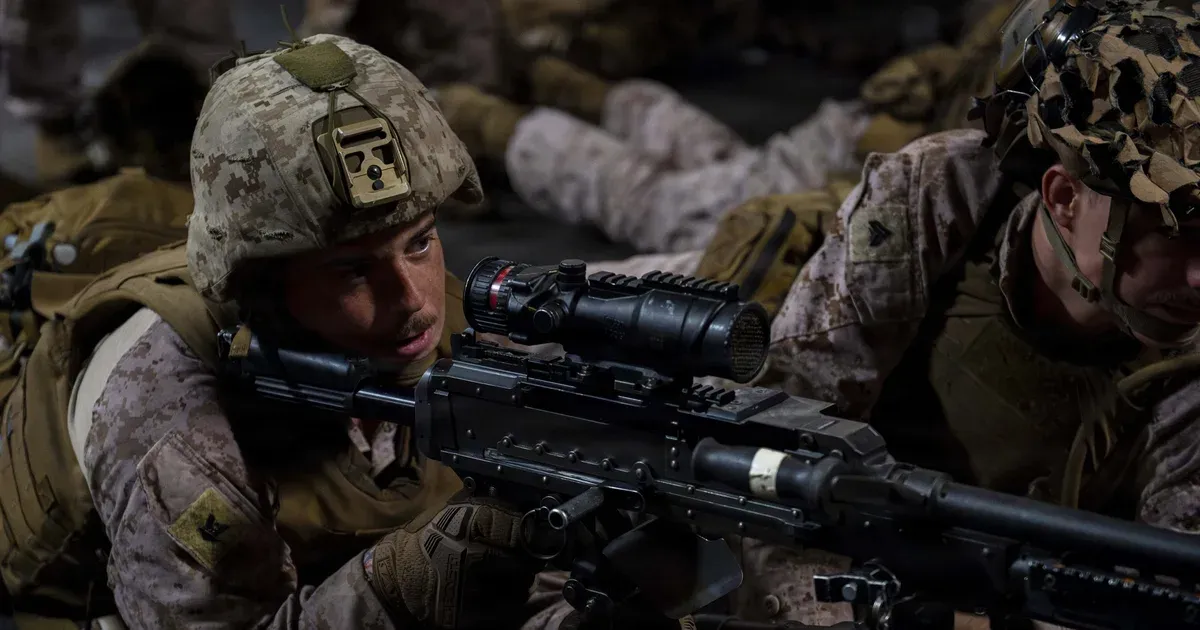
Iranian missile and drone attacks on US forces in Jordan killed two service members, left another missing and brought American bases in the kingdom into the center of the war.
US officials said the troops had faced four Iranian attacks in five days. The casualties were the first American deaths directly attributed to Iranian fire since the opening phase of the conflict. US Central Command said on July 18, 2026, that the fatal attack occurred Friday while American and partner forces were defending against incoming weapons.
Washington answered with another round of airstrikes against Iran. The response connected the protection of troops in Jordan to a broader campaign around the Strait of Hormuz, where naval access, commercial shipping and attacks on regional infrastructure have become parts of the same military contest.
A Missing Service Member Complicates the Jordan Response
CENTCOM did not identify the two dead service members because their families were still being notified. The command said one service member remained missing. Four others were medically evacuated to hospitals in Jordan and later discharged, according to the military account carried by France 24.
The latest deaths raised the reported US military toll in the conflict to 16 service members. Earlier losses included six soldiers killed at a civilian port in Kuwait on February 28, a seventh who died after an attack on Prince Sultan Air Base in Saudi Arabia, six personnel killed in a KC-135 crash in Iraq and a Navy pilot who died after a helicopter emergency in the Arabian Sea. CENTCOM previously said the July helicopter incident showed no sign of hostile action.
The new attack differs because the military attributed the deaths directly to Iranian missiles and drones aimed at forces in Jordan. The New York Times reported that US officials counted four attacks there over five days. Jordanian air defenses also intercepted Iranian missiles during the broader exchange, placing the kingdom in the position of defending its airspace while hosting troops involved in American regional operations.
CENTCOM Links Retaliation to Hormuz Shipping
The military announced additional strikes after confirming the casualties. Its statement named the Iranian forces involved and paired punishment for the Jordan attack with the campaign to protect commercial movement through the strait:
“The strikes are designed to further degrade Iran’s ability to threaten commercial shipping in the Strait of Hormuz and swiftly punish Islamic Revolutionary Guard Corps forces who launched attacks against American service members in Jordan last night.”
The United States had already restored a naval blockade and carried out consecutive nights of attacks near Iran's coast. Fortune reported that the campaign had expanded to railways and other infrastructure that could support weapons movement. The latest retaliation therefore adds force protection to an operation that was already trying to reduce Iran's control over shipping routes.
Traffic data cited by Fortune showed how limited that effort remained. No ships used a US-backed route through the strait on Friday, while seven vessels traveled through the corridor permitted by Iran. Commercial operators must weigh the danger of attack, insurance restrictions and the possibility that a military escort route will close without notice.
The attacks also overlap with the previous round of strikes on water and power systems in Iran and Kuwait. Damage to ports, roads, electricity and desalination facilities increases the number of governments managing consequences from a conflict they did not start, while air-defense interceptions create debris and airspace risks beyond the intended targets.
The Interim Memorandum No Longer Restrains Either Side
Iranian Supreme Leader Mojtaba Khamenei accused President Donald Trump of invalidating the Islamabad memorandum signed about a month earlier. Deputy Foreign Minister Kazem Gharibabadi said Iran was no longer carrying out its commitments because Washington had violated the arrangement. France 24 reported no renewed mediation after that announcement.
The United States argues that Iran breached the understanding by restricting movement through the strait and attacking vessels outside a Tehran-approved corridor. Iran points to renewed American strikes as proof that the document no longer restrains Washington. Those positions leave little shared procedure for verifying a breach or arranging a pause after an attack.
American deaths add domestic pressure to that diplomatic collapse. Trump had campaigned against a prolonged Middle East war, but reporting cited by Fortune said he had previously treated the killing of US troops as a threshold for renewed large-scale action. The White House responded to questions about the latest deaths by circulating CENTCOM's statement rather than announcing a separate policy decision.
Protecting Regional Bases Now Limits Washington's Choices
The Jordan attack forces the administration to defend regional bases and shipping lanes at the same time. Strikes meant to protect one mission can expose the other: a larger campaign against Iran can generate more missile and drone attacks on US personnel, while a restrained response can leave bases vulnerable and weaken assurances given to host governments.
Washington's retaliation will be judged by whether Iran's ability to reach American personnel in Jordan declines without producing another cycle of attacks on bases, ships and civilian infrastructure. Fewer attacks would indicate that added defenses and strikes had reduced the threat; another cycle would show that escalation had exposed more positions. Until the attacks subside, every US installation in the region remains both a military asset and a potential point of escalation.