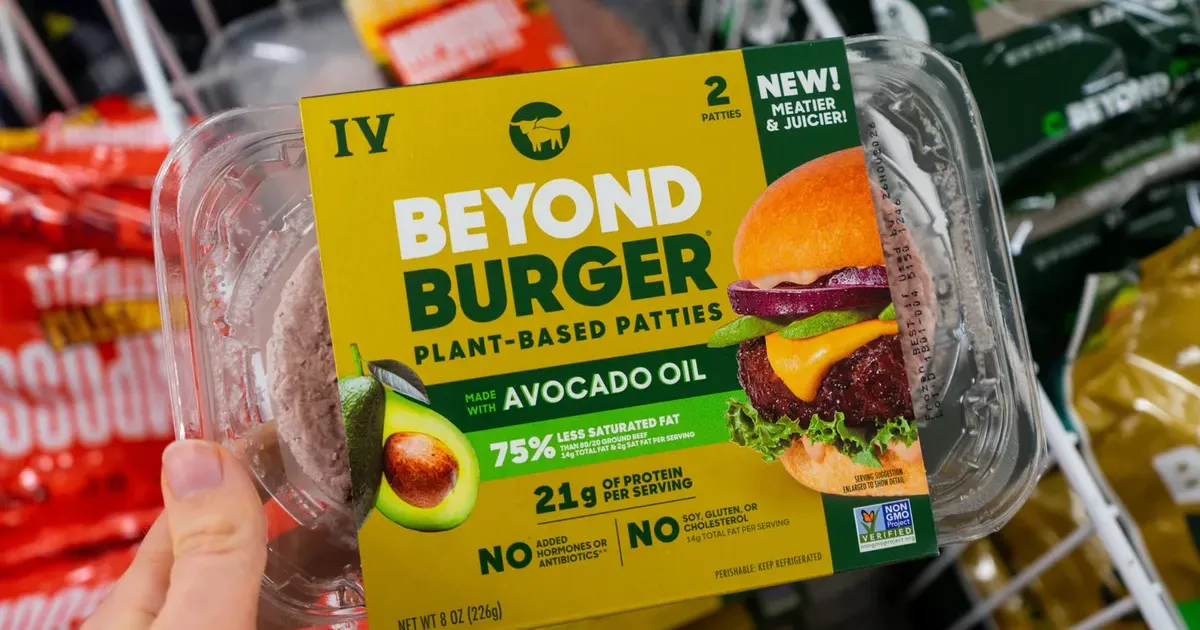
Beyond Meat executives faced mounting pressure on March 30, 2026, to address the disappearance of their plant-based products from major retail shelves across the United States. Shoppers in metropolitan hubs report empty slots where the brand's signature patties once sat. Grocery store managers are quietly rotating stock to make room for higher-margin animal proteins or cheaper private-label alternatives. Demand for the product, once seen as a revolutionary staple, has cooled as household budgets tighten under persistent inflationary pressure.
Financial analysts observe that the company's struggle is not merely a matter of taste but a fundamental conflict with consumer economics. Early adopters who once paid a premium for environmental reasons are now scrutinizing their receipts more closely. Many households find that the luxury of plant-based substitutes no longer fits within a monthly food budget that has seen double-digit increases across all categories. Sales volumes continue to slide, leaving inventory to sit until it reaches its expiration date.
Retailers Cut Back on Underperforming Plant Proteins
Retail chains are re-evaluating the square footage dedicated to refrigerated plant-based sections. Data from $1.2 billion in recent retail sector assessments suggest that turnover for premium meat substitutes has slowed sharply. Store owners prioritize velocity, meaning items that sit for more than a few days are quickly replaced. Beyond Meat products often carry shorter shelf lives than their highly processed competitors, adding waste risks for the grocer.
Kroger and other national chains have started consolidating their plant-based offerings. Instead of dedicated aisles, many stores now tuck meat alternatives into small corners of the traditional meat department. This change reflects a lack of confidence in the category as a standalone driver of foot traffic. Independent grocers in the Midwest have reported removing the brand entirely to focus on local poultry and beef options that offer more reliable margins.
Price Disparity Hinders Beyond Meat Mass Adoption
Cost stays the primary barrier preventing the brand from achieving mass-market dominance. While Beyond Meat initially promised to reach price parity with beef by 2024, the reality in early 2026 reflects a widening gap. Ground beef prices have fluctuated, yet the production of pea protein isolates requires energy-intensive processing that keeps retail prices high. Consumers find it difficult to justify paying twice the price for a plant-based burger when their purchasing power is diminished.
"We must reach price parity with animal protein to truly scale," Ethan Brown, CEO of Beyond Meat, stated during a previous investor briefing.
Achieving this goal requires huge infrastructure investments that the company has struggled to fund. Private-label competitors, such as those launched by Kroger, can undercut the brand by leveraging existing supply chains. These store-brand versions often sell for 30 percent less than the name-brand alternative. Brand loyalty in the grocery sector is notoriously thin when a price difference of several dollars exists between two similar items.
Production Costs Challenge Beyond Meat Profitability
Manufacturing hurdles continue to plague the balance sheet of the California-based company. Processing yellow peas into a substance that mimics the texture of bovine muscle is an expensive, multi-stage effort. Volatility in the global pea market has led to unpredictable raw material costs. Energy prices, which are a major component of the extrusion process, have remained elevated since the early 2020s.
Beyond Meat utilizes a complex network of co-manufacturers to produce its goods. Outsourcing production adds layers of cost that integrated meat packers simply do not face. Giant meat processors like JBS or Tyson Foods can process millions of pounds of protein through facilities they own outright. Smaller, specialized firms lack this economy of scale, forcing them to pass higher costs on to the consumer or absorb losses that alienate shareholders.
Consumer Skepticism Impacts Beyond Meat Shelf Space
Perception of the product has shifted as the "clean label" movement gains momentum among health-conscious buyers. Ingredients such as methylcellulose and refined oils are now under scrutiny by the same demographic that originally fueled the plant-based boom. Critics argue that these products are ultra-processed foods that offer fewer health benefits than whole plant sources like lentils or beans. This shift in sentiment has divided the market into those who want meat and those who want whole vegetables.
Investment in the sector has dried up accordingly. NASDAQ: BYND has seen its valuation drop from its 2019 highs as the market realizes that replacing animal protein is a decades-long project, not a quick technological fix. Retailers are sensitive to this waning investor enthusiasm. They see the lack of marketing spend as a sign that the brand cannot support the heavy promotion needed to maintain its position on the shelf.
The Elite Tribune Strategic Analysis
Market speculators once treated pea protein as the new crude oil, but they ignored the brutal reality of the American dinner table. Beyond Meat is failing not because the world has rejected environmentalism, but because the company's business model is built on an unsustainable fantasy of price-blind consumption. The assumption that a processed substitute could permanently command a 100 percent markup over the real thing was an arrogance of the Silicon Valley mindset applied to a commodity industry.
Wealthy coastal elites can afford to ignore a five-dollar price gap, but the average family in Ohio or Manchester cannot. When a brand becomes a luxury item in a necessity category, it enters a death spiral. Retailers are not charities; they are real estate agents for shelves. If a square inch of freezer space generates three times more profit with a bag of frozen chicken wings than with a box of plant-based patties, the patties will vanish every single time.
The era of the VC-funded burger is over. Survivors in this space will be those who can strip away the high-tech branding and compete on the cold, hard metrics of price per gram of protein. Beyond Meat must either find a way to slash its cost structure by half or prepare to become a niche specialty item found only in high-end boutiques. The grocery store shelf is a ruthless judge. It has found the current pricing model guilty of irrelevance.