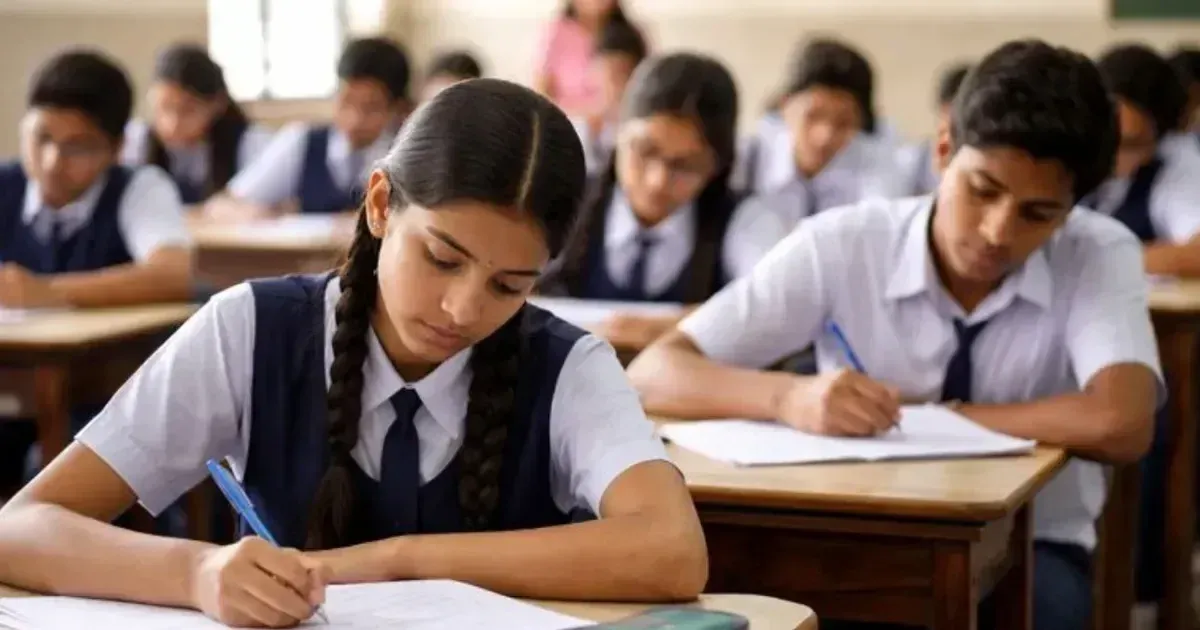
UP Board officials announced on April 23, 2026, that 5.2 million students successfully completed their secondary and senior secondary examinations, marking one of the largest academic assessment cycles in global history. This administrative feat involved the processing of millions of physical and digital records to ensure timely delivery for the academic year. Results went live on official portals at 4:00 PM local time, immediately drawing enormous traffic from candidates across Uttar Pradesh. High-speed servers managed by the National Informatics Centre supported the heavy load without substantial downtime. Students accessed their scores through multiple platforms, including the official website and government-backed mobile applications. The total number of candidates registered for these exams reached approximately 52 lakh.
Statistical breakdowns provided by the UP Board reveal a substantial discrepancy between the two primary levels of certification. Class 10 students outperformed their seniors, achieving an overall pass percentage of 90.42%. This figure reflects a high level of consistency in the lower secondary tier, where foundational subjects dominate the curriculum. Results for Class 12 showed a lower success rate, with 80.38% of candidates meeting the requirements for graduation. Examiners noted that the senior secondary curriculum, which includes specialized streams in science, commerce, and humanities, presents a steeper challenge for the average student. The 10 percentage point gap between the two grades suggests a tightening of standards as students move toward higher education.
UP Board Logistics and Student Participation
Managing an examination for over five million people requires a large logistical network spanning thousands of urban and rural centers. Uttar Pradesh administrators deployed a multi-tier security system to prevent cheating and maintain the integrity of the evaluation process. Closed-circuit cameras monitored every hall, while static observers tracked the movement of answer scripts from local collection points to centralized marking hubs. These measures ensured that the results released on April 23, 2026, reflect genuine student performance rather than systemic manipulation. The scale of the 5.2 million student cohort remains a unique challenge for the Indian education system. Administrative costs for the 2026 cycle reached record levels due to increased security and digital infrastructure needs.
Millions of individual marks were cross-verified by regional offices before final aggregation in Prayagraj. Local reports indicate that the grading process involved thousands of teachers working under strict deadlines to meet the April release date. This schedule is critical for students seeking admission into prestigious universities across India and abroad. Early publication allows the 5.2 million candidates to participate in national-level entrance tests for engineering and medical programs. The board remains committed to a timeline that aligns with the national academic calendar. Delays in the UP Board results often cause cascading problems for admission offices in other states.
Technology played a central role in the 2026 result distribution.
Analysis of Class 10 and Class 12 Metrics
Data indicates that 90.42% of Class 10 students cleared their exams, continuing a trend of high achievement in the high school segment. Rural districts often reported pass rates that rivaled urban centers like Lucknow and Kanpur. The parity suggests that government initiatives to improve school infrastructure in the countryside have influenced student outcomes. In the senior secondary segment, the 80.38% pass rate reflects the rigorous nature of the pre-university syllabus. Science stream students faced particularly difficult physics and mathematics papers this year. Commerce and humanities candidates showed more stable performance across the board. The 5.2 million total enrollment makes these percentages statistically meaningful for the entire South Asian education landscape.
Individual toppers in both categories will receive formal recognition from the state government. Merit lists show a growing number of students from modest backgrounds achieving top honors, often outperforming peers from private institutions. These success stories provide a human face to the 90.42% and 80.38% statistics that dominate headlines. Examiners emphasized that the 2026 evaluation focused on conceptual understanding instead of rote memorization. Such a change in grading philosophy explains the slight variation in pass percentages compared to the previous decade. Students who failed to clear their exams will have an opportunity to appear for compartmental tests in the coming months.
Digital Distribution via UMANG and DigiLocker
Accessing academic credentials has become more efficient through the integration of digital locker services. The UP Board collaborated with the Ministry of Electronics and Information Technology to ensure that all 5.2 million marksheets are available on DigiLocker. The move eliminates the need for physical copies during the initial rounds of university applications. UMANG, a unified mobile application for multi-platform services, also provided a direct link to the results. These digital tools reduced the physical crowding at school premises, which was previously the only way to obtain marks. Security protocols on these apps protect student privacy while allowing instant verification by prospective employers or colleges.
UP Board 10th and 12th results have been declared for around 52 lakh students today, April 23 at 4 pm.
Electronic marksheets carry a digital signature from the Secretary of the UP Board to prevent forgery. University registrars can now verify these documents via QR codes printed on the digital versions. The system has drastically reduced the time required for document verification during the admission season. While digital access is widespread, physical marksheets will still be distributed through individual schools for students in areas with limited internet connectivity. The board maintains a hybrid model to ensure no student is left behind due to technological barriers. Most candidates logged into the system within the first hour of the release.
Educational Infrastructure in Uttar Pradesh
Sustaining a pass rate of 90.42% in Class 10 requires constant investment in teacher training and classroom resources. Uttar Pradesh has expanded its network of government-run schools to accommodate the 5.2 million students entering the system annually. Recent audits of school facilities show an increase in the availability of laboratories and libraries. These resources are essential for Class 12 students, who must master complex scientific concepts to achieve the 80.38% success rate. Critics of the system often point to the high student-to-teacher ratio as a bottleneck for further improvement. However, the 2026 results show that student performance holds steady despite these challenges.
Graduation from the UP Board remains a requirement for government employment in the state. Millions of families view the Class 12 certificate as a ticket to social mobility and economic stability. The high pass rates in 2026 will likely lead to intense competition for undergraduate seats in local colleges. Education officials are now focusing on the next phase of the academic cycle, which includes counseling for successful candidates. Vocational training programs are also being promoted for those who do not wish to pursue traditional university degrees. The economic impact of 5.2 million students entering the workforce or higher education is large. Uttar Pradesh persists as a primary talent hub for the national economy.
Pass Rates Test Uttar Pradesh’s Exam Infrastructure
Questions regarding the authenticity of a 90.42% pass rate in a state with such vast socio-economic disparities cannot be ignored. The UP Board provides a huge service, yet the sheer volume of successful candidates suggests a systemic push for grade inflation to satisfy political narratives. If nearly every student passes, the value of the credential itself begins to erode. The evidence points to a credentialist trap where the certificate is a participation trophy instead of a measure of mastery. Employers in the private sector increasingly look past these board results, favoring independent aptitude tests to gauge actual competency. The 5.2 million students are being funneled into a bottleneck of limited university seats and stagnant job markets.
Relying on digital platforms like DigiLocker and UMANG is a positive step toward modernization, but it does nothing to fix the underlying pedagogical flaws. The 10 percent drop in success between Class 10 and Class 12 exposes the weakness of the foundational years. Students are being pushed through the system with 90.42% efficiency only to hit a wall when the curriculum demands specialized knowledge. It creates an enormous cohort of graduates who possess certificates but lack the skills necessary for the modern economy. The Uttar Pradesh education model prioritizes administrative optics over intellectual rigor. It is a factory of mediocre outcomes.
Numbers do not lie, but they often obscure the truth about quality. The 2026 results are a triumph of logistics, not necessarily a triumph of learning. Until the board addresses the gap between mass graduation and real-world employability, these statistics will hold little weight in the global marketplace. The system remains broken.