Lebanese Ambassador Nada Hamadeh Moawad and Israeli envoy Yechiel Leiter convened in Washington on April 23, 2026, to negotiate the terms of a fragile ceasefire extension. Direct engagement between these two diplomats follows a period of intense cross-border violence and represents the second formal sit-down in US territory this month. Previous attempts to stabilize the border relied on indirect channels or French mediation, but the current administration in Washington has successfully moved both parties into the same room. Security officials from the Pentagon and the State Department are monitoring the discussions to prevent a collapse of the existing truce. Lebanon insists on a return to internationally recognized borders before any permanent agreement takes hold.
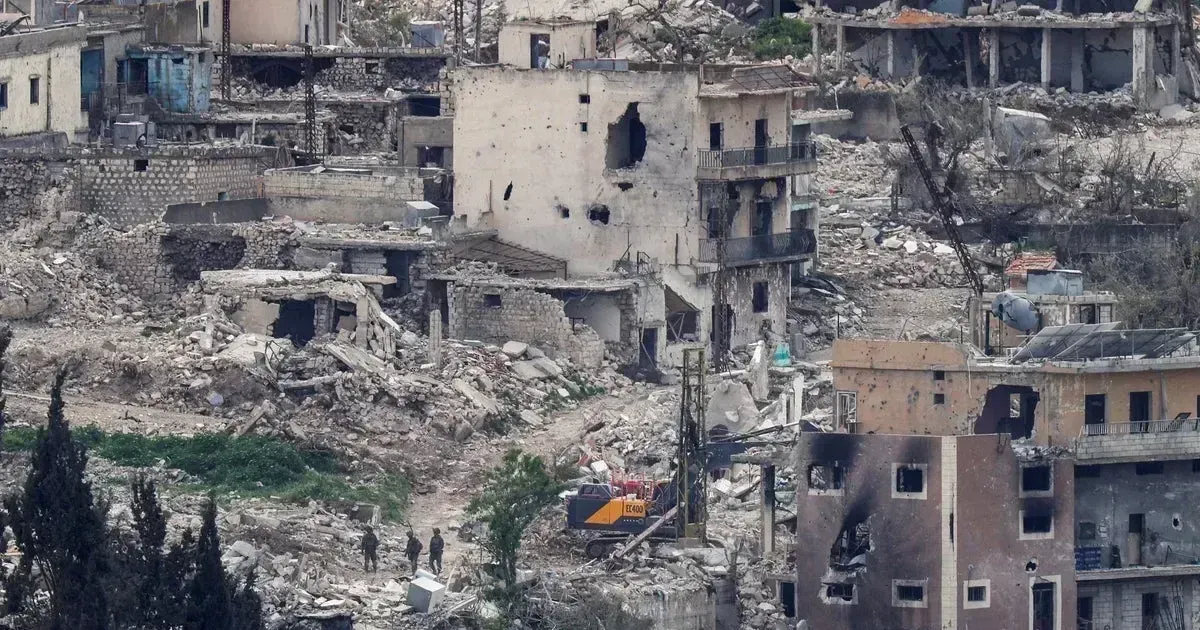
Prime Minister Nawaf Salam stated in a recent briefing that his government views the current diplomatic window as a chance to restore sovereignty over southern territories. Israeli forces currently occupy a strip of land described by military planners as a necessary security buffer against Hezbollah incursions. Lebanese officials argue that this occupation violates the original terms of the cessation of hostilities. Security in the region depends on whether the two sides can agree on a phased withdrawal of Israeli Defense Forces (IDF) personnel. Recent reports indicate that the buffer zone covers approximately 800 square miles of Lebanese territory.
Washington Diplomacy and the Buffer Zone Crisis
Territorial integrity stands at the center of the Lebanese platform. Ambassador Moawad entered the meeting room with a mandate to secure a timeline for the complete exit of foreign troops. Israel, however, maintains that its presence in the buffer zone prevents the re-establishment of rocket launch sites near its northern towns. Leiter brings a mandate focused exclusively on border security. Diplomatic observers note that the Israeli delegation is hesitant to trade physical security for paper promises. The stalemate over these specific coordinates has delayed the formal signing of an extension for several days.
"Any deal requires a full withdrawal of Israeli forces after Israel seized a buffer zone in Lebanon," Prime Minister Nawaf Salam said during a press conference addressing the ongoing negotiations.
Withdrawal remains the primary hurdle for the Trump administration team managing the current crisis. Lebanese negotiators are leveraging the American desire for regional stability to pressure the Israeli cabinet. Beirut calculates that the White House is eager to claim a foreign policy success before the next legislative session. Success in Washington would allow Lebanon to begin the $12 billion reconstruction effort required in its southern governorates. Financial institutions have withheld credit lines until a permanent security arrangement is codified.
Leiter has not publicly commented on the specific demands regarding the buffer zone coordinates. He has instead focused on the technical aspects of electronic surveillance and the role of international monitors. Israel prefers a multi-layered security regime that includes drone patrols and motion-sensing technology along the blue line. Lebanon views such technology as an infringement on its national airspace. These technical disagreements often overshadow the broader humanitarian needs of the displaced populations on both sides of the border.
Lebanese Strategic Reliance on American Mediation
Beirut views the American executive branch as the only entity capable of restraining Israeli military expansion. Prime Minister Salam has centered his foreign policy on engaging with Washington directly. Lebanese diplomats believe the White House possesses the financial and military levers necessary to shift the Israeli position on the buffer zone. Reliance on this American leverage has become the foundation of Lebanon's negotiation strategy. This approach creates a high-stakes environment where any shift in US domestic politics can derail months of delicate diplomacy. National interests in Beirut are now closely linked to the decisions made in the Oval Office. Internal political pressure from Naim Qassem has complicated the Lebanese delegation's position during the Washington negotiations.
Ambassador Moawad has reportedly provided the US State Department with detailed maps of civilian infrastructure destroyed during the initial incursion. These documents aim to prove that the buffer zone is more than a military necessity; it is a zone of total displacement. Evidence of civilian casualties and property damage serves to strengthen the Lebanese claim for a full withdrawal. Israeli counter-arguments emphasize the tunnels and infrastructure found beneath residential areas in southern Lebanon. Both delegations are using the Washington summit to win the battle of public perception in the West.
International observers from the United Nations Security Council have expressed cautious optimism regarding the direct nature of these talks. Direct communication reduces the risk of misinterpretation that often plagues third-party mediation. Despite the direct channel, the fundamental objectives of each nation remain diametrically opposed. Israel seeks a permanent end to cross-border threats while Lebanon seeks the restoration of its pre-war geography. The meeting scheduled for the afternoon of April 23, 2026, is expected to focus on the specific language of the withdrawal clause.
Israeli Military Objectives and Security Guarantees
Hardline elements within the Israeli cabinet argue against any withdrawal without a verifiable disarmament of non-state actors in Lebanon. Leiter is under immense pressure to ensure that the buffer zone does not become a vacuum once the IDF retreats. Military intelligence reports suggest that militant groups are already attempting to move equipment back into the contested areas. Such reports complicate the task of the diplomats in Washington. Trust between the two nations is virtually non-existent, making the role of American guarantees even more essential. Israel demands a mechanism that allows for immediate military re-entry if the ceasefire is breached.
Lebanon rejects any clause that would permit Israeli forces to cross the border after the withdrawal is complete. Salam has described such demands as a violation of international law. The Lebanese military has offered to deploy more units to the south to fill the security gap, but questions about their equipment and funding persist. Without a substantial infusion of foreign aid, the Lebanese Armed Forces may struggle to maintain order. Washington has hinted at a multi-million dollar security assistance package if a deal is reached. This financial carrot is intended to stabilize the border through legitimate state actors.
Border disputes often turn on the smallest geographic details. Map experts from both sides are currently arguing over specific ridges and valleys that offer tactical advantages. Control of high ground near the Litani River is a particular point of contention. Each side understands that these negotiations will define the security posture of the Levant for the next decade. Failure to reach an agreement today would likely lead to a resumption of artillery exchanges by nightfall. The stakes in the conference room are reflected in the heightened alert status of troops on the ground.
Buffer Zone Dispute Threatens the Ceasefire Extension
Reliance on American political cycles to resolve Levantine border disputes reflects a deep failure of regional institutional architecture. Lebanon is effectively gambling its territorial integrity on the hope that Washington can bully the Israeli security establishment into a retreat. This strategy ignores the domestic political reality in Israel, where any perceived weakness in the north is met with immediate electoral punishment. Prime Minister Salam is playing a dangerous hand by treating the White House as a guarantor of Lebanese sovereignty when American priorities can pivot with a single news cycle. Beirut must realize that US leverage is a finite resource, not a permanent shield.
Is a buffer zone even a viable security solution in the age of precision-guided munitions and long-range drones? The Israeli insistence on physical ground control seems like a twentieth-century solution to a twenty-first-century threat. By contrast, the Lebanese demand for a full withdrawal without a realistic plan to prevent militant re-occupation is equally delusional. Both parties are performing for their respective domestic audiences while the actual security of the border remains secondary to political survival. Washington is not a neutral arbiter but a weary manager trying to prevent a wider fire from consuming its regional interests.
The talks in Washington are a temporary bandage on a deep, festering wound. Expect the ceasefire to hold only as long as it takes for one side to find a tactical advantage in breaking it.