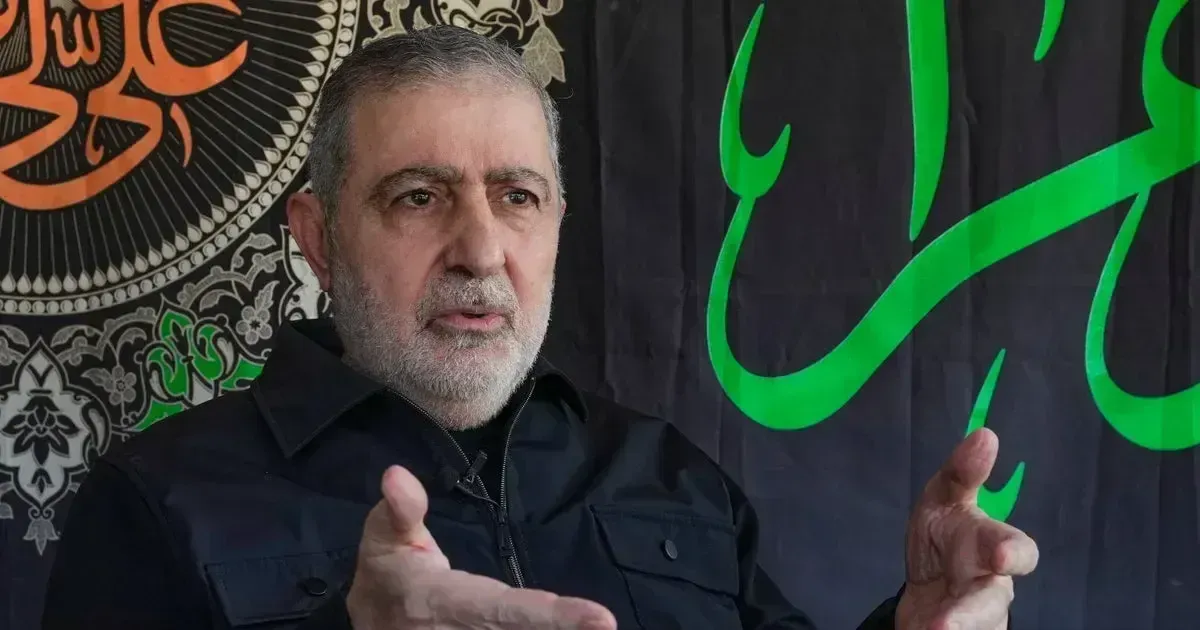
Naim Qassem, the secretary-general of Hezbollah, demanded that the Lebanese government immediately cease participation in upcoming diplomatic negotiations with Israel scheduled for Washington. His public address signaled a sharp rejection of international efforts to resolve the enduring border disputes between the two nations. Beirut officials received a direct warning that continuing these discussions would undermine the security of the country and surrender essential national leverage. Qassem characterized the diplomatic initiative as a coordinated attempt to neutralize the military capabilities of his organization through political coercion. Qassem's warning landed on April 14, 2026. Hezbollah officials argue that the United States is using the promise of border stability to isolate the group from the Lebanese state infrastructure.
Washington became the focal point of this controversy after the United States Department of State announced a new round of indirect mediation efforts. These sessions, intended to address territorial claims along the Blue Line, have faced intense scrutiny from political factions within Beirut. Qassem maintains that the timing and structure of the summit reveal ulterior motives beyond simple boundary demarcation. Diplomacy, in his view, is being weaponized to achieve objectives that military action failed to secure in previous conflicts. Skepticism toward Western mediation persists within the Hezbollah leadership, which views the White House as an inherently biased actor favoring Israel.
Intelligence gathered from recent briefings suggests that the Lebanese delegation had intended to discuss several sensitive land points. Qassem's intervention effectively freezes the political consensus required for the government to move forward with such high-stakes engagement. He specifically targeted the perception that Lebanon is acting under duress due to its internal instabilities. Disarmament, he asserted, is not a negotiable item on any international agenda. This hardline stance places Prime Minister Najib Mikati in an unstable position as he attempts to balance regional stability with domestic power dynamics.
Washington Diplomatic Pressure and Hezbollah Weapons
Planned sessions in the American capital are designed to force Hezbollah into a state of strategic vulnerability. Qassem made it clear that the invitation to Washington carries conditions that threaten the core identity of the Lebanese resistance. Lebanon, currently struggling with a leadership vacuum, finds itself pressured by external actors to make concessions on its defense architecture. Behind the rhetoric is a deep fear that the state will trade Hezbollah's military presence for financial or political concessions from the West. Qassem noted that the proposal centers on a security arrangement that would restrict Hezbollah's movement in southern territories. Critics of the group, however, suggest that refusing to negotiate only prolongs the risk of open escalation with Israeli forces.
“The planned talks in Washington, DC, are a ploy to pressure Hezbollah into laying down its weapons, Naim Qassem said during his televised address to the nation.”
Israel's government has stayed largely silent on the specific demands issued by Qassem, though military officials in Tel Aviv have previously stated that diplomatic solutions are preferred over northern border skirmishes. Washington mediators have countered the ploy narrative by suggesting that the talks focus purely on territorial integrity. Hezbollah leadership views these claims with suspicion, citing historical precedents where diplomatic accords preceded increased monitoring of their personnel. Every attempt to bridge the gap between Beirut and Jerusalem seems to collide with the reality of Hezbollah's autonomous military status. Negotiations cannot proceed without the tacit approval of the group that controls much of the southern border region.
Beirut Political Divide on Border Negotiations
Political factions in Beirut remain deeply divided over how to respond to the Hezbollah directive. Traditional allies of the group within the parliament have echoed Qassem's concerns, arguing that the United States is not an honest broker. By contrast, opposition parties have criticized the Hezbollah leader for hijacking the foreign policy of the state. These detractors argue that Lebanon cannot afford to miss an opportunity for stabilization given the crumbling state of its national infrastructure. State authorities find themselves caught between the requirements of international diplomacy and the threat of domestic paralysis. Tensions in the cabinet have surfaced as ministers weigh the risks of defying the Hezbollah mandate. Hezbollah leadership continues to aggressively dismantle any proposed U.S. peace plan that involves restricting its movement along the border.
Internal documents from the Lebanese Foreign Ministry suggest that the delegation was prepared to present a detailed map of the disputed Shebaa Farms area. Qassem's decree has effectively sidelined these technical preparations in favor of a broader ideological confrontation. Sovereignty, in the eyes of Hezbollah, is inseparable from the right to maintain a standing militia independent of the state. Proponents of the Washington talks argue that formalizing the border is the only way to protect Lebanon from future incursions. Projections show that a failure to reach a land agreement will likely result in continued low-level conflict along the frontier. Security in the Mediterranean basin hangs in the balance as the diplomatic window begins to close.
Government ministers have held several emergency meetings to discuss the implications of withdrawing from the U.S.-led process. Mikati has not yet issued a formal cancellation of the trip, but the political atmosphere in Beirut has turned clearly colder. Hezbollah's influence over the Lebanese state apparatus ensures that any delegation sent without their blessing would be viewed as illegitimate by a meaningful portion of the population. Stability in the capital depends on maintaining a delicate peace between the various sectarian blocs. No single entity possesses the power to override the Hezbollah veto without risking a total collapse of the current governing coalition.
Regional Implications of Hezbollah Withdrawal Demands
Regional powers are monitoring the situation closely as the potential for a diplomatic breakdown grows. Any withdrawal by Lebanon from the Washington talks would be interpreted as a victory for the hardline elements in the Iranian-led axis. This development would likely trigger a reassessment of security strategies in Tel Aviv and Washington. Analysts observe that the absence of a diplomatic track increases the probability of a miscalculation on the border. Israel has frequently signaled that it will not tolerate the continued buildup of precision-guided munitions near its northern communities. Hezbollah maintains that its arsenal is purely defensive and is a deterrent against Israeli aggression.
Maritime border successes from several years ago are often cited as a model for these land negotiations, but the current climate is far more hostile. The land border involves inhabited areas and strategic heights that possess greater emotional and military significance than offshore gas fields. Qassem's rhetoric emphasizes that land is not something to be traded for economic relief. His speech highlighted a commitment to a long-term struggle that goes beyond immediate financial needs. International observers fear that a rejection of the Washington initiative will leave no viable path for peaceful resolution. Military readiness on both sides of the Blue Line has been elevated in response to the political deadlock.
Beirut's ability to act as a sovereign negotiator is increasingly called into question by the international community. When a non-state actor dictates the terms of engagement for the national government, the concept of state authority becomes a polite fiction. Diplomats from the European Union have expressed private frustration with the inability of the Lebanese state to commit to a consistent policy. If the Washington talks collapse before they begin, the focus will shift back to the containment of potential violence. Hezbollah appears prepared for this outcome, prioritizing its military autonomy over international recognition. The group has historically shown a willingness to endure sanctions and isolation to preserve its core mission.
Lebanon Talks Under Militia Pressure
The demand by Naim Qassem for Lebanon to abandon the Washington talks extends beyond diplomatic protest to become a declaration of the Lebanese state's irrelevance. By dictating foreign policy through televised ultimatums, Hezbollah has signaled to the world that Prime Minister Najib Mikati is little more than a placeholder for a ghost government. The West continues to labor under the delusion that providing aid to the Lebanese Armed Forces will eventually create a counterweight to the resistance. The strategy has failed. Every dollar sent to Beirut effectively subsidizes a state that is forced to function as a shield for Hezbollah's regional ambitions.