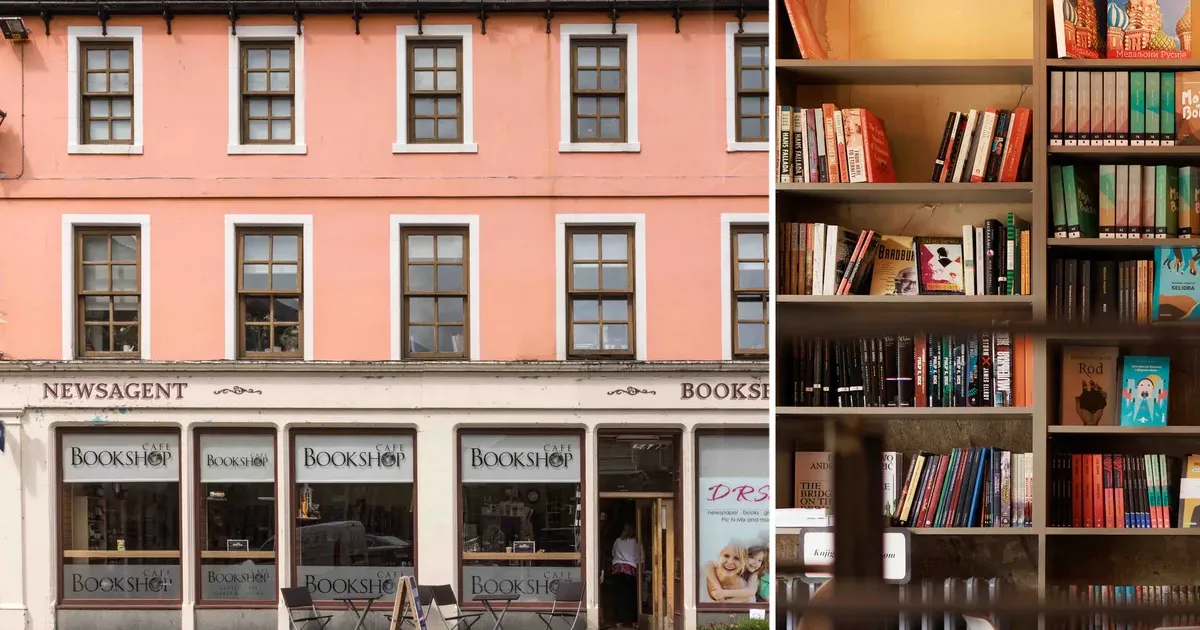
Book towns have turned literary travel into a rural economic strategy. Hay-on-Wye in Wales remains the model: a small border town that used secondhand books, independent shops and later the Hay Festival to build an identity much larger than its population. The appeal is simple but durable. Readers travel for the pleasure of browsing in a place where books are not decoration, but the organizing principle of the town.
That idea has been copied and adapted from the Catskills to Scotland. Hobart, New York, markets itself as the Book Village of the Catskills, with bookstores clustered along a small main street. Wigtown is Scotland's National Book Town, using festivals, year-round programming and The Open Book stay to turn literary identity into participation as well as shopping.
Hay-on-Wye Made Density The Attraction
Hay-on-Wye's story is tied to Richard Booth, who helped turn a quiet market town into a destination by filling shops with secondhand books and selling the idea of a town built around reading. That density is the economic lesson. One bookshop may be fragile. A cluster of bookshops becomes a reason to travel.
The model works because visitors do not come only to buy one title. They come to wander between shelves, compare shops, pause in cafes, stay overnight, walk the surrounding countryside and return for events. Restaurants, guesthouses, pubs and local makers benefit from the same footfall. The town does not have to compete with online retail on price when it offers discovery and atmosphere that a checkout page cannot reproduce.
Hobart Shows The Main-Street Version
Hobart's strength is compactness. The Catskills village is small enough that the book-town experience feels walkable and concentrated. A visitor can move between stores, browse slowly and build a day around the search rather than treating the town as a quick stop between larger destinations.
The model is important for rural places with empty storefronts or thin visitor traffic. Books give the street a shared identity. They also create a slower kind of tourism, where people linger because the product rewards time. A shelf has to be examined. A used-book room has to be searched. The value comes from not knowing what will be found.
Wigtown Adds Participation
Wigtown extends the model by making the book-town fantasy something visitors can do. The Open Book, a volunteer-run bookshop holiday, lets guests stay in town and help run a shop for a short period. That is more than lodging with a theme. It turns the visitor into a temporary bookseller and gives the trip a story.
The festival and year-round programming also protect the town from relying on one peak weekend. A book town needs recurring reasons to visit: author events, workshops, markets, walking routes, school programs and shops that remain active outside festival season. Otherwise the identity becomes seasonal branding rather than a living economy.
The Shops Have to Stay Real
The most durable book towns understand that books cannot become props. Bibliophiles will tolerate dust, uneven shelving, cramped aisles and odd discoveries. They are less forgiving when a place becomes a photo backdrop with a few curated spines and too little substance. Authentic disorder is part of the asset.
Book towns survive by selling anti-speed. They offer the human recommendation, the misfiled treasure and the pleasure of unplanned browsing. That can rescue rural storefronts, but only if the commerce remains rooted in actual books rather than book-themed branding. Polish the model too much and it starts to lose the readers who made it work.