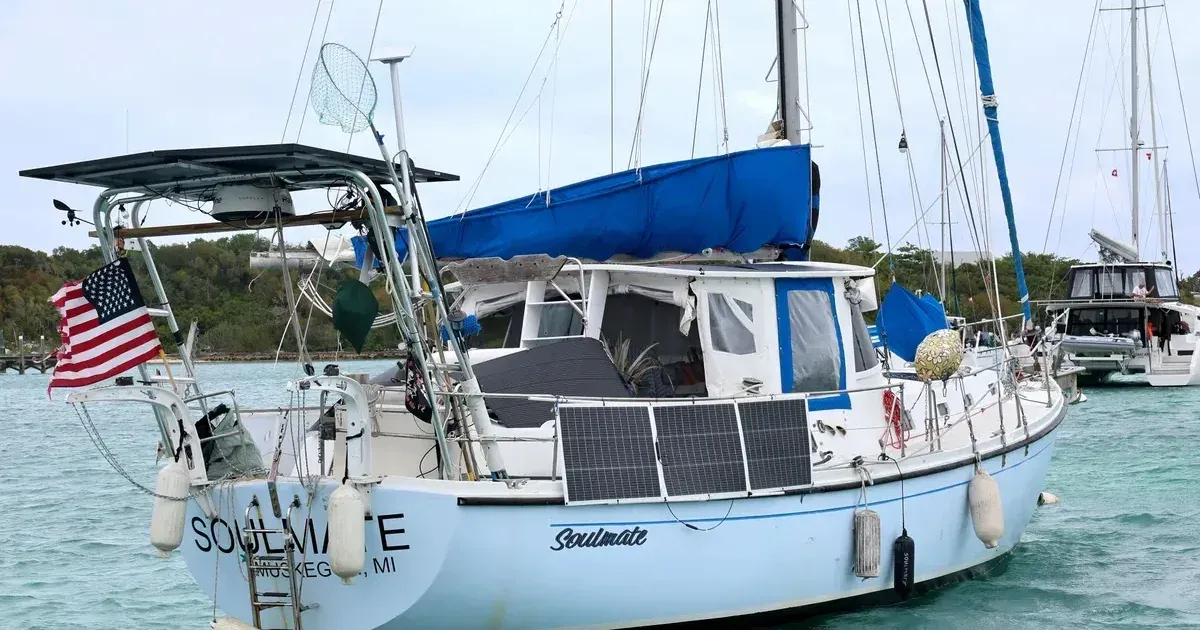
The Bahamas disappearance case has become a test of credibility and search coordination. The decision by Brian Hooker to leave the country intensified public scrutiny. Lynette Hooker vanished from a vessel in the turquoise waters surrounding the Bahamas on April 4, 2026, triggering an international search effort that has entered its second week without discovery. Local authorities received the initial report from her husband, who claimed she fell overboard from a small dinghy during a late-night transit. Search teams have failed to locate any physical evidence of her whereabouts since the initial distress call. Coastal patrols continue to sweep the region for signs of the missing American citizen.
Brian Hooker, the spouse of the missing woman, reported the incident to the Royal Bahamas Police Force after what he described as an accidental fall. He told investigators that the couple had been sailing through the island chain when the mishap occurred. Bahamian officials have conducted multiple interviews with the husband to reconstruct the timeline of events leading up to the disappearance. Divers searched the seabed near the reported location with no success.
Geographically, the search area covers several remote cays and deep-water channels known for unpredictable currents. Rescuers noted that the window for finding a survivor in open water narrows sharply after 72 hours. Search crews have found no trace of the woman despite extensive aerial surveillance.
Visual Evidence Centers on Pirate-Style Vessel
Images obtained by the New York Post reveal a distinct aesthetic for the primary vessel the couple used during their voyage. The boat resembles a traditional pirate ship, complete with ornate rigging and a dark hull that stands out among the modern yachts typically seen in the Exumas. These photos provide a clear look at the craft that was the base for the Hookers before the reported accident. Witnesses in local marinas had previously noted the vessel for its unconventional design.
Investigators examined the dinghy from which Lynette allegedly fell to determine if mechanical failure or environmental factors played a role. Small watercraft like dinghies are often unstable in choppy Caribbean conditions, though weather reports from that evening indicate relatively calm seas. Analysts from the Bahamian maritime authority are comparing the photographic evidence with the physical condition of the boat. No signs of struggle or foul play were mentioned in the preliminary forensic summary.
Visual documentation of the boat has allowed the public to track its previous movements through different Bahamian ports. Residents of Great Exuma recalled seeing the pirate-style ship anchored in various bays throughout the week prior to the disappearance. The unique appearance of the vessel makes it a recognizable landmark for anyone who may have seen the couple. Police are asking boaters in the area to check their own dashcam or security footage from early April. The Royal Bahamas Police Force has shifted its investigation status following recent developments regarding the primary witness.
Search Operations Expand Across Bahamian Cays
Coordination between the Royal Bahamas Defense Force and international partners has expanded the search radius beyond the immediate vicinity of the disappearance. Fixed-wing aircraft have performed low-altitude passes over uninhabited islands to check for signals or debris. While some items were recovered from the water, none have been linked to the missing woman. Local volunteers from the sailing community have joined the effort by monitoring less-traveled shorelines.
Bahamian law enforcement maintains that the investigation remains an active search and rescue mission. Every reported sighting of debris is being investigated with careful attention to detail. A local fisherman has provided insights into the drift patterns of the current in that specific channel. The depth of the water in some areas of the Cay Sal Bank exceeds several hundred feet, making recovery efforts more difficult.
Lynette Hooker has been missing since her husband reported that she fell overboard from their dinghy in the Bahamas on April 4.
Newsweek reported on the rising public scrutiny regarding the case as the timeline extends without a breakthrough. International media outlets have centered their coverage on the lack of physical evidence at the scene. This absence of clues has fueled speculation across social media platforms among those following the search. The official stance from the U.S. State Department is that it is providing all possible assistance to the family through the embassy in Nassau.
Critical Backlash Follows Brian Hooker Exit
Criticism of Brian Hooker intensified after reports surfaced that he departed the Bahamas while his wife was still missing. Newsweek detailed the public reaction, using terms like disgusting to describe his decision to leave the site of the ongoing search. Critics argue that a spouse should stay in the country to assist authorities until a resolution is reached. Public records confirm that he exited the island nation via a private flight earlier this week.
Legal experts suggest the departure complicates the potential for a swift resolution. Bahamian authorities did not place any travel restrictions on the husband, as he has not been named a suspect in any crime. He remains a key witness in the disappearance of his wife. His legal representatives have not issued a formal statement regarding his return to the United States. Private investigators hired by the family are still on the ground in Nassau.
Technically, the police cannot force an individual to stay in the country without formal charges or a court order. The decision to leave has nonetheless polarized the online community and local residents. Family members of Lynette have reportedly expressed confusion over the move. Brian Hooker has not spoken publicly since the news of his departure broke. The investigation into the circumstances of the fall continues without his physical presence in the territory.
Resource allocation for the search is being reviewed by the Bahamian government as costs mount. Maintaining a fleet of vessels and aircraft is expensive for the island nation. Officials are weighing the probability of a successful recovery against the logistical burden on the defense force. Search missions of this scale typically last for fourteen days before transitioning to a recovery phase. The fourteenth day of the search is rapidly approaching.
Bahamas Search Faces Credibility Questions
Grief manifests in disparate forms, yet the optics of international flight during a missing person case rarely favor the survivor. Brian Hooker has placed himself in an unstable position by exiting the Bahamas before the search for Lynette reached a definitive conclusion. While his legal right to travel is undisputed, the social and investigative consequences of his departure will likely haunt this case for years. The history of maritime disappearances is littered with unsolved mysteries where the primary witness exited the scene before the full facts were established.
Bahamian authorities are now left with a cold trail and a missing witness, regardless of how they frame the current cooperation levels. This maneuver shifts the burden of proof and the focus of the investigation toward his actions rather than the physical search for his wife. It is a tactical error in the court of public opinion, where he has already been convicted by a chorus of online critics. The unique pirate-themed vessel that once symbolized a dream voyage has now become a visual anchor for a potentially grim narrative.
Credibility is the most valuable currency in high-stakes investigations, and Hooker has spent a significant part of his in a single flight. Suspicion is a natural byproduct of such a swift exit.