the pressure of a Neighborhood Legacy
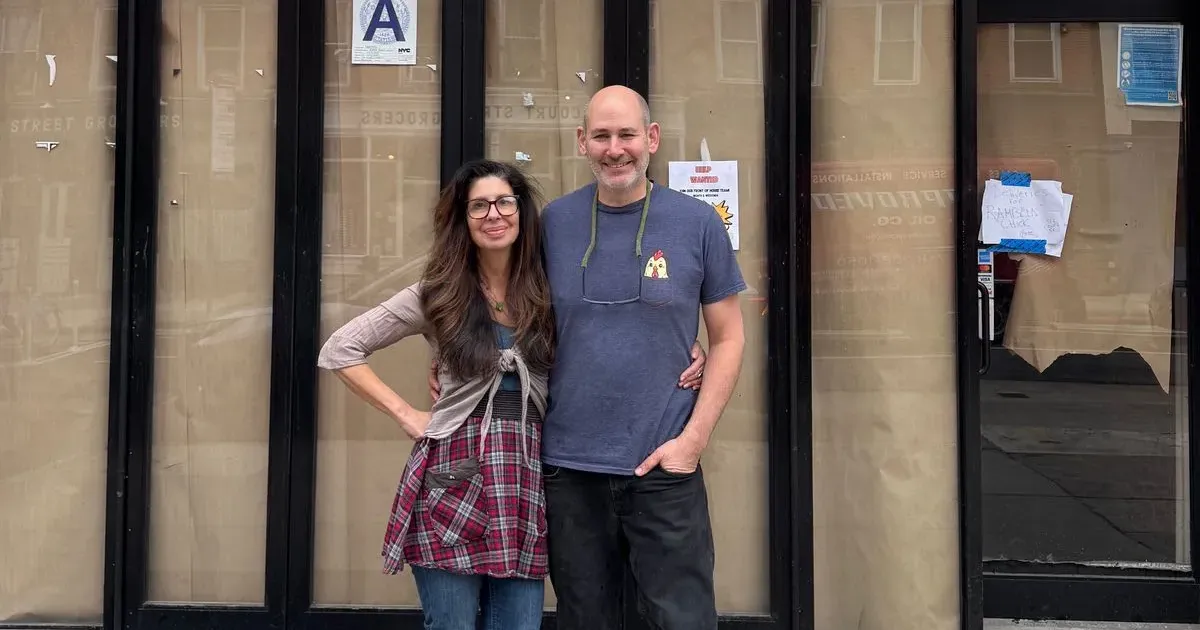
Prospect Heights residents still remember the lines stretching around the block in the summer of 2011. Jackie Cuscuna finds herself haunted by those ghosts daily. Walking to the supermarket requires her to pass the original Ample Hills Creamery location, a site that served as the epicenter of a multi-million dollar frozen dessert empire before it all crumbled. Cuscuna and her husband, Brian Smith, founded the brand with a mix of creative storytelling and high-quality ingredients that captured the imagination of New York City. But the transition from a local favorite to a national powerhouse proved to be a path filled with structural traps and financial mismanagement.
Pain remains a primary motivator for the couple as they attempt to reclaim their place in the industry. Losing the company they built from scratch was not merely a financial blow, but a public divorce from a brand that carried their personal identity. When the business entered bankruptcy in 2020, it exposed a debt load exceeding 6 million dollars, a figure that shocked those who only saw the cheerful branding and whimsical flavors. Every trip to the grocery store now is quiet confrontation with that history.
The Red Hook Factory and the Price of Ambition
Success brought opportunities that few artisanal food makers ever encounter. A partnership with Disney led to Star Wars-themed flavors and a high-profile location at Disney World. Yet, the drive for expansion culminated in the construction of a 15,000 square foot factory in Red Hook, Brooklyn. Many industry analysts now view this move as the beginning of the end. The facility was designed to produce massive quantities of ice cream to supply grocery stores and new scoop shops across the country, but the costs of operating such a space far outpaced the revenue generated by the actual sales.
Brian Smith often reflects on the creative impulses that led them to take such significant risks. He was a former playwright who treated every pint like a narrative, but narratives do not always account for the cold reality of supply chain logistics. While competitors focused on lean operations, Ample Hills invested in a dream that required constant, aggressive growth to survive. Such a strategy left no room for error when the global economy shifted or when construction delays at the Red Hook site began to drain cash reserves. Internal records from that era show a company struggling to balance the artisanal soul of the brand with the industrial requirements of a large-scale manufacturer.
The math did not add up.
A Corporate Interlude and a Failed Rescue
Schmitt Industries, a machine-tool company based in Oregon, emerged as an unlikely savior during the bankruptcy auction. They purchased the brand for a mere 1 million dollars, a fraction of what investors had poured into the company during its peak. Local enthusiasts hoped that corporate stability would save the beloved Brooklyn institution. Still, the marriage between a manufacturing firm and a whimsical ice cream brand was fraught from the start. Schmitt Industries lacked the specialized knowledge required to navigate the hyper-competitive dairy market in New York.
Losses continued to mount under the new ownership. Instead of stabilizing the ship, the corporate management struggled with the same high overhead costs that plagued the founders. By 2023, the brand was once again in a state of flux, eventually leading to its closure and another round of sales. This period served as a harsh lesson for the entire food industry regarding the limits of brand equity. A name, no matter how beloved, cannot sustain a business if the underlying unit economics are fundamentally broken.
Starting Over at The Social
Jackie Cuscuna and Brian Smith did not stay away from the kitchen for long. In 2021, they opened The Social in Clinton Hill, a new venture that focused on community and the joy of ice cream making without the immediate pressure of national scaling. This shop represented a return to their roots. It was smaller, more focused, and intentionally neighborhood-oriented. They traded the sprawling Red Hook factory for a more manageable footprint, yet the shadow of Ample Hills never truly receded.
Neighbors frequently asked when they would get their old brand back. The Social flourished because the community still believed in the founders, but the emotional tether to their first creation remained unbroken. Despite the success of the new shop, the desire to correct the mistakes of the past drove them to watch the legal and financial developments of the Ample Hills name very closely. Reclaiming a brand that has been through two bankruptcies is a feat few entrepreneurs would even consider, let alone attempt.
Resilience defines the next chapter of their story.
Reclaiming the Brand Name
News of the couple re-acquiring the Ample Hills name has sent ripples through the Brooklyn food scene. Re-buying the trademark and the intellectual property marks a symbolic victory, but the operational challenges remain as steep as ever. They are not simply returning to where they left off. They are inheriting a brand that has been battered by corporate mismanagement and a loss of consumer trust. Restoring the original luster of the brand will require a delicate balance of nostalgia and modernized business practices.
Cuscuna and Smith have expressed a desire to avoid the mistakes that led to the 2020 collapse. They are no longer the wide-eyed entrepreneurs who believed that every growth opportunity must be seized. Experience has taught them the value of saying no to expansion that threatens the quality of the product or the stability of the balance sheet. This new iteration of the brand is likely to look much more like the 2011 version than the 2019 version, focusing on craft rather than massive volume.
Industry experts remain curious about how the couple will integrate the Ample Hills name with their existing work at The Social. Managing two distinct brands in the same geographical area poses unique marketing challenges. Yet, for the founders, this is about more than market share. It is about closing a circle that has remained open and painful for nearly six years. They want to prove that a business can fail, be lost, and then be redeemed through persistence and a return to core values.
The Elite Tribune Perspective
Why do we celebrate the return of entrepreneurs who burned millions of dollars in venture capital and left a trail of unpaid vendors in their wake? The fascination with Brian Smith and Jackie Cuscuna is a symptom of our collective obsession with the myth of the creative founder. We prioritize the narrative of the 'scrappy startup' over the boring reality of fiscal responsibility. While their ice cream was undoubtedly excellent, the original Ample Hills was an exercise in hubris, a project that prioritized vanity metrics and Disney-fueled expansion over a sustainable business model. Every dollar lost in that bankruptcy was a dollar taken from the ecosystem of smaller, more disciplined producers who did not have the benefit of a theatrical backstory.
Success in the artisanal food world should be measured by longevity and stability, not by how many Star Wars tie-ins a brand can secure before collapsing under its own weight. If the couple truly wants to find redemption, they must abandon the growth-at-all-costs mindset that defines the Brooklyn 'maker' culture. The return of Ample Hills is not a victory for the neighborhood; it is a second chance for two individuals who learned the hard way that you cannot eat your own hype. Let us hope they have finally realized that a scoop of ice cream is just a scoop of ice cream, not a plot point in a tragedy.