March 24, 2026, marks the seasonal apex of retail inventory shifts as Marshmallow Treats begin to fill American Baskets from Maine to California. Retail data confirms that despite a vocal online community that disparages the sugar-coated confections, consumer purchasing power remains firmly behind the neon-colored chicks and bunnies. Industry analysts project that seasonal spending on confectionery products will reach $2.5 billion by the end of the spring cycle. This volume suggests a deep tradition that outweighs individual palate preferences.
And the geographic distribution of these sales reveals a surprising uniformity across disparate demographics. Reports from National Confectioners Association suggest that while chocolate continues to hold the highest market share by weight, the specific marshmallow-based icons represent the highest unit velocity during the three weeks leading up to the holiday. Families often buy these items not for consumption, but for decorative utility and basket aesthetics. Public sentiment remains split, yet the cash registers tell a singular story of dominance.
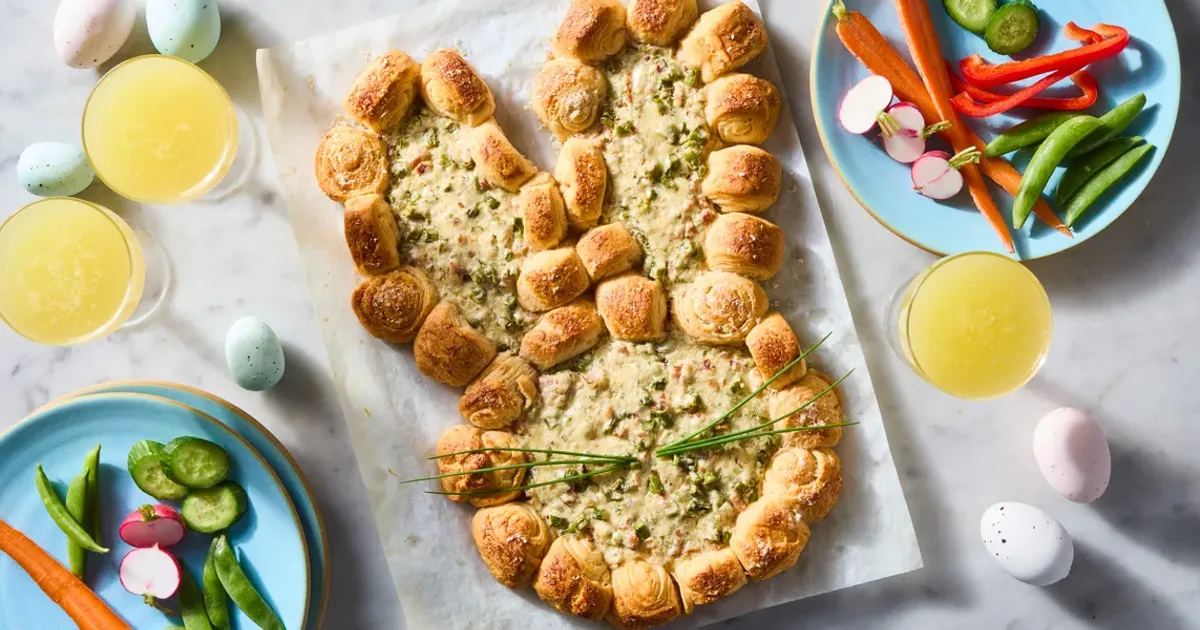
In a separate move, the focus for home hosts has pivoted toward logistical efficiency in the kitchen. Culinary archives from Delish indicate a list of 43 spring appetizers designed to ease the burden of complex preparation during the holiday weekend. These recipes focus on assembly over active cooking time, a trend that reflects a broader shift in domestic labor patterns. Modern hosts increasingly seek shortcuts like pull-apart bunny bread or pre-assembled savory tartlets to maximize social engagement over stove time.
Savory trends emphasize the use of seasonal produce like asparagus, radishes, and peas to signal a departure from heavy winter fare.
Marshmallow Peeps Lead National Candy Sales
For starters, the manufacturing hub of Just Born Quality Confections in Bethlehem, Pennsylvania, operates at maximum capacity throughout the first quarter to meet this specific demand. Workers at the facility produce millions of individual marshmallow units daily to ensure that every major retailer maintains adequate stock. Historical sales records show that the popularity of these treats has remained resilient for decades, defying the rise of artisanal and organic alternatives. The sugar-sanding process used to give the candies their distinct texture is still a trade secret that competitors have struggled to replicate.
But the cultural debate surrounding these candies is often characterized by hyperbole and performative distaste. Social media platforms frequently host debates regarding the optimal way to consume the treats, with some advocating for a stale texture achieved by opening the package days in advance. Others prefer to use them as subjects for science experiments, including the known practice of microwaving them to observe their rapid expansion. This secondary use case contributes greatly to the total unit volume sold annually.
Indeed, the polarizing nature of the product serves as its own marketing engine. Every year, a new wave of digital content creators generates engagement by testing the limits of marshmallow-based recipes or staging elaborate taste tests. Marketing departments recognize that being the most hated candy is often just as profitable as being the most loved. Attention, in any form, translates to visibility on crowded supermarket shelves.
The most divisive sweet in the basket is also the one dominating the map, proving that consumer behavior is frequently driven by nostalgia rather than refined taste.
Easter Appetizer Trends Shift Toward Simplicity
For that reason, the culinary field for spring gatherings has undergone a transformation characterized by the rejection of formal multi-course meals. Home cooks are opting for large-scale appetizer spreads that allow for grazing throughout the afternoon. This approach accommodates the erratic schedule of family events, including community egg hunts and religious services. The 43 recommended appetizers emphasize ingredients that can be prepared in advance or served at room temperature.
Still, the demand for visual flair remains high, leading to the rise of centerpiece-style starters. Pull-apart breads shaped like festive animals or wreath-like vegetable platters offer a festive aesthetic without requiring professional-grade pastry skills. Recipes often use store-bought refrigerated dough to cut preparation time by 60 percent. Efficiency has become the primary metric for success in the modern holiday kitchen.
For instance, deviled eggs remain the most frequent request for spring menus, yet chefs are now experimenting with bold toppings. Smoked salmon, pickled jalapeños, and bacon crumbles are replacing the traditional dusting of paprika. The evolution suggests that while the base format remains constant, the American palate is seeking more complex flavor profiles within familiar structures. Consistency in form provides a sense of tradition, while novelty in flavor provides excitement.
Manufacturing Data Reveals Consumer Paradox
Yet the logistics of candy distribution reveal a hidden complexity in the supply chain. Manufacturers must time their production cycles perfectly to avoid a surplus of highly perishable seasonal goods. Unlike chocolate, which has a relatively long shelf life under controlled conditions, marshmallow treats are susceptible to moisture and temperature fluctuations. Distribution networks focus on rapid transit from the Pennsylvania factory to regional hubs to ensure maximum freshness for the consumer.
Meanwhile, the price of raw sugar and gelatin continues to fluctuate, impacting the profit margins for seasonal treats. Manufacturers have largely absorbed these costs to maintain the low price point that makes these candies an impulsive checkout-aisle purchase. Most consumers view a pack of marshmallow chicks as a low-stakes investment in holiday tradition. Keeping the price under five dollars is essential for maintaining high volume.
That aside, the environmental impact of seasonal packaging has come under increased scrutiny from advocacy groups. Single-use plastic trays and colorful cardboard boxes contribute to a major spike in household waste during the spring months. Some boutique brands have attempted to introduce biodegradable packaging, but the major players have been slow to pivot due to the high cost of retooling assembly lines. Corporate sustainability reports suggest that packaging remains the primary hurdle for the industry.
So the paradox of the American shopper persists into the 2026 season. People complain about the cloying sweetness and the artificial colors while simultaneously adding multiple packs to their carts. It is a ritual of consumption that goes beyond logical critique or culinary trends. The marshmallow bunny is not just a snack; it is a temporal marker of the changing seasons.
According to market research from 2025, over 70 percent of parents purchase candies they personally dislike because they believe it is a mandatory component of their children's experience. The cycle of inherited preference ensures that even the most criticized products enjoy a guaranteed market share for the foreseeable future. Cultural momentum is a more powerful force than the most negative review.
The Elite Tribune Perspective
Does the American consumer possess any genuine agency, or are we simply programmed to repeat the same hollow rituals every March? The annual spectacle of the marshmallow treat is an exercise in psychological manipulation disguised as holiday cheer. We claim to despise these neon-colored lumps of sugar and gelatin, yet we buy them by the billions. It is not a choice; it is a compulsion driven by a desperate need for continuity in an increasingly fragmented culture.
We cling to the Peep not because it is delicious, but because it is familiar, and in a world of constant upheaval, the familiar is a valuable commodity. Retailers and manufacturers understand this better than we do. They do not need to improve the product because the product’s flaws are part of its brand identity. The mockery is the marketing. We are paying for the privilege of participating in a collective joke, and the punchline is the record-breaking profit margins of the confectionary industry.
It is time to admit that our culinary traditions have been hijacked by a factory in Pennsylvania that knows our nostalgia is more profitable than our taste. We deserve better than sugar-sanded mediocrity, but as long as we keep reaching for the yellow chicks, we will never get it.