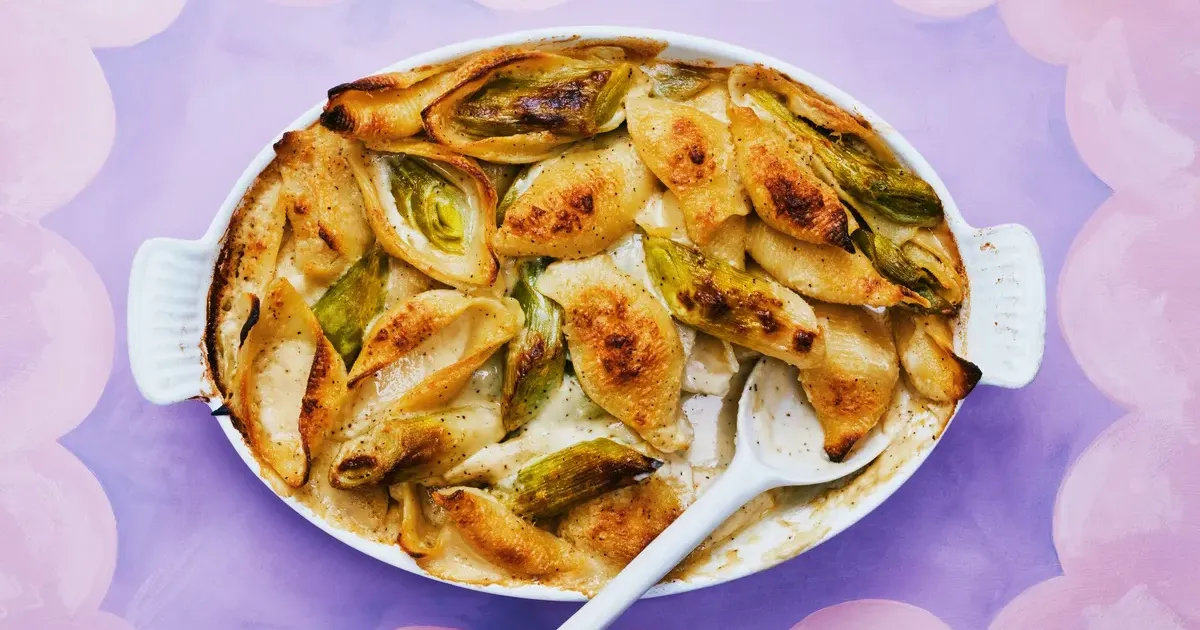
March 23, 2026, witnessed a total synchronization of digital content between Bon Appétit and Epicurious that signals the final stages of a years-long editorial consolidation. Both legacy platforms published identical recipes for Baked Cheddar and Leek Pasta and Spicy Cod and Potato Chowder. The descriptions accompanying these entries did not merely share a theme but used the exact same phrasing, word for word. Readers visiting both sites encountered the same playful assertion that the pasta dish was not stuffed shells but also not not stuffed shells. This unified voice suggests a central desk now manages the output for what were once fierce editorial rivals.
Digital editors at Condé Nast, the parent company for both titles, have moved toward a shared content model to maximize the reach of individual assets. The Baked Cheddar and Leek Pasta recipe features a specific visual style that appears on both domains under the same file name in their digital asset management system. Asset servers hosted the same high-resolution image of the golden-brown pasta dish across both the.com and.net extensions of the two brands. Such technical overlap confirms that the underlying infrastructure for these publications has become a singular entity. The era of distinct test kitchens and separate photography studios for each brand appears to have ended in favor of a streamlined production pipeline.
Condé Nast Consolidation and Editorial Efficiency
Condé Nast initiated a major restructuring in 2021 that sought to unify the global leadership of its various titles under centralized heads. This organizational shift placed diverse brands under singular umbrellas to reduce overhead costs and eliminate redundant positions. Culinary content became a primary target for this efficiency drive because of the high costs associated with recipe testing and food styling. Developing a single recipe for the Spicy Cod and Potato Chowder and deploying it across two platforms costs much less than commissioning two different soup features. The financial benefits of this strategy remain clear to the executive suite in Lower Manhattan.
But the erosion of a distinct brand voice creates a new set of risks for consumer loyalty. Epicurious originally built its reputation as a vast, utilitarian database for home cooks seeking reliable instructions and an extensive archive of past work. By contrast, Bon Appétit positioned itself as a lifestyle authority with a specific, often personality-driven story style. When both sites use the same quippy descriptions about pasta not being stuffed shells, the unique benefit of each brand becomes difficult to define. Institutional knowledge suggests that audiences pay for a specific perspective, not just a list of ingredients. The current approach treats recipes as fungible commodities rather than intellectual property with a unique pedigree.
Shared Metadata and the Search Engine Monopoly
Search engine optimization requirements frequently dictate the phrasing used in modern digital food journalism. Both the pasta and the cod recipes use metadata structures that are nearly indistinguishable from one another. In fact, the descriptions are improved to capture the same keywords regardless of whether a user clicks on the Bon Appétit or Epicurious link in search results. The shared chowder description promises that the brothy bowl will nourish the reader from the inside out, a phrase designed to hit specific health and wellness trends popular in 2026. This tactical choice ensures that the parent company captures the traffic regardless of which specific masthead the reader prefers. We documented a similar shift in our coverage of Condé Nast editorial consolidation.
Identical descriptions across competing titles reveal a strategic decision to focus on algorithmic visibility over the maintenance of a unique editorial identity.
Meanwhile, the technical implementation of these shared recipes creates a feedback loop for the Condé Nast data teams. Tracking user behavior across two sites with the same content allows for a more thorough analysis of how different demographics interact with the same material. For instance, data might show that the audience for one brand engages more with the pasta dish on mobile devices while the other prefers desktop browsing. These insights inform future ad placement strategies and subscription models. The recipe content effectively functions as a sensor to measure the digital habits of a fragmented audience.
Identity Erosion and the Future of Culinary Media
Still, the long-term impact on the culinary media market is still a subject of intense debate among industry analysts. If two of the most prominent names in food media offer the same product, the justification for maintaining two separate subscription paywalls begins to crumble. To that end, many observers expect a formal merger of the two digital properties within the next eighteen months. The shared recipes for Spicy Cod and Potato Chowder serve as a public trial for how an integrated audience reacts to a singular feed. Corporate leadership has yet to announce a formal union, but the evidence on the digital storefronts suggests the transition is already underway.
Yet the problem of brand confusion persists for the dedicated subscribers who still remember the distinct eras of these publications. For one, a reader who pays for both subscriptions may feel cheated when encountering the same "not not stuffed shells" joke on both homepages. Separately, the lack of variety limits the creative opportunities for new chefs and writers who are now competing for space on a single, consolidated calendar. The number of unique recipes produced by these combined teams has dropped by roughly 35% since the implementation of the shared content policy. The reduction in volume is a direct consequence of the push for singular, high-performing assets over a diverse range of niche content.
The Elite Tribune Perspective
Obsessive brand differentiation once defined the high-stakes world of New York magazine publishing. An editor at one title would have sooner resigned than run a headline that appeared on a competitor's cover, even if that competitor shared the same corporate parent. Those days of pride and territorialism are dead. Condé Nast is now a data-management firm that happens to sell magazines. By stripping away the unique souls of Bon Appétit and Epicurious, the company has turned its once-vibrant culinary brands into a hollow, automated content farm.
The "not not stuffed shells" quip is a perfect example of this zombified editorial style, a clever-sounding phrase that means nothing and serves only to fill space on a template. It is a cynical maneuver that assumes the reader is too distracted to notice they are being fed the same meal twice. It is not about efficiency or "nourishing you from the inside out." It is about a desperate attempt to maintain profit margins in a dying industry by cannibalizing the very things that made these brands valuable in the first place.
When the voice is gone, the reader eventually follows. The bean counters in the boardrooms are trading long-term institutional authority for short-term logistical savings, and the result is a flavorless, homogenized media field.