Target executives monitored shifting consumer preferences on March 21, 2026, as new industry reports evaluated the quality of Good & Gather salsas and seasonal Easter candy offerings. Target and its flagship brand, Good & Gather, faced fresh scrutiny alongside a wide array of Easter Candy products from major confectionery manufacturers. Market analysts focused on these specific categories to determine how private label goods are competing with established national brand names in the current retail climate. Internal data suggests that premium-tier house brands have become a primary driver for customer retention at major big-box retailers in the United States. New rankings from specialized food publications provided a detailed look into which specific products are meeting consumer expectations for taste and value.
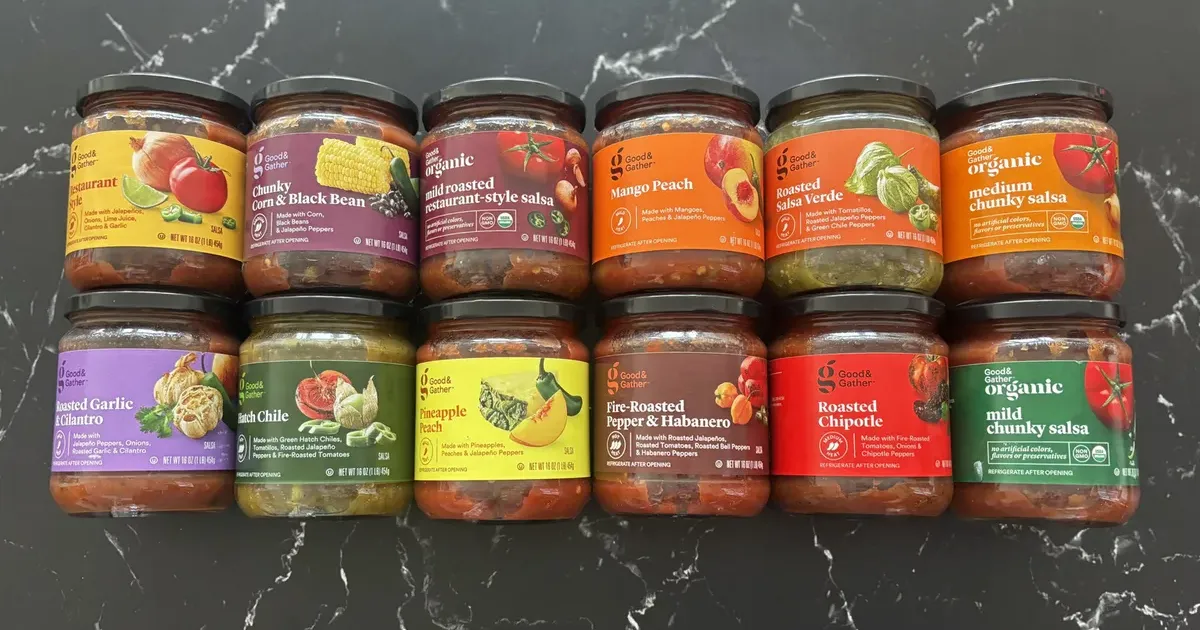
Tasting Table conducted a rigorous review of 12 jarred salsas sold under the Target house label, highlighting a major range in flavor profiles and ingredient quality. Good & Gather has expanded its portfolio to include eclectic options like Mango Lime, Roasted Garlic, and Black Bean and Corn to appeal to a more sophisticated palate. But the results showed that complexity does not always equate to a superior product. Some jarred options failed to balance acidity with heat, while others relied too heavily on thickeners like corn starch. High-performing varieties were characterized by fresh-tasting vegetables and a lack of metallic aftertaste commonly associated with shelf-stable glass jars.
Separately, confectionery experts evaluated 14 popular items in the seasonal aisle to identify the best and worst treats for the spring holiday. Easter remains one of the most profitable periods for the global candy industry, generating billions in annual revenue for companies like Hershey and Mars. Yet, the ranking indicated that traditional favorites do not always hold up under modern taste testing. For instance, some marshmallow-based products received criticism for being overly sugary without enough flavor depth to justify the caloric intake. By contrast, chocolate-covered peanut butter eggs continued to lead the pack in consumer preference due to their consistent texture and balanced salt-to-sweet ratio.
Target Good and Gather Salsas Reshape Grocery Margins
Consumer demand for affordable gourmet options has pushed Target to invest heavily in the chemical formulation and flavor engineering of its Good & Gather lineup. Success in the salsa category is often viewed as a bellwether for the broader success of a grocery brand. In fact, salsa surpassed ketchup as the top-selling condiment in the United States years ago, making it a critical battleground for retail supremacy. According to Tasting Table, the ranking of these 12 products revealed a clear divide between standard pantry staples and high-end artisanal imitations.
The Mango Lime variety, while popular in concept, must manage the volatile nature of citrus oils in a pressurized jar. To that end, the brand has adjusted its recipes several times over the last three fiscal quarters to minimize the use of artificial preservatives.
Still, some consumers find that the lower price point of house brands comes with a sacrifice in texture. Chunky salsas from Good & Gather often feature uniform vegetable cuts that indicate automated processing rather than hand-chopped preparation. Yet, the price difference is still a compelling factor for the average household. A standard jar of Good & Gather salsa often retails for far less than a comparable jar from a premium brand like Pace or Tostitos. This pricing strategy forces competitors to offer deep discounts or increase their marketing spend to justify a higher shelf price. Market data indicates that nearly 40% of shoppers now prefer house brands over name brands when the quality is perceived as equal.
House brands are no longer just the budget-friendly alternative for cost-conscious families, they are now a primary vehicle for innovation in the grocery sector where national brands have become stagnant and risk-averse.
Flavor scientists at Target have specifically targeted the roasted garlic segment to capture shoppers who desire a smokier profile without the acidity of a raw tomato base. Roasted garlic salsa ranked well in recent tests because it masks some of the industrial cooking notes inherent in the canning process. Meanwhile, the peach and pineapple varieties continue to struggle with maintaining fruit integrity over several months of shelf life. Soft fruit tissues tend to break down in the acidic environment of the jar, leading to a mushy consistency that many reviewers found unappealing. These technical challenges highlight the difficulty of scaling gourmet recipes for national distribution across thousands of retail locations.
Easter Candy Quality Metrics Shift Toward Premium Flavors
Confectionery manufacturers are facing a $4 billion seasonal market that demands both nostalgia and novelty. The Takeout's ranking of 14 Easter candies demonstrated that enduring heritage brands are losing ground to products that emphasize high-quality ingredients. For one, the classic hollow chocolate bunny has seen a decline in popularity as consumers opt for solid chocolate figures with higher cocoa percentages. Even so, the Reese's Peanut Butter Egg is still a dominant force in the seasonal market. Its unique ratio of peanut butter to chocolate differs greatly from the standard Reese's cup, creating a specific texture that has a cult-like following. This particular item consistently ranks at the top of annual reviews, regardless of the testing methodology used.
In fact, the ranking of jelly beans showed that the market is bifurcating between traditional pectin beans and gourmet versions that use real fruit juice. Cheap jelly beans often rely on a hard sugar shell and corn syrup centers, which many modern reviewers find cloying. By contrast, brands like Jelly Belly have raised the bar for what a jelly bean should represent for flavor accuracy. At the same time, the marshmallow category remains dominated by Peeps, though their position in the rankings is often polarizing.
Some critics argue the texture is too grainy, while others view them as an essential component of the holiday experience. The polarizing nature of these treats ensures they remain a staple of the retail landscape regardless of critical reviews.
Confectioners have also experimented with white chocolate and ruby chocolate variants to attract younger demographics interested in aesthetic appeal. These products often rank lower in taste tests because white chocolate lacks the complex flavor compounds found in cocoa solids. To that end, many ranking lists place these items near the bottom, citing a lack of balance and an oily mouthfeel. Separately, the Cadbury Creme Egg is still a staple of the UK and US markets, though changes to the chocolate recipe in recent years have sparked intense debate among purists. Many enthusiasts claim the newer milk chocolate coating is inferior to the original Dairy Milk recipe used in previous decades.
Retail Brand Strategy Focuses on Gourmet Differentiation
Target's strategy involves not simply copying the leading national brands. It involves creating a unique identity for Good & Gather that feels like a standalone specialty label. To achieve this, the retailer has focused on transparency in labeling and the removal of synthetic colors. In particular, the salsa ranking showed that the brand is attempting to compete with regional artisanal producers by offering small-batch flavor profiles. This move is designed to capture the attention of millennials and Gen Z shoppers who focus on ingredient lists and brand ethics over long-term brand loyalty. Internal surveys suggest these younger cohorts are the most likely to switch between brands based on a single positive or negative experience.
Market analysts note that the success of these products is heavily dependent on shelf placement and digital marketing integration. Target uses its mobile app to provide personalized recommendations based on past purchases of Good & Gather items. It creates a feedback loop that reinforces brand loyalty without the need for traditional television advertising. For instance, a customer who buys organic tortilla chips is highly likely to receive a coupon for a top-ranked salsa. Such targeted promotions have helped the Good & Gather brand reach $2 billion in annual sales within just a few years of its launch. The rapid growth has forced competitors like Walmart and Kroger to revamp their own private label offerings to keep pace.
Market Saturation Challenges Food Quality Standards
Increasing competition in the grocery aisle has led to a saturation of flavor options that can overwhelm the average consumer. With 12 different salsas and 14 different Easter candies to choose from, the decision-making process becomes increasingly complex. High-quality rankings provide a necessary service by filtering out products that focus on shelf life over flavor. According to recent retail studies, shoppers are increasingly relying on third-party reviews and social media influencers to guide their purchasing decisions. The shift has diminished the power of traditional brand marketing and placed a premium on consistent product quality. One bad batch of salsa can now result in thousands of negative reviews that are visible to every potential customer with a smartphone.
Producers must also navigate the rising costs of raw materials like sugar, cocoa, and tomatoes. These inflationary pressures often lead to ingredient substitutions that can negatively impact a product's ranking. For example, some candy manufacturers have replaced cocoa butter with palm oil to maintain profit margins, a move that is frequently panned by food critics. Similarly, some salsa brands have increased the ratio of water and tomato paste to fresh diced tomatoes. These subtle changes are often detected by experienced reviewers who compare products year-over-year. Maintaining a top spot in an annual ranking requires a commitment to quality that many companies find difficult to sustain in a volatile economy.
The Elite Tribune Perspective
The rise of the private label is not a victory for consumer choice; it is a calculated enclosure of the retail commons by a handful of corporate giants. We are told that Good & Gather offers the same quality as an artisanal brand at a fraction of the cost, but this narrative ignores the massive logistical machinery that flattens flavor into a predictable, shelf-stable commodity. Target is not innovating out of a desire for culinary excellence. It is consolidating its grip on the supply chain to ensure that every dollar spent in its aisles stays within its own ecosystem.
The vertical integration creates a deceptive landscape where the appearance of variety masks a narrowing of actual production sources. When a single retailer can dictate the flavor profile of 12 different salsas, the concept of a free market for food begins to dissolve. We should be skeptical of any ranking that treats these industrial products as genuine competitors to local, independent producers. The real cost of a three-dollar jar of salsa is the slow erosion of a diverse food economy where small players are priced out by the sheer scale of big-box procurement.
Convenience has become the mask for a creeping corporate monoculture that values margin over soul.