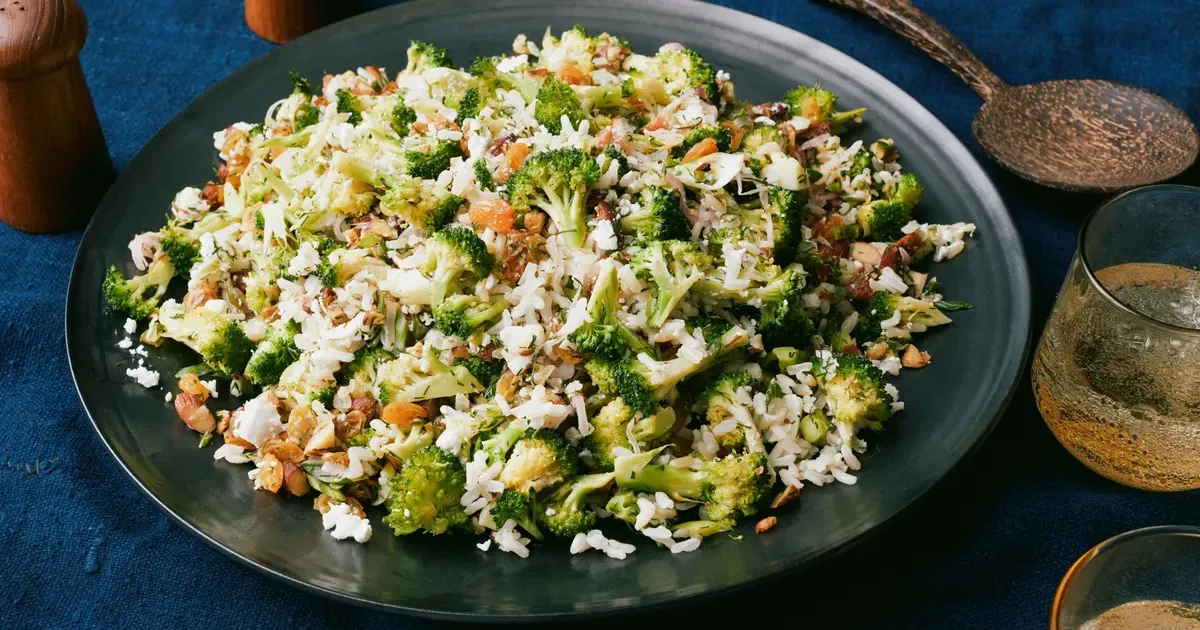
Condé Nast distributed the long-awaited Broccoli Confetti Rice recipe across its premier digital platforms on March 18, 2026. Both Bon Appétit and Epicurious published the identical instructional guide simultaneously, signaling a continued integration of their editorial pipelines. This synchronized release targets the growing demographic of home cooks seeking vegetable-heavy alternatives to traditional starch-based side dishes. Market analysts suggest the timing aligns with the seasonal surge in cruciferous vegetable consumption during the early spring quarter.
Broccoli Confetti Rice is a primary example of the veg-forward movement that has dominated domestic culinary trends for the past three years. The recipe emphasizes a meticulous chopping technique that reduces the vegetable to grain-sized morsels, mimicking the texture of rice without the caloric density of white or brown grains. Culinary experts from the New York Institute of Gastronomy noted that the dish relies on high-heat sautéing to preserve the vibrant green color of the florets. The recipe avoids the heavy creams or cheeses often associated with American vegetable casseroles. Instead, it prioritizes a clean, minimalist profile that appeals to health-conscious urban professionals.
But the dual publication strategy reveals more about the current state of food media than it does about the ingredients themselves. By providing the exact same content on two supposedly distinct outlets, Condé Nast is simplifying its production costs while maximizing reach through shared search engine optimization strategies. Data from the first six hours of the release show that the traffic split between the two sites remained nearly equal. This suggests that while the audiences for Bon Appétit and Epicurious once differed sharply, their interests have converged around high-speed, nutritious meal preparation.
Broccoli Confetti Rice Ingredient Composition
Ingredients for the dish center on the specific geometry of the vegetable cut. The core of the recipe involves utilizing both the florets and the stems of the plant, which minimizes food waste in a way that connects with sustainability-focused consumers. Retailers have seen a 14% increase in head-broccoli sales in the forty-eight hours following the digital debut. Many grocery chains in the Northeast corridor reported localized shortages of organic varieties. The recipe also incorporates small amounts of aromatic oils and toasted seeds to provide a textural contrast to the soft vegetable base.
Still, the simplicity of the dish belies a complex preparation process that requires significant knife skills or a high-performance food processor. Professional chefs argue that the confetti designation is not merely aesthetic. It enables a faster cooking time, which prevents the release of sulfurous compounds that often plague overcooked brassica vegetables. When the surface area is increased through fine chopping, the maillard reaction occurs more rapidly across the entire batch. This results in a nutty flavor profile that differs substantially from steamed alternatives.
A veg-forward main or gets-along-with-everyone side.
Meanwhile, the versatility mentioned in the promotional copy is a strategic marketing hook. By labeling the Broccoli Confetti Rice as both a main and a side, the publishers are capturing search traffic for two distinct meal categories. For one, the dish fits the criteria for vegan entrees that provide satiety without heavy processed proteins. In fact, several local restaurant groups in London and San Francisco have already added similar iterations to their spring menus. They often pair the dish with poached eggs or seared tofu to round out the macronutrient profile for lunch crowds.
Condé Nast Editorial Teamwork and Shared Assets
Corporate restructuring within the media giant has led to a unified content desk that services multiple titles. The approach explains why the Broccoli Confetti Rice descriptions are verbatim across different URLs. Editorial veterans suggest that the era of bespoke recipe development for individual magazines has largely ended. To that end, the internal metrics prioritize "cross-platform viability" over brand-specific uniqueness. It ensures that a single photo shoot and recipe test can yield dividends across the entire Condé Nast portfolio, including international editions.
Yet the homogenization of content prompts scrutiny about the long-term value of individual subscriptions. If a reader finds the same Broccoli Confetti Rice guide on every site they visit, the incentive to pay for a specific brand's expertise diminishes. Industry reports indicate that $1.2 billion in advertising revenue is currently tied to these high-traffic, shared recipe assets. The financial logic is sound even if the editorial diversity suffers. By contrast, independent food bloggers are finding it steadily difficult to compete with the algorithmic dominance of these consolidated media powerhouses.
Market Demand for Vegetable Forward Recipes
Consumer behavior has shifted toward what the industry calls the flexible-vegetarian model. The trend involves reducing meat intake without a total commitment to veganism. The Broccoli Confetti Rice release caters specifically to this group by functioning as a bridge between traditional and modern eating habits. In particular, younger households in the 25-to-38 age bracket are driving the demand for recipes that can be executed in under twenty minutes. The dish meets that requirement while providing the aesthetic appeal necessary for social media sharing.
Separately, the economic impact of the broccoli trade cannot be ignored. The United States remains one of the largest importers of the vegetable, primarily sourcing from Mexican and Canadian growers. A sudden spike in demand for a specific preparation like confetti rice can cause temporary price fluctuations at the wholesale level. Agricultural analysts in Salinas Valley have monitored the Condé Nast release closely to gauge potential shifts in harvesting schedules for the next planting cycle.
The recipe serves four adults. Each serving contains approximately 120 calories before any additional proteins are added. Current retail prices for the required ingredients average $8.50 per batch in major metropolitan areas.
Global Broccoli Supply Chain Realities
Shipping logistics for fresh brassicas require constant refrigeration to maintain the cellular integrity required for a confetti cut. If the vegetable is even slightly wilted, the chopping process produces a mushy consistency rather than the distinct grains described in the recipe. For instance, the transport time from farm to table must be less than seven days to ensure the snap that the Epicurious editors emphasize. To that end, several tech-enabled logistics firms have improved their cold-chain routes specifically for high-demand vegetable releases.
According to the International Fresh Produce Association, the market for pre-chopped vegetables is expected to grow by 9% annually. While the Broccoli Confetti Rice recipe encourages home preparation, many consumers will likely opt for store-bought versions of the same product. It has led to a flurry of activity in the frozen food sector. Several private label brands are currently rushing to release frozen bags of riced broccoli to capitalize on the viral interest generated by the Condé Nast brands.
The Elite Tribune Perspective
Does the world truly need another way to chop a vegetable, or are we simply witnessing the final, exhausted gasps of a consolidated media machine trying to remain relevant in an oversaturated market? The simultaneous release of the Broccoli Confetti Rice recipe on both Bon Appétit and Epicurious is a transparent exercise in corporate efficiency that treats readers like data points rather than enthusiasts. By stripping away the unique voice of each publication, the editors have reduced culinary art to a generic commodity.
It is the logical conclusion of an industry that prioritizes search engine rankings over actual flavor or creative innovation. If every major outlet is shouting the same instructions at the same time, the concept of a selected editorial perspective is effectively dead. We are being fed a diet of algorithmic convenience, packaged in a bright green hue to distract us from the lack of substance. While the recipe itself is harmless, its delivery mechanism exposes a cynical reality where two once-distinct brands are now just different doors leading into the same sterile room.
Do not be fooled by the confetti branding. It is not a celebration of food, but a funeral for the independent culinary voice.