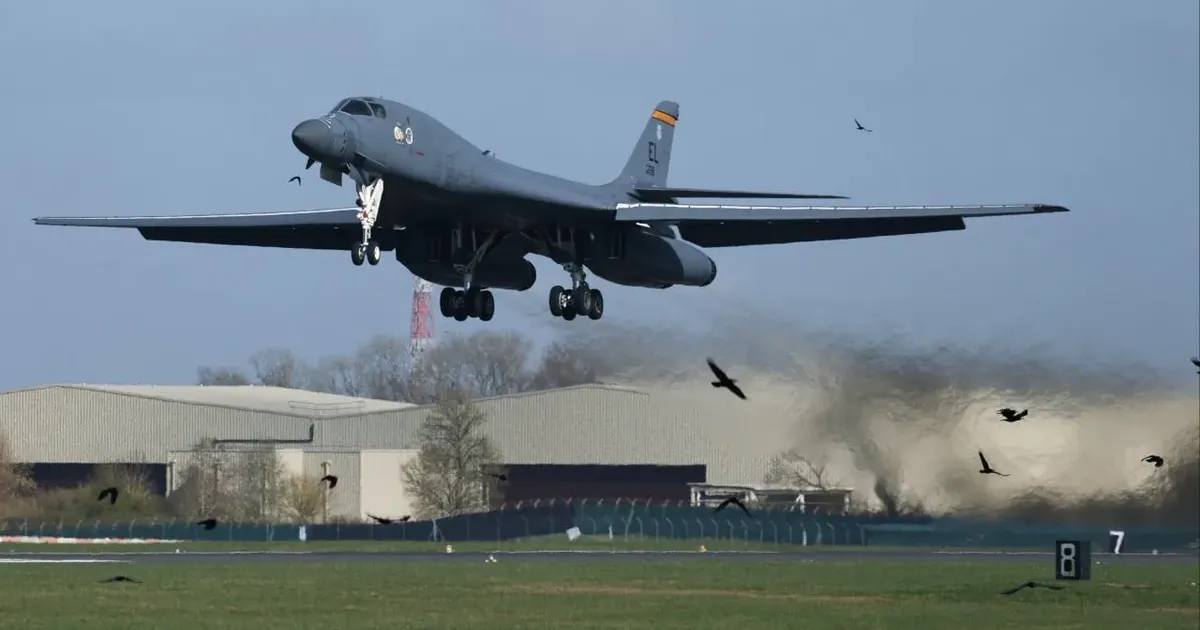
British ministers authorized the United States to launch offensive military strikes from sovereign UK bases targeting Iranian missile batteries. This decision follows weeks of escalating tension in the Persian Gulf where Tehran has effectively halted commercial transit through the Strait of Hormuz. Britain's base access decision had widened the Iran conflict posture. Still, the British public remains deeply divided over the potential for retaliatory strikes on UK soil or interests abroad. Recent polling suggests that while there is support for protecting shipping, there is little appetite for a full-scale ground war with Tehran. Protesters gathered outside the Ministry of Defence on Friday afternoon to demand clarity on the rules of engagement. Government representatives insist that no British ground troops will be deployed in an offensive capacity during these operations. They maintain that the UK role is primarily one of facilitation and logistical support for US air power. Critics in Parliament argue that providing the launchpad makes the UK a primary target regardless of who pulls the trigger.
In fact, the technical capabilities of the US Air Force units being deployed are specifically tuned for the rugged terrain of the Iranian coastline. B-2 Spirit bombers and F-35C Lightning II jets are expected to lead the first wave of sorties. These aircraft are capable of penetrating sophisticated air defense networks like the S-300 and S-400 systems that Iran claims to operate. Intelligence reports indicate that several batteries are currently hidden in hardened silos near the port of Bandar Abbas. Eliminating these sites requires the kind of precision heavy-ordnance that can only be sustained through consistent sorties from stable land bases. The current naval presence in the Arabian Sea lacks the sustained sortie rate required for a full suppression campaign against enemy air defenses.
Trump Criticizes British Response Speed in Crisis
London should have acted faster after it agreed to help efforts to curb attacks on shipping, according to statements made by Donald Trump on Friday.
Meanwhile, the rhetoric coming from the campaign trail in the US has put immense pressure on British Prime Minister Keir Starmer. Trump maintains that the UK is acting as a reluctant partner rather than a proactive ally. His comments were echoed by some members of the Conservative opposition who believe the government was too slow to recognize the severity of the blockade. These critics point out that insurance premiums for ships transiting the region have surged by 400 percent since January. They argue that every day of delay results in millions of pounds in lost revenue for British firms. The Prime Minister has ignored these jabs in favor of maintaining a unified front with the current US administration.
By contrast, the Biden administration has been more measured in its public praise of the British decision. State Department officials characterized the base agreement as an essential component of the international coalition known as Operation Prosperity Guardian. They emphasized that the UK remains the only European power willing to provide such high-level military cooperation in this specific crisis. Other NATO allies have expressed concern that the use of British bases might draw the entire alliance into a conflict it is not prepared to fight. France and Germany have so far limited their involvement to naval patrols in the Gulf of Aden. This leaves London and Washington as the sole architects of the offensive strategy against Iranian missile sites.
Economic Fallout of Strait of Hormuz Blockade
In turn, global energy markets reacted with extreme volatility to the news of the base authorization. Brent Crude prices jumped nearly 8 percent in afternoon trading as investors weighed the likelihood of a major regional conflagration. The Strait of Hormuz is responsible for the transit of approximately 20 percent of the world's daily oil consumption. Any prolonged closure or military engagement within the waterway threatens to trigger a global recession. Shipping giants like Maersk and MSC have already begun rerouting vessels around the Cape of Good Hope.
The detour adds roughly 14 days to the journey and increases carbon emissions greatly. The base authorization is seen as the final attempt to reopen the waterway through force before the economic damage becomes permanent.
Even so, the risk to the global supply chain extends beyond just oil and gas. Thousands of container ships carrying consumer electronics, medical supplies, and industrial components pass through the region every month. A total blockade by Iran would effectively sever the primary maritime link between Asia and Europe. Logistics experts warn that the current stockpiles in European warehouses will only last another three weeks. If the US-led strikes fail to neutralize the missile threat quickly, the resulting shortages could cause widespread inflation. Retailers are already warning customers to expect price hikes on imported goods by the start of the next quarter. The military intervention is now a race against an economic clock.
According to military analysts at the Royal United Services Institute, the success of the strikes depends on the accuracy of real-time intelligence. Iran has spent decades developing a doctrine of asymmetric warfare that relies on decoys and underground tunnels. Simply bombing known coordinates may not be enough to stop the attacks on shipping. US drones have been monitoring the Iranian coast for months, yet the mobile nature of the missile launchers makes them difficult targets. If the initial strikes fail to clear the path for tankers, the UK may find itself pressured to allow even more invasive military actions. The current authorization is only the first step in a potentially long and unpredictable campaign.
Defense Protocols for Iranian Missile Site Targeting
To that end, the Ministry of Defence has increased the readiness of its own destroyer fleet in the region. HMS Diamond and HMS Richmond are currently positioned to provide air defense for any US tankers or logistical ships operating near the strike zone. These Type 45 destroyers are equipped with the Sea Viper missile system, designed specifically to intercept the types of projectiles Iran is likely to fire in retaliation. British sailors have been conducting high-intensity drills to prepare for a multi-directional swarm attack. Such tactics involve dozens of small, explosive-laden boats and low-flying drones designed to overwhelm traditional defenses. The coordination between the US Air Force and the Royal Navy is now the primary shield for the international fleet.
But the Iranian Revolutionary Guard Corps has its own set of protocols for such an eventuality. Their commanders have repeatedly stated that any nation providing bases for attacks on Iran will be considered a legitimate target for their ballistic missile force. That specifically puts RAF Akrotiri at risk, as it lies within range of Iran's medium-range missiles. The British government has deployed an additional battery of Sky Sabre air defense missiles to Cyprus to reduce this threat. The move highlights the reality that the UK is no longer just a passive supporter but an active participant in the hostilities. Britain's base access decision turns geography into policy. Once a facility enables strikes, the host government owns part of the strategic consequence.