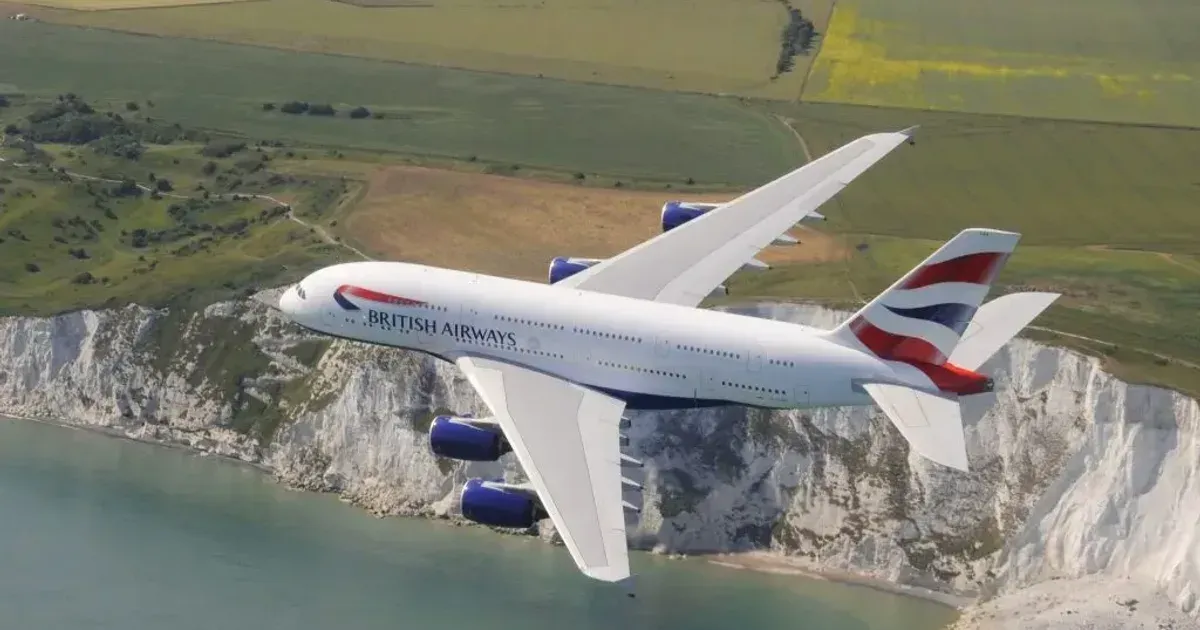
British Airways halted Dubai and several other regional flights as the Iran conflict made Gulf routing harder to guarantee. Passengers were left dealing with cancellations at Heathrow and Gatwick while the carrier reset its schedule for months rather than days. The retreat marks a major risk reassessment by a Western airline. British Airways told travelers it needed operational certainty before restoring the route. Flight paths that once crossed the Persian Gulf now require longer diversions over Africa or Central Asia, raising fuel costs and forcing airlines to choose between service promises and safety margins.
But the vacuum left by international airlines is being felt most acutely in the lounges of the United Arab Emirates. While local giants like Emirates and Etihad attempt to maintain some semblance of order, they are operating under what they call limited flight schedules. These restricted timetables cater primarily to those already caught in the middle of the disruption. Security concerns over Iran have forced these airlines to fly through ever-narrowing corridors. Risk management has replaced expansion as the primary goal of every flight dispatcher in the region.
British Airways Flight Cancellations Impact Regional Hubs
Aviation experts suggest that the move by British Airways reflects a lack of confidence in a swift resolution to the hostilities. By clearing the schedule until the start of the summer season, the airline avoids the daily nightmare of rolling cancellations. Reliability has become more valuable than market share in the current climate. According to Skift, the bold approach reduces operational complexity during a period of extreme volatility. Travelers are being told to seek refunds or rebook through codeshare partners that still dare to enter the airspace. Meanwhile, the logistical strain on the remaining operational hubs is reaching a breaking point. Airports in Doha and Abu Dhabi are functioning as triage centers for the global aviation industry. Qatar Airways continues to fly, yet its pilots must handle a geopolitical minefield every time they retract their landing gear. The strain on crews is immense. Every flight requires a fresh risk assessment as the tactical situation on the ground in Iran shifts by the hour. Intelligence reports from Western agencies suggest the instability will persist well into the second quarter of the year.
For instance, the cost of insurance for hulls flying over the region has tripled in less than a month. These premiums are often passed directly to the consumer in the form of war-risk surcharges. Aviation analysts at Bloomberg indicate that the profitability of the London-Dubai route has vanished under the pressure of these new expenses. Still, the impact is not just financial. The symbolic retreat of British Airways from Dubai suggests that the golden era of the Middle Eastern megahub is facing its greatest trial since the pandemic.
The decision to suspend flights until June is a tactical withdrawal designed to protect the integrity of the wider network from the unpredictable nature of regional hostilities.
So the map of global travel is being redrawn in real time. Passengers who once viewed a layover in the Gulf as a mandatory part of a trip to Southeast Asia are now looking for alternatives. Long-haul narrow-body aircraft are suddenly in high demand as airlines look to bypass the conflict zone entirely. Direct flights from London to Perth or Singapore are selling out months in advance despite the steep price tags. Convenience is currently a secondary concern compared to the fear of being stranded in a war zone.
Travelers Pivot Toward Morocco and Mediterranean Routes
Europeans and Americans who once flocked to the beaches of the UAE are now redirecting their leisure spending. Morocco has become a primary beneficiary of the shift in regional preference. Travel agencies report a 40 percent surge in bookings for Marrakesh and Casablanca as travelers seek sun without the shadow of conflict. South America and the European Mediterranean are also seeing an influx of early-season tourists who would normally be in the Gulf. Capacity is struggling to keep up with this sudden migration of capital.
In fact, the scramble for hotel rooms in Portugal and Spain has pushed prices to record highs for March. Airlines are desperately trying to move planes from Middle Eastern routes to North African and Southern European corridors. This repositioning of assets takes time and requires regulatory approval that can rarely be granted overnight. Many holidaymakers are finding that their preferred destinations are already at capacity. Staycations are rising in popularity again as the logistics of international travel become too cumbersome for the average family. Yet the shift toward the Mediterranean is not without its own set of challenges. Infrastructure in smaller coastal cities was not designed to handle the peak-summer volumes currently arriving in early spring. Water shortages and over-crowding are already being reported in parts of Greece. Travelers are trading one set of problems for another in their search for safety. Geography is destiny for the global jet set. The world is getting smaller as certain regions become effectively inaccessible to the casual tourist.
Limited Schedules for Emirates and Qatar Airways
Qatar Airways and Emirates represent the front line of the regional aviation crisis. These companies were built on the premise of a stable and open Middle East. Now, they must operate in a environment where their primary competitive advantage, their location, has become their greatest liability. Limited schedules mean that even when flights do depart, they are frequently delayed by hours. Ground crews in Dubai are working around the clock to manage the backlog of thousands of stranded travelers. The luxury experience once promised by these brands is being replaced by basic survivalism.
In particular, the plight of transit passengers has become a public relations nightmare for the Gulf carriers. Social media is flooded with images of passengers sleeping on terminal floors because hotels are at full capacity. According to Conde Nast Traveler, the limited flight schedules are only serving the most essential traffic. Leisure travel through these hubs has effectively ground to a halt. The financial hit to the UAE tourism sector is expected to reach billions if the June restart date for Western carriers holds firm. At the same time, the regional conflict in Iran shows no signs of de-escalation. Military activity in the northern Gulf has made several key air routes unusable for civilian traffic. Pilots are being forced to fly through Iraqi or Saudi airspace, which are themselves becoming congested. Every diversion increases the risk of a mid-air incident or a fuel emergency. The margin for error has narrowed to zero. Safety is the only metric that matters in this environment, and currently, the metrics are not trending in the right direction.
Economic Consequences of Middle East Airspace Closures
Business travel between the City of London and the financial districts of the Gulf has been severely impaired. British Airways was the primary carrier for the banking and oil sectors. Without these direct links, high-level negotiations are being moved to video conferencing or neutral locations like Zurich. The loss of face-to-face interaction is slowing the pace of deals in the region. Corporate travel departments are placing a total ban on transit through the Middle East for non-essential personnel. This institutional caution will have long-lasting effects on the regional economy. By contrast, the rise of Morocco as a business hub is accelerating. Investors are looking for more stable gateways to the African and Middle Eastern markets. Casablanca is positioning itself as the new safe harbor for regional finance. The shift is not just a temporary reaction to a crisis but a potential long-term realignment of economic influence. If the conflict in Iran persists, the traditional power centers of the Gulf may find it difficult to win back the trust of global investors. Capital is notoriously cowardly and flees at the first sound of artillery.
In turn, the aviation industry is facing a period of intense consolidation and cost-cutting. Smaller airlines that rely on Middle Eastern routes are facing bankruptcy as their revenue evaporates. Even the larger players are looking for government bailouts to cover the costs of the disruption. The true price of the conflict will not be known for years, but the immediate impact is a total fracturing of the global travel network. Aviation is the heartbeat of the modern economy, and right now, that heart is skipping beats. The industry is in a state of managed retreat.
What the Route Pullback Signals for Airlines
Do not be fooled by the sanitized press releases claiming that airlines are prioritizing customer safety. The decision by British Airways to abandon Dubai until June is a cold, calculated move to stop the bleeding of their balance sheets. For years, the Gulf carriers have enjoyed an unfair geographical advantage, fueled by state subsidies and cheap labor. That advantage has now been exposed for what it truly is: a fragile facade that crumbles at the first sign of real geopolitical tension. The megahub model is dead, and it deserves no eulogy.
Why should any rational traveler trust a hub located in the most volatile corner of the planet? The hubris of building a global transit center in a region defined by centuries of instability is finally being punished by the market. We are seeing a necessary correction that will return the focus of global aviation to more stable, Western-aligned corridors. Morocco and South America are not just temporary alternatives; they are the future of a more resilient travel industry. If the sheikhdoms of the Gulf cannot guarantee the safety of their skies, they have no business claiming the mantle of global leadership. The age of the Middle Eastern detour is over, and the world will be better for it. It is time for travelers to rediscover the Atlantic and the Mediterranean, where stability is not just a marketing slogan but a geographic reality.