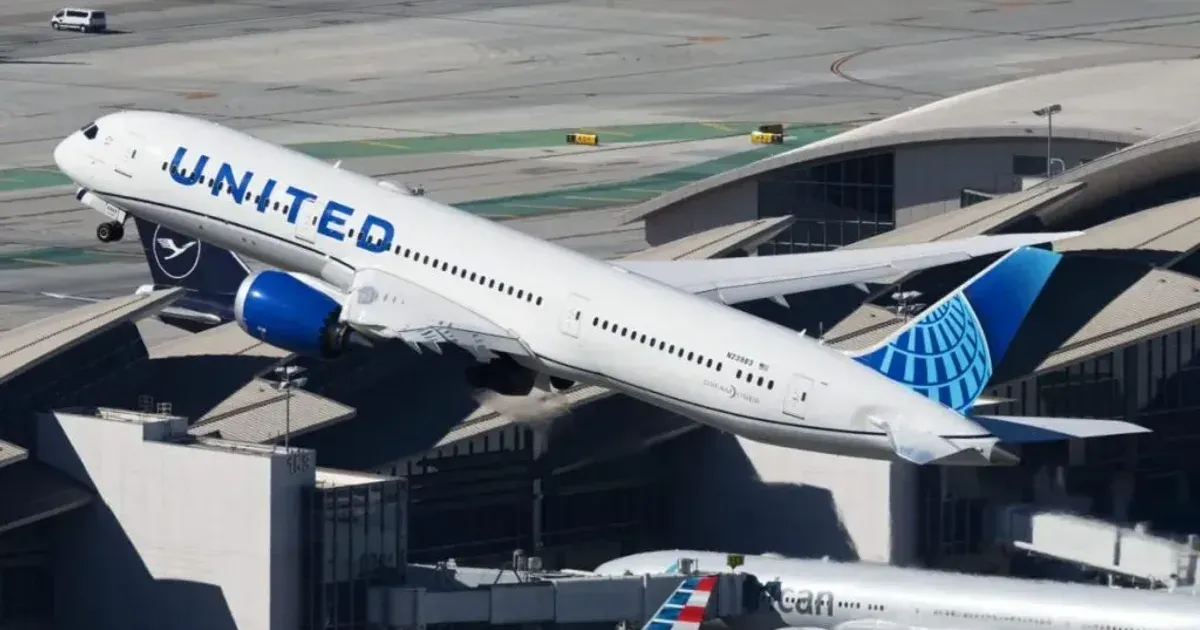
United Airlines executives warned investors on March 18 that surging jet fuel prices are threatening to erase first-quarter profits even as passenger volume hits record levels. These cost pressures stem largely from the escalating conflict in Iran, which has destabilized energy markets across the Persian Gulf. American Airlines and Delta Air Lines are reporting similar headwinds, signaling a difficult period for the industry. Still, domestic and international travel demand remains strong despite the increase in ticket prices. Financial analysts noted that the correlation between fuel costs and airfares has tightened in recent weeks as carriers pass expenses directly to consumers.
Aviation markets reacted sharply to news of restricted oil production and the closure of Iranian airspace. Major carriers must now reroute long-haul flights between Europe and Asia, adding significant flight time and fuel consumption to every journey. $1.2 billion in additional fuel expenses could hit the US aviation sector if current price paths hold through the second quarter. American Airlines CEO Robert Isom indicated that the financial impact has already compromised what would have otherwise been a profitable start to the fiscal year. Most executives believe that only the high volume of business and premium travel is preventing a widespread collapse in quarterly earnings.
United Airlines Aggressive Fuel Offset Strategy
Scott Kirby, the chief executive officer of United Airlines, told shareholders that the carrier intends to remain bullish despite the energy crisis. United maintains a strategy of aggressive capacity management and dynamic pricing to protect its bottom line. In fact, internal data shows that passengers are step by step willing to pay a premium for flexibility and comfort. This allows the airline to maintain high yields even as its operational costs climb. Executives expect to fully recover the added fuel costs by the end of the calendar year. They are counting on a sustained surge in international bookings to provide the necessary cushion.
United manages its fleet by prioritizing its most fuel-efficient aircraft, such as the Boeing 787-9 Dreamliner, for routes most affected by the Iranian airspace closure. Older, less efficient jets are being relegated to shorter domestic hops where fuel burn is less of a factor. For one, the efficiency gains from newer engines are proving essential in the current economic climate. Airlines that failed to modernize their fleets during the pandemic now face much steeper margin compression. Investors have responded by favoring carriers with younger, more technologically advanced inventories. Efficiency has become the primary metric for long-term viability.
Still, the logistical burden of avoiding regional conflict zones cannot be fully mitigated by technology. Rerouting a single flight around Iranian territory can add up to 90 minutes of extra flight time. Each additional minute burns hundreds of gallons of specialized kerosene. Aviation experts estimate that these detours represent a hidden tax on the global supply chain. And the cost is not limited to fuel alone. Extra flight time requires higher labor costs as crews reach their maximum duty hours more quickly.
American Airlines Profit Margins Under Pressure
American Airlines finds itself in a more precarious position than some of its peers due to its specific route structure and labor agreements. CEO Robert Isom provided a candid assessment of the current quarter during a recent industry summit. He clarified that the carrier has the demand to reach profitability but is being held back by external variables.
the carrier would have probably had a profitable first quarter if it weren’t for high fuel prices.
Robert Isom noted that while basic economy fares have risen, the real growth is happening in the front of the plane. Premium demand is helping to bridge the gap left by soaring energy costs. Business travelers are returning in numbers not seen since before the pandemic, providing a steady stream of high-margin revenue. Yet the volatility of the crude oil market makes long-term forecasting nearly impossible. For instance, a single day of tension in the Strait of Hormuz can erase a month of careful financial planning.
Analysts at Bloomberg suggest that American may need to trim its summer schedule if fuel prices do not stabilize. Reducing flights on low-margin regional routes would allow the carrier to consolidate its resources on more profitable hubs. By contrast, rivals like Delta are doubling down on their existing schedules. The divergence in strategy suggests a lack of consensus on how long the Iranian conflict will last. American remains focused on debt reduction even as these new costs emerge. Debt servicing combined with fuel spikes creates a difficult environment for equity growth.
Delta Air Lines Uses Premium Demand
Delta Air Lines continues to position itself as the premium choice for US travelers, a move that appears to be paying off during this crisis. CEO Ed Bastian recently raised the company’s first-quarter guidance despite the fuel surge. Delta relies on its loyal customer base and its partnership with American Express to generate consistent cash flow. High-end travelers are less sensitive to the price increases necessitated by the fuel market. So the airline can pass through its increased costs without seeing a major drop in load factors.
Strong demand for Delta One and Premium Select cabins has reached an all-time high. Travelers are opting for luxury even as inflation affects other sectors of the economy. In turn, Delta has been able to maintain its profit projections while other carriers are lowering theirs. The company’s refinery in Trainer, Pennsylvania, also provides a unique hedge against fuel price volatility that its competitors lack. This facility allows Delta to manage the spread between crude oil and jet fuel more effectively than most. It is still a foundation of their financial resilience.
Separately, the airline is investing heavily in lasting aviation fuel to reduce its long-term dependence on traditional petroleum. While this does not solve the immediate crisis in Iran, it indicates a move toward energy independence. Most industry insiders believe that the current crisis will accelerate the adoption of alternative fuels. Even so, the immediate focus remains on the daily fluctuations of the Brent crude index. Delta must balance its long-term green goals with the immediate reality of $120-a-barrel oil. Profitability depends on this delicate equilibrium.
Iran Conflict Disrupts Global Jet Fuel Markets
Tehran’s aggressive stance has caused a ripple effect that extends far beyond the borders of the Middle East. Global jet fuel inventories are at their lowest levels in a decade. Refineries are struggling to keep up with the demand for distillates as the war continues to escalate. In fact, some European carriers have already begun rationing fuel on certain routes. US carriers are in a better position but are not immune to the global pricing structure. Prices at the pump are a trailing indicator of the pain felt by the aviation sector.
Crude oil markets reacted instantly to the news from Tehran. Every diplomatic failure in the region translates to another five dollars per barrel on the global market. Travelers should expect ticket prices to remain elevated for the foreseeable future. There is little evidence to suggest that demand will cool enough to force prices down. Business travelers have shown a remarkable lack of price sensitivity in the current environment. Premium seats now command the highest margins in modern aviation history.
Aviation analysts are monitoring the situation hourly as the conflict develops. If Iranian airspace remains closed through the summer peak, the industry could face a logistical crisis. The rerouting of thousands of flights creates a bottleneck in neighboring airspaces. Air traffic control systems in Turkey and Saudi Arabia are already operating at near-maximum capacity. Efficiency is no longer just a goal. It is a necessity for survival.
The Elite Tribune Perspective
Aviation history reveals a recurring cycle of incompetence masked by global instability. Why do we continue to treat major air carriers as essential infrastructure when they behave like predatory hedge funds? Whenever a regional conflict erupts, executives are quick to wring their hands and point toward the fuel pump while simultaneously reporting record-breaking premium revenue. This is not a crisis of scarcity. It is a crisis of opportunism. The airlines have successfully conditioned the public to accept that geopolitical tension is a valid excuse for $800 domestic tickets.
By focusing on the front of the plane, carriers like United and Delta are effectively creating a two-tiered mobility system. The wealthy continue to fly in luxury, insulated from the price spikes, while the average traveler is priced out of the sky. We should be skeptical of the claim that fuel costs are the primary driver of these price hikes. These companies are not victims of the Iranian conflict. They are its beneficiaries, using the fog of war to permanently reset the baseline for what it costs to move through the world.
If the government continues to bail out these entities during every downturn, it should, at the very least, demand a more transparent accounting of how fuel surcharges are actually spent.