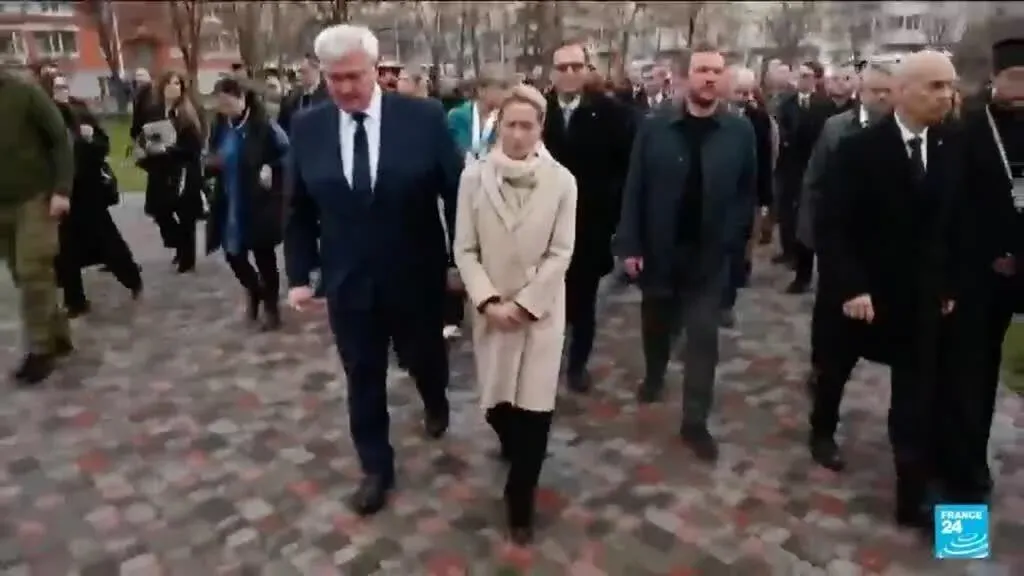
Ukraine's fourth-anniversary commemorations in Bucha turned remembrance into a test of ceasefire diplomacy. European foreign ministers visited Kyiv and Bucha on March 31, 2026, honoring civilians killed during Russia's 2022 occupation while Ukraine pushed an Easter truce proposal through U.S. mediators. The timing linked two arguments that Kyiv has never separated: a pause in fighting is useful only if it is verified, respected and connected to accountability.
Bucha is not only a memorial site for Ukraine. It is a legal and political reference point. The town became a symbol of civilian suffering after Russian forces withdrew from the Kyiv region in 2022 and evidence of killings, torture allegations and bodies in streets shocked foreign governments. Four years later, that memory still shapes how Ukraine judges any Russian ceasefire language.
Bucha Keeps the Record Open
Anniversaries in wartime are not only ceremonies. They keep evidence and grief in public view. For families in Bucha, the date carries names, last calls, missing relatives and homes that never returned to normal. For investigators and diplomats, it carries the demand that crimes committed during occupation not be erased by the next negotiation document.
European ministers therefore went there. Their presence tied military support, sanctions and legal memory together. The message was that Ukraine's case is not only about front lines. It is also about what happens to civilians when territory is occupied and international pressure fades.
The Easter Truce Exposed the Trust Problem
Zelenskyy's proposal for an Easter pause was framed as a humanitarian step and a test of Russian restraint. Moscow later announced its own short holiday ceasefire, but the truce expired with both sides accusing the other of violations. Even with a reported lull in some air attacks, the episode did not produce the confidence that a broader ceasefire would need.
Verification is the core Ukrainian concern. A truce without monitoring can become theater. A pause without clear scope can let each side accuse the other of cheating. A ceasefire without consequences can give Russia time while civilians remain exposed. Ukraine therefore treats every temporary pause as a test of verification, not a substitute for strategy.
Memory Shapes the Negotiating Position
Bucha makes it politically difficult for Ukrainian leaders to accept a ceasefire that freezes the war while leaving atrocities unresolved. Kyiv can support humanitarian pauses and prisoner exchanges, but any broader settlement has to answer a harder question: who is accountable for what happened in occupied towns?
The accountability demand does not mean every negotiation must wait for a full war-crimes process to finish. It means the language of peace cannot ask Ukrainians to forget why they distrust Russian promises. Bucha is the warning that a signature on paper is not enough if there is no enforcement and no record of responsibility.
Europe Uses Bucha Against Fatigue
War fatigue is real in Europe and the United States. Budgets are strained, elections change priorities and voters ask how long support should continue. Bucha gives Ukrainian and European officials a direct answer: ending pressure too cheaply could leave civilians, occupied towns and legal accountability behind.
The Bucha argument does not make every aid package automatic. It does make the moral cost of disengagement harder to dismiss. European ministers can disagree about weapons, sanctions or spending levels, but standing in Bucha narrows the political space for treating the war as only a border dispute.
Accountability Is Also Security Policy
Ukraine's position is that accountability is not separate from security. If atrocities are ignored, occupation becomes cheaper. If violations during a truce carry no consequence, future pauses become easier to abuse. If the world treats civilian harm as a bargaining detail, Russia has less reason to change conduct.
Remembrance therefore now functions as policy. Bucha is a graveyard, a case file and a negotiating boundary. It reminds allies that the central question is not whether a truce sounds humane. The question is whether it protects civilians, can be monitored and does not bury the evidence of what happened before.
The Truce Debate Cannot Escape Bucha
Calls for a pause in fighting will continue because civilians need relief and soldiers need breathing space. Ukraine is not rejecting the idea of temporary restraint. It is insisting that restraint must be real. The Easter episode showed how quickly a ceasefire can become another dispute when trust is absent.
Bucha sharpens that debate because it gives distrust a concrete address. A ceasefire that reduces killing is valuable. A ceasefire that freezes the battlefield while leaving crimes unanswered is politically and morally unstable. The anniversary mattered beyond ceremony because it mattered beyond ceremony. It forced diplomacy to carry memory, verification and accountability in the same sentence.