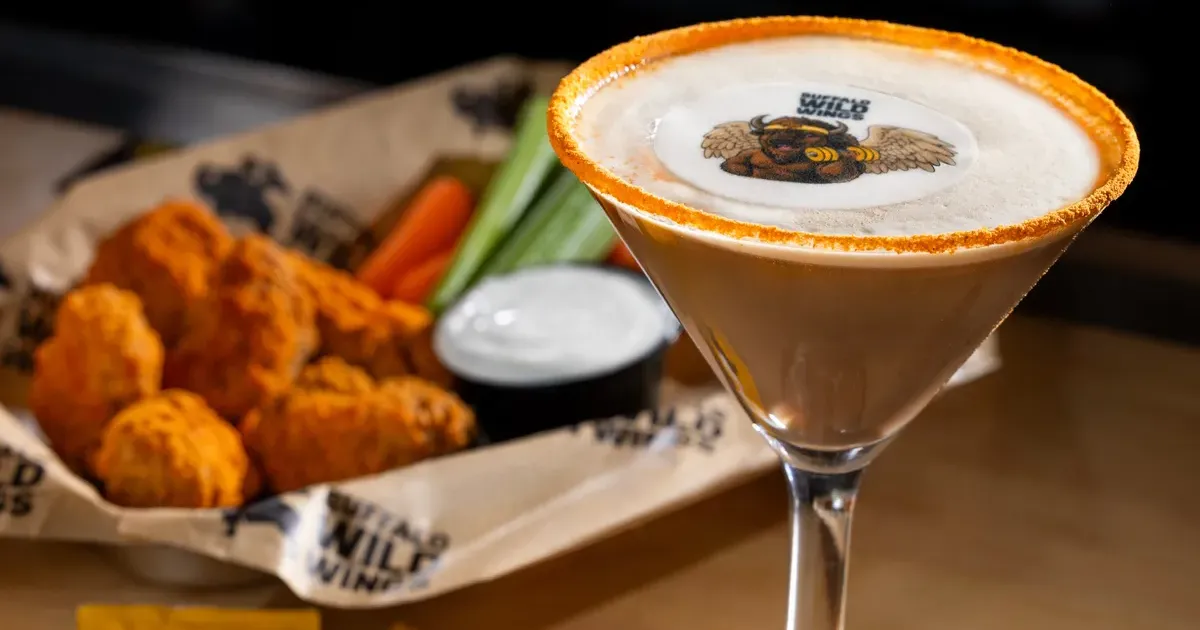
Caffeine and Whey Meet the Sports Bar Aesthetic
March 2026 arrived with a beverage that defies traditional culinary logic. Buffalo Wild Wings, a brand typically synonymous with domestic drafts and honey barbecue wings, recently unveiled the Espresso Proteini. This recipe reflects a chaotic convergence of fitness culture and late-night indulgence. Patrons find themselves staring at a glass that combines the sharp acidity of cold brew espresso with the thick, chalky texture of vanilla-flavored whey protein. It is a drink designed for the Instagram grid and the iron-pumping ego.
Critics often describe the Espresso Martini as the ultimate fuel for a long night, but this iteration adds a muscle-building twist that feels almost satirical. Each glass contains a standard pour of vodka, a double shot of espresso, and twenty grams of protein powder. Mixing these elements produces a beige, frothy liquid that sits awkwardly next to a basket of greasy drumsticks. It is a drink that asks the consumer to optimize their physical recovery while simultaneously dehydrating their system with ethanol.
Complexity is not the goal here.
The Psychology of the Unhinged Menu Item
Inspire Brands, the parent company of Buffalo Wild Wings, appears to be leaning into the viral nature of absurd food. Recent years saw a rise in items that prioritize shock value over traditional flavor profiles. Culinary experts point to the success of extreme fast-food mashups as the blueprint for this strategy. Consumers in 2026 do not just want a meal, they want a story to tell their followers. Buying a protein-infused coffee cocktail provides exactly that narrative. It functions as a badge of bravery or perhaps a lack of self-preservation.
Industry analysts suggest that the sports bar giant is targeting the younger, health-conscious male demographic that refuses to skip a workout even on a Saturday night. This specific strategy bridges the gap between the gym and the pub. If a customer can justify their cocktail consumption by citing their daily protein macro requirements, the barrier to entry for daytime drinking drops sharply. Such logic ignores the biological reality of how the liver processes alcohol, yet it makes for a compelling marketing pitch.
The math doesn't add up.
Historical Context of the Espresso Martini Boom
Dick Bradsell invented the original Espresso Martini in 1980s London, allegedly for a model who wanted a drink that would wake her up and then knock her out. The classic recipe relied on simplicity: vodka, fresh espresso, sugar syrup, and coffee liqueur. Decades passed before the drink reclaimed its throne as the most popular cocktail in America. By 2024, it had surpassed the Old Fashioned in total sales at urban bars. Buffalo Wild Wings stayed away from the trend for years, preferring to focus on its beer-heavy identity.
Caffeine culture eventually became too large for any franchise to ignore. Most bars responded by upgrading their espresso machines or sourcing better beans. Buffalo Wild Wings took a different path by adding a supplement usually found in a shaker bottle at Gold's Gym. Traditionalists in the mixology world have expressed horror at the idea of shaking whey protein with high-end vodka. They argue that the protein creates a grainy mouthfeel that ruins the silky texture of the espresso foam. Still, the target audience at a suburban sports bar rarely seeks out the nuances of a perfectly balanced cocktail.
Market Response and Flavor Profile Analysis
Taste testers describe the Espresso Proteini as a liquid version of a coffee-flavored energy bar. The sweetness of the vanilla protein often masks the low-quality vodka, making it dangerously drinkable for those with a high tolerance for artificial sweeteners. Some early reviews mention a lingering aftertaste reminiscent of a vitamin shop. Customers seem divided. Younger patrons embrace the novelty, while older regulars stick to their pitchers of lager. Alcohol remains the primary draw, but the caffeine provides a jittery alertness that keeps guests in their seats for an extra round of wings.
Social media engagement metrics for the launch have outpaced previous seasonal promotions. Videos of people grimacing after the first sip tend to perform better than polished advertisements. Buffalo Wild Wings understands that a polarized reaction is better than no reaction at all. Disgust and curiosity both drive foot traffic. A customer might enter the restaurant to mock the Espresso Proteini, but they will likely stay to order a twenty-piece traditional wing platter and a side of fries. The drink acts as the ultimate top-of-funnel marketing tool.
The Nutritional Paradox
Nutritionists have raised concerns about the health messaging of such a beverage. Protein is universally coded as a healthy macronutrient, which can create a halo effect around the cocktail. Mixing a stimulant like caffeine with a depressant like alcohol already carries risks. Adding a meal-replacement component to the mix further confuses the body's hunger and satiation signals. This trend toward functional excess suggests that consumers are no longer satisfied with simple pleasures. Everything must now serve a dual purpose, even if those purposes are fundamentally at odds with one another.
Innovation in the food service industry often leads to strange places. We have seen fried chicken used as taco shells and donuts used as burger buns. The Espresso Proteini is simply the liquid version of this maximalist philosophy. It is world where the boundary between a supplement store and a tavern has completely evaporated. Whether this drink survives the summer season or disappears into the graveyard of failed experiments remains to be seen. For now, it stands as a proof of the power of the absurd in the modern economy.
The Elite Tribune Perspective
Has the American palate finally reached its breaking point? The introduction of the Espresso Proteini is a desperate play for attention in a saturated market. It is the culinary equivalent of a car crash, something you cannot look away from despite the obvious carnage. We are living through an era where brands feel compelled to mutilate their menus to stay relevant on TikTok. That cocktail is not an innovation, it is an admission of defeat. It admits that the quality of the food and the atmosphere of the bar are no longer enough to attract a crowd. Instead, the establishment must offer a freak-show in a martini glass. The audacity to market a protein-laden alcoholic beverage as anything other than a stomach-churning gimmick is breathtaking. We should stop pretending that these mashups are creative. They are lazy. They rely on the lowest common denominator of human curiosity. If you need twenty grams of whey to justify your fourth vodka of the night, your problems are far larger than your choice of cocktail. Buffalo Wild Wings has traded its dignity for a few thousand shares and a mountain of chalky foam.