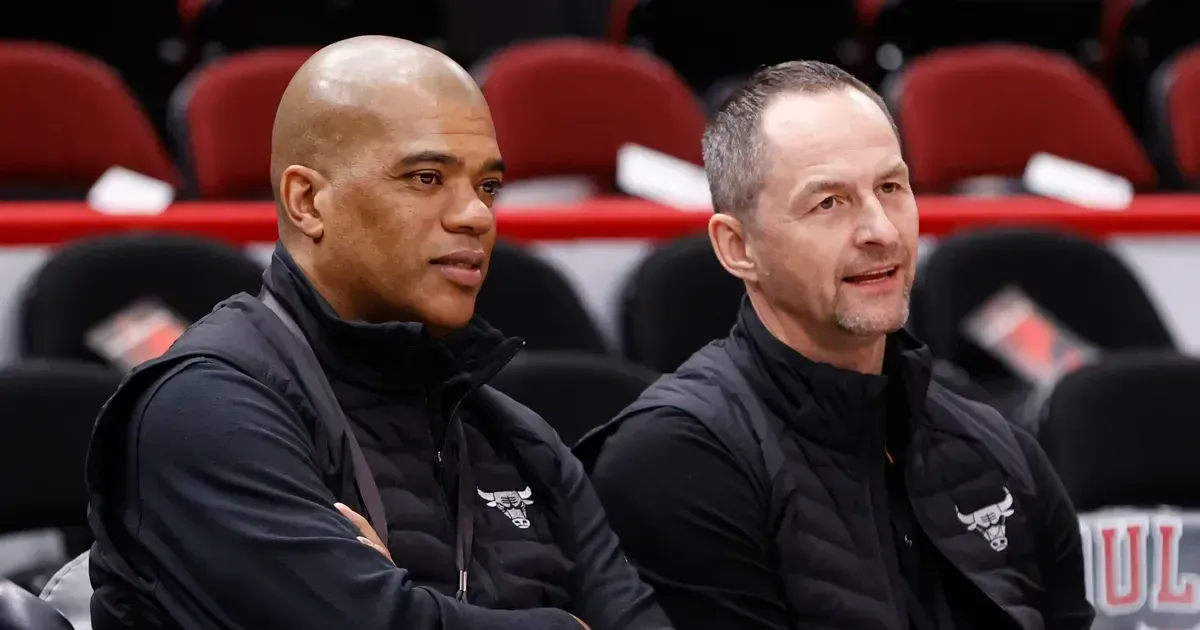
The Chicago Bulls have moved their front-office reset from speculation to action. Michael Reinsdorf dismissed Arturas Karnisovas and Marc Eversley after a season that left the franchise near the bottom of the Eastern Conference.
The decision, announced on April 6, 2026, ends a six-year basketball operations run defined by one brief playoff appearance, stalled roster development and mounting fan frustration at the United Center.
Chicago Basketball Operations and Personnel Failures
Administrative failures began with a fundamental inability to balance short-term playoff aspirations with long-term roster health. When Arturas Karnisovas and Marc Eversley took control in 2020, they inherited a roster desperate for veteran leadership. Moves for Nikola Vucevic and DeMar DeRozan initially provided a spark, but those acquisitions came at the expense of multiple first-round draft picks and young talent. Strategic errors became apparent as the Eastern Conference grew more competitive while Chicago remained stationary. Financial commitments to underperforming players capped the team's flexibility, preventing the front office from pursuing high-impact free agents.
Marc Eversley often spoke of a new standard for the Bulls, yet the on-court product rarely met those expectations. Talent evaluation remained a serious hurdle, as several lottery picks failed to develop into consistent contributors.
"These decisions are never easy, especially when they involve people we respect both personally and professionally. We are grateful for their dedication and the work they’ve put in over the past six years. At the same time, we have not had the success our fans deserve, and it’s my responsibility to go in a new direction," Reinsdorf said.
Roster Deconstruction and Missing Draft Assets
Roster mismanagement reached a breaking point during the 2024 and 2025 seasons. Arturas Karnisovas sanctioned the departure of DeMar DeRozan in 2024 without securing a meaningful return in draft capital or young assets. By February 2026, the fire sale continued with the trade of Coby White, a move that left the backcourt devoid of reliable scoring. Critics point out that Marc Eversley failed to secure a single first-round selection while trading away a core that once included Zach LaVine and Alex Caruso.
Draft equity is the lifeblood of NBA rebuilding efforts, yet Chicago finds itself with a depleted stock of future picks. Failure to retain value for departing stars has left the next front office with an enormous task. Scarcity of assets means the Bulls must rely on luck in the lottery rather than a calculated accumulation of talent.
Michael Reinsdorf expressed his disappointment through a formal statement released by the team communications department on Monday afternoon. Ownership emphasized that respect for the individuals involved did not outweigh the need for a change in leadership. Reinsdorf focused on the responsibility he feels toward the fan base, which has seen the brand value of the Bulls diminish sharply since the mid-2020s.
Discontent within the locker room mirrored the frustrations found in the front office. Players reportedly grew disillusioned with the lack of a clear rebuilding plan or a commitment to a veteran-led push for the playoffs. Arturas Karnisovas maintained a stoic public persona, but internal reports suggested a growing disconnect between the basketball operations department and the coaching staff. Results on the court confirmed these suspicions, as the Bulls frequently lost games to inferior opponents throughout the 2025-26 season. Ownership recognized that keeping the current staff through the end of the year would only delay the necessary rebuilding process.
Asset depletion persists as the most damning indictment of the Karnisovas era. Instead of embracing a full rebuild when the Lonzo Ball injury first derailed the team, management doubled down on a core that had reached its ceiling. Marc Eversley and Arturas Karnisovas appeared overmatched in trade negotiations with more aggressive rivals. Organizations like the Oklahoma City Thunder and Utah Jazz accumulated dozens of picks while the Bulls remained content with a treadmill of mediocrity. Financial growth for the Reinsdorf family continued, but the basketball product suffered from a lack of vision.
Trading Ayo Dosunmu and Nikola Vucevic for aging role players showed the short-term thinking that plagued the United Center for years. Chicago now sits in a position where the roster holds little trade value and the draft cabinet is nearly empty.
Internal chaos intensified last week when the Bulls released Jaden Ivey for conduct harmful to the team. Jaden Ivey had been a central part of the rotation until he engaged in an anti-LGBTQ rant on social media, specifically targeting the NBA for its Pride Month celebrations. Public relations disasters of this magnitude often signal a lack of discipline within the organization. Arturas Karnisovas and Marc Eversley faced intense scrutiny for their handling of the situation, with some suggesting the release came too late to salvage the team's reputation.
What Chicago Must Fix Next
Profitability and winning are not always synonymous in the ledger of Michael Reinsdorf. The firing of Arturas Karnisovas and Marc Eversley on April 6, 2026, is a convenient sacrifice designed to pacify a fan base that was nearing a total boycott. Ownership spent six years watching a slow-motion car crash of asset mismanagement, only to act when the financial risk of empty seats outweighed the cost of executive buyouts. The Reinsdorfs are masters of the "strategic reset," a cycle where they fire the current scapegoats to reset the clock on fan expectations without ever changing the underlying penny-pinching philosophy that hamstrings the roster.