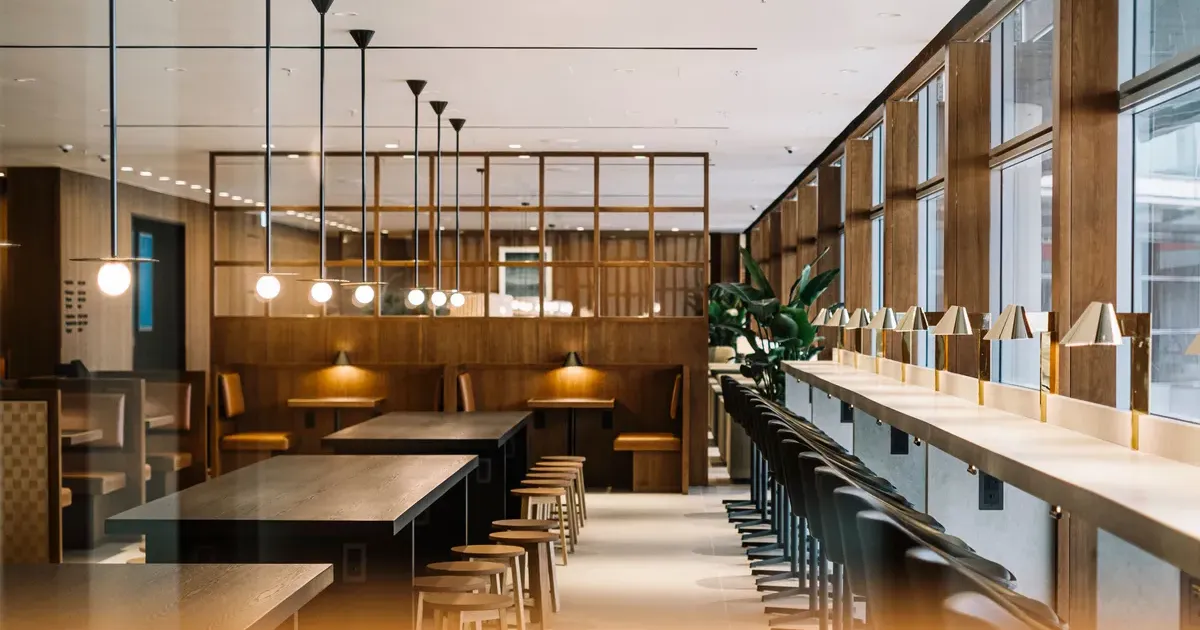
Cathay Pacific reopened its premier business class lounge, The Bridge, at the height of the spring travel season to capture increasing transit traffic through Hong Kong International Airport. Travelers passing through the Chek Lap Kok hub now find a facility that emphasizes residential aesthetics over traditional corporate waiting areas. Architect Foster + Partners designed the space to mirror the intimacy of a luxury apartment, focusing on warm wood finishes and hand-tufted carpets. By April 1, 2026, Cathay Pacific was treating The Bridge as a key part of its premium transit strategy. The facility spans more than 2,500 square meters on Level 5 of the terminal near Gate 35.
Divided into two distinct zones, the lounge provides North and South wings that cater to different passenger moods and requirements. North Wing arrivals encounter the Bakery, where the scent of fresh bread is a sensory anchor for those arriving from long-haul flights from London or New York. Bistro-style seating surrounds the buffet area, which provides a mix of Asian and Western cuisines that rotate according to the time of day. This architectural layout encourages movement throughout the space to prevent the static congestion often found in older airport facilities.
South Wing visitors find a more contemplative environment designed for extended stays during multi-hour layovers. It houses the Long Bar, a signature element of the Cathay Pacific brand, which offers views across the tarmac toward the South China Sea. Bartenders serve a range of spirits and custom cocktails, while the adjacent Television Lounge provides a darker, quieter setting for passengers needing to escape the bright lights of the main terminal. The specific selection of Italian marble and timber flooring reinforces the high-end residential theme throughout the southern corridor.
Architectural Shift at Hong Kong International Airport
Foster + Partners used a design language at The Bridge that differs sharply from the industrial aesthetic of the wider terminal. Soft lighting replaces the harsh overhead neon common in public concourses, while the use of greenery softens the transition between the gate areas and the lounge interior. Internal surveys of premium travelers showed a growing preference for spaces that do not feel like airports. Architects responded by using residential-grade furniture that invites longer periods of rest. Each seating cluster includes integrated power outlets and USB-C ports hidden within side tables.
Connectivity is the backbone of the redesign as business travelers increasingly demand high-bandwidth environments for video conferencing. Dedicated workstations offer acoustic privacy without the isolation of enclosed booths. Most of these desks provide direct sightlines to the departure boards, ensuring that passengers stay informed about their flight status without relying solely on mobile notifications. The South Wing also features nine shower suites lined with Travertine stone and fitted with high-pressure showerheads. Each suite provides a private vanity and premium skincare products to help travelers refresh before their next flight leg.
Work on the renovation began after the carrier noticed shifts in how transit passengers used their time during layovers. Long-haul travelers from Europe and North America often arrive in the early morning hours, creating a surge in demand for breakfast services and shower facilities. The Bakery accommodates this by producing warm pastries and artisanal breads on-site throughout the morning peak. Records show that The Bridge handles thousands of guests daily, requiring a strong maintenance schedule that operates during the brief quiet periods in the middle of the night.
Culinary Integration of Local Hong Kong Identity
Food at the facility acts as a bridge between the sterile environment of an international airport and the vibrant street life of the city outside. The Noodle Bar remains the most popular feature, serving Dan Dan noodles and wonton soup prepared to order by a dedicated culinary team. Many travelers, such as Matt Ortile of Conde Nast Traveler, have noted that these local flavors provide a sense of place even when they lack the time to clear customs and enter the city. Dim sum baskets and seasonal Chinese dishes are available throughout the day in the main dining areas. As a major global hub, Dubai International Airport serves as the primary competitor to the premium services offered here.
Matt Ortile, writing for Conde Nast Traveler, stated that his eight-hour layover at the facility allowed him to experience the culinary highlights of the city without ever leaving the terminal.
Beyond the traditional Cantonese offerings, the Coffee Loft provides a modern cafe experience with professional baristas. Passengers can order specialty lattes or select from a range of high-quality teas sourced from regional plantations. The loft also serves light snacks and desserts, functioning as a quieter alternative to the bustling Bistro. This diversification of dining options reflects a broader strategy to compete with other major Asian hubs like Singapore Changi and Seoul Incheon. Performance metrics indicate that food quality is a primary driver of lounge satisfaction scores among Oneworld alliance members.
Supply chains for the lounge prioritize local ingredients to ensure freshness and support regional producers. Produce arrives daily from markets across the New Territories to meet the high volume of the Bistro and Noodle Bar. Executive chefs oversee the menu rotation to ensure that frequent flyers do not encounter the same meals on consecutive trips. The kitchen staff operates on a 24-hour cycle to provide consistent service across all time zones. Logistics for such a large-scale catering operation require precise coordination with the airport's central security and customs protocols.
Economic Impact of Premium Layover Services
Competition for high-value transit passengers has intensified as airlines recover their global network capacities. Cathay Pacific uses its lounge network as a tool to maintain loyalty among its Diamond and Gold Marco Polo Club members. By offering a superior ground experience, the carrier can justify premium pricing on its long-haul routes. The revenue generated from business class tickets remain a critical component of the airline's financial stability. Investment in The Bridge is a calculated move to defend market share against emerging carriers in the Middle East.
Financial analysts at Bloomberg suggest that premium lounge access is one of the few remaining ways for legacy carriers to differentiate their service in a crowded market. Many travelers now choose their transit hubs based on the quality of the amenities available during layovers. Hong Kong has historically held a dominant position in the trans-Pacific market, but it faces pressure from newer facilities in the region. The redesign of The Bridge aligns with the airport's Master Plan 2035, which aims to enhance the passenger experience through technological and architectural upgrades. These improvements are expected to increase the average spend per passenger within the terminal.
Retail and hospitality services at the airport contribute sharply to the local economy of the Special Administrative Region. Thousands of workers are employed in the maintenance, catering, and management of these premium spaces. Training programs for lounge staff emphasize the high standards of service expected by international business travelers. The refurbishment of the facility also involved local contractors and designers, providing a temporary boost to the construction sector. Data from the Airport Authority Hong Kong shows that transit passengers account for approximately 30% of the total traffic volume.
Layover Hospitality as Strategy
The Bridge redesign treats transit time as a product rather than a delay. For premium passengers, a better lounge can turn Hong Kong into a preferred connection point even when routes are similar.
That matters for Cathay Pacific because airport experience now competes with fare, schedule and alliance benefits. Food, architecture and local identity become tools for defending loyalty in a crowded Asian hub market.