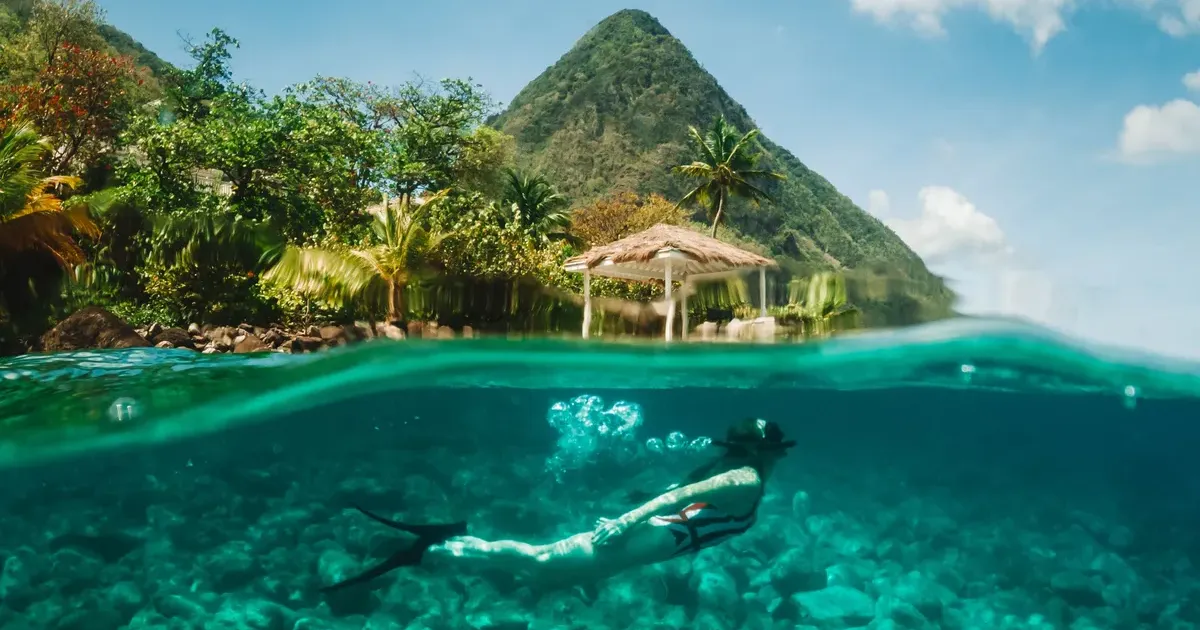
Viceroy Sugar Beach welcomed a new wave of eco-conscious travelers marking a shift toward high-end tourism rooted in direct marine access. Marine ecosystems across the globe now serve as the primary draw for ultra-high-net-worth individuals seeking more than traditional leisure. Market data from the first-quarter of the year indicates that properties with private reefs or direct access to protected marine zones command a 35 percent premium over landlocked competitors. Luxury travelers increasingly prioritize properties that offer immediate entry to underwater biodiversity without the need for lengthy boat transfers or external charters. On April 1, 2026, luxury resorts were leaning harder on conservation as part of the travel experience.
St. Lucia remains at the center of this trend because of its unique geological formations. Viceroy Sugar Beach sits between the Pitons, where the sea floor drops steeply to support a diverse array of coral species. Guests at this property can access a designated marine reserve within seconds of leaving their villas. Preservation efforts in this specific cove have led to a measurable increase in hawksbill turtle sightings over the last twenty-four months. Local regulations strictly limit boat traffic in these waters to prevent anchor damage to the delicate fan corals lining the shore.
Caribbean Marine Conservation Efforts at Viceroy
Viceroy Sugar Beach manages its aquatic frontage with the precision of a laboratory. On-site marine biologists monitor the health of the reef daily, tracking water temperature and acidity levels to predict bleaching events before they occur. Crystalline waters in this region of the Caribbean allow for visibility often exceeding 100 feet, which makes the resort a hub for underwater photography and scientific observation. Revenue generated from these specialized tourism activities funds local reef restoration projects that extend beyond the hotel property line.
Economic analysts at global travel consultancies suggest that the value of a healthy house reef can exceed $11 million in annual booking revenue. Maintaining these ecosystems requires constant vigilance and a ban on certain chemical sunscreens among guests. While some travelers initially resisted these restrictions, compliance rates have climbed to nearly 100 percent as the visible health of the reef improves. Caribbean resorts are finding that environmental stewardship is no longer an optional marketing tool but a core operational requirement for fiscal stability.
Maldivian Resorts Combat Rising Ocean Temperatures
Maldives properties face a different set of challenges as rising sea levels and warming waters threaten the very foundations of their atolls. At W Maldives on Fesdu Island, the house reef is considered one of the most resilient in the North Ari Atoll. Divers and snorkelers here frequently encounter whale sharks and manta rays, species that rely on the nutrient-rich currents flowing through the deep channels surrounding the resort. The hotel has invested in sophisticated coral nursery programs to transplant heat-resistant strains of staghorn coral back onto the main reef structure.
Gili Lankanfushi takes a more minimalist approach to its marine interaction. Overwater villas are positioned to allow guests to observe reef sharks and rays directly from their decks. This layout minimizes the physical footprint on the seabed while providing an educational view on the local ecosystem. Marine biologists at the resort lead daily snorkeling expeditions that focus on data collection rather than just sightseeing. Guests contribute to a global database of turtle sightings, helping researchers track migratory patterns across the Indian Ocean. Luxury developments like Peninsula Papagayo continue to shape the evolution of sustainable high-end tourism in the Caribbean region.
Marine conservation is the foundation of our operational philosophy because the reef is our primary asset. Without the vibrant biodiversity of the house reef, the economic justification for high-end Maldivian tourism disappears completely.
COMO Maalifushi represents the expansion of luxury tourism into the remote Thaa Atoll. Snorkeling in this region offers access to untouched coral gardens that have seen little human interference compared to the crowded reefs near Malé. Hammerhead sharks are frequently spotted in the deeper waters just off the resort edge. Isolation provides a natural defense against the over-tourism that has plagued other parts of the archipelago. Remote destinations like Maalifushi are now the gold standard for travelers seeking authentic encounters with megafauna.
Indonesian Remote Hospitality and Biodiversity
Nihi Sumba offers a different view on the intersection of luxury and the ocean. Located on the island of Sumba, this resort overlooks a legendary surf break known as Occy's Left, but the underwater terrain is equally meaningful. Rocky outcrops and deep-sea trenches near the shore create a habitat for large pelagic fish and sea snakes. Guests must often navigate strong currents to reach the most vibrant sections of the reef, making this a destination for more experienced snorkelers. Sumba remains less developed than Bali, preserving a level of biodiversity that is increasingly rare in Southeast Asia.
Belmond Maroma on the Riviera Maya utilizes its proximity to the Mesoamerican Barrier Reef to attract visitors interested in the second-largest reef system in the world. Recent renovations at the property included the creation of a specialized dive and snorkel center that focuses on reef education. Guests can participate in seagrass planting initiatives designed to stabilize the shoreline and provide feeding grounds for green sea turtles. This focus on the entire coastal ecosystem, instead of just the colorful corals, reflects a more holistic approach to environmental management. Protection of the mangrove forests adjacent to the resort remains a high priority for the engineering team.
Four Seasons Resort Hualalai in Hawaii maintains a unique 1.8-million-gallon aquarium carved into natural volcanic rock. Known as King's Pond, this man-made lagoon contains over 4,000 tropical fish and provides a controlled environment for guests to practice snorkeling skills before heading into the open ocean. 4,000 individual organisms requires a complex life-support system to mimic the natural tides and nutrient cycles of the Pacific. This facility is a bridge for travelers who may feel intimidated by the unpredictability of the open sea. It also is a sanctuary for injured marine life being rehabilitated by state wildlife officials.
Six Senses Zil Pasyon in the Seychelles occupies the private island of Félicité, where granite boulders create a dramatic underwater landscape. These large stones provide shelter for small reef fish and octopuses, creating a complex hunting ground for larger predators. Water clarity in the Seychelles is highly dependent on seasonal monsoon winds, but the sheltered coves of Félicité remain navigable for most of the year. The resort has eliminated all single-use plastics to prevent debris from entering the surrounding marine park. Hawksbill turtles nest on the resort beaches between October and January each year.
Marine conservation gives luxury hotels a way to sell purpose alongside comfort. Guests can feel that a high-end stay supports reefs, turtles or local biodiversity rather than only private leisure.
That promise needs evidence. Resorts that market conservation without measurable local work risk turning environmental language into another amenity rather than a real protection strategy.