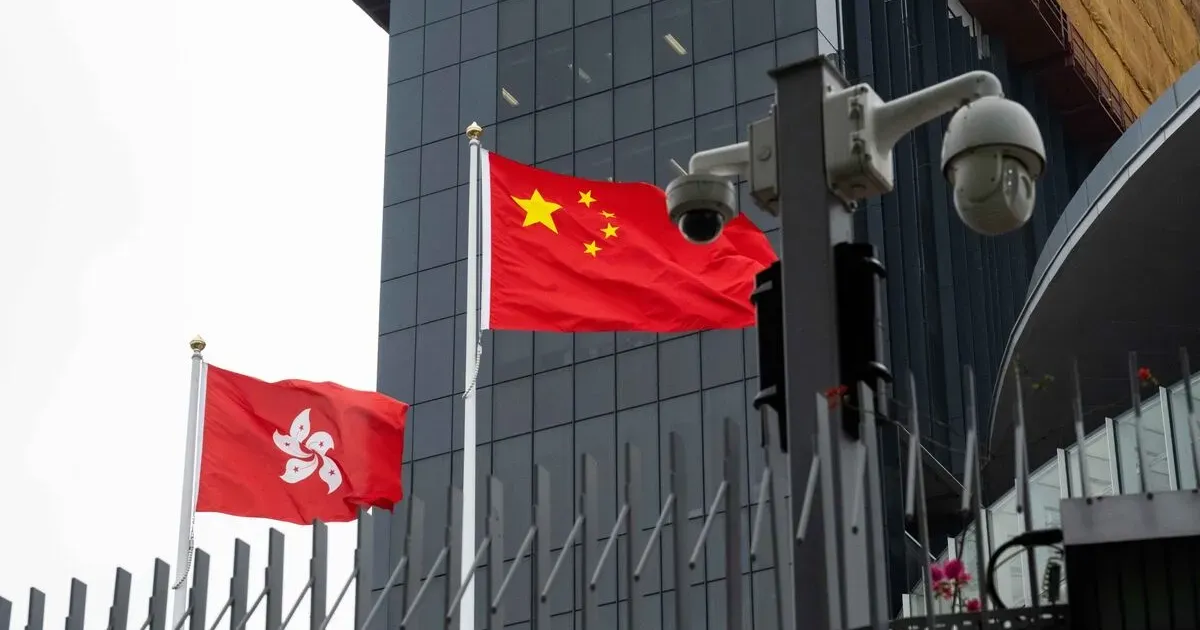
China's decision to summon the United States' top diplomat in Hong Kong turned a device-password warning into a larger argument about the city's legal risk. The U.S. consulate had warned citizens that, under amended national security enforcement rules, refusing to provide passwords or decryption assistance for electronic devices can be a criminal offense in relevant cases.
The envoy was Julie Eadeh, the U.S. consul general in Hong Kong and Macau. Beijing's foreign ministry office in the city objected to the March 26 alert, accusing Washington of smearing Hong Kong's legal environment and interfering in Chinese internal affairs. The diplomatic language was predictable. The practical issue is more difficult to dismiss: phones and laptops now sit at the center of Hong Kong's business, travel and civil-liberties risk.
The rules implemented in March widened the pressure on people caught in national security investigations. Reports on the alert said refusal to provide passwords or decryption access could bring criminal penalties, while authorities also gained more power to take and retain devices described as evidence.
The Device Is The Archive
A password is no longer just a way into one phone. It can unlock messages, contacts, cloud accounts, travel records, photographs, corporate documents, source material, health information and privileged communications. For a journalist, lawyer, banker, researcher or activist, one device can contain many other people's data as well as the owner's.
The U.S. alert carried weight for that reason. It was a standard consular warning in form, but it carried political weight because it told Americans to treat Hong Kong as a place where national security law can reach deep into personal and professional data. Beijing can call that interference. Travelers and companies still have to plan for the legal fact on the ground.
National Security Is the Broad Zone
Hong Kong officials argue that the powers apply to national security cases and are needed for enforcement. Many jurisdictions have tools for search, seizure or compelled assistance in serious investigations. The difference is the breadth and political history of Hong Kong's security framework after 2020.
Critics do not have to claim that every visitor is likely to be targeted. The concern is that national security categories can be broad, politically charged and difficult to challenge. Once that framework is attached to digital devices, ordinary travel preparation changes. A person may have nothing to hide and still be carrying data they have a duty to protect.
Companies Have to Rewrite Travel Habits
For businesses, the issue is operational rather than abstract. Should staff travel with clean devices? Should sensitive client files remain outside local storage? Who is authorized to unlock a company laptop? What happens if a password demand conflicts with professional secrecy, data-protection rules or obligations to sources and clients?
Those questions are especially sharp for finance, law, media, academia, technology and civil society. Hong Kong's commercial value has long depended on the belief that information, people and capital could move with fewer political frictions than in mainland China. Password-compulsion powers weaken that belief even if enforcement is selective.
The Diplomatic Protest Cannot Remove The Risk
Beijing's response fits a familiar pattern. When foreign governments warn citizens about Hong Kong's security laws, Chinese officials frame the warning as an attack on stability and sovereignty. That message may work domestically and with some allies, but it does not solve the compliance problem facing travelers.
Risk teams do not write travel policies from diplomatic slogans. They write them from enforceable powers, penalties and worst-case exposure. If a device can be searched, compelled open or retained in a national security case, companies will reduce local data, change device policies and brief staff before travel. That is not ideology. It is basic risk control.
Hong Kong's Trust Problem Is Bigger Than One Alert
Hong Kong's security laws may expand state control while weakening the trust that made the city commercially distinct. A financial and legal hub runs on courts, buildings and tax rules, but it also runs on confidence that data will not become a political hostage.
China can summon diplomats, reject foreign criticism and insist that Hong Kong remains stable. It cannot force every company, journalist, lawyer or researcher to behave as if the password issue is minor. Once device access becomes part of the national security toolkit, every laptop at the border or in a police interview carries more than one person's secrets. That is the cost the alert exposed.