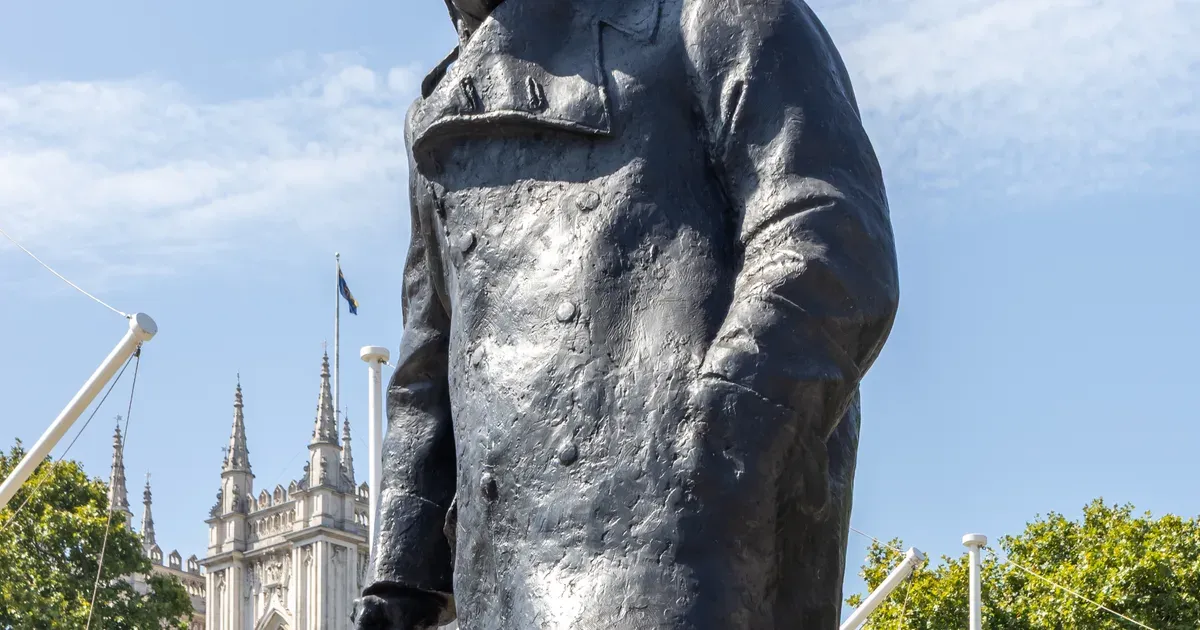
Emma Soames, the granddaughter of Winston Churchill, has backed the Bank of England's plan to rotate his image off the five-pound note, turning a routine currency decision into a larger argument about memory and national identity. Her position cuts against critics who framed the change as an institutional slight. The report was published March 13, 2026. Soames argued that Churchill had already received a prominent place on the note and that other British figures deserve public recognition too.
The dispute is not only about one portrait. It is about who gets to decide which historical figures appear on everyday money, how long that recognition should last and whether a design change should be read as political judgment. That is why a note used for small transactions has become a proxy fight over heritage.
A note used for small transactions has become a proxy fight over heritage.
Currency Rotation Meets Symbol Politics
Churchill has appeared on the polymer five-pound note since 2016, after earlier designs featured figures including Elizabeth Fry and George Stephenson. Banknote characters in Britain have never been permanent. They move through design cycles shaped by security upgrades, production needs and public nominations. That technical process has become harder to separate from politics. Nigel Farage and other critics described the planned removal as part of a wider effort to soften or diminish Churchill’s legacy. Supporters of the rotation see that argument as exaggerated, noting that Churchill remains central in museums, statues, school names and public ceremonies.
The Bank of England also has practical reasons to refresh designs. New notes give officials a chance to update anti-counterfeiting features, improve durability and introduce a new visual system. Those operational details rarely draw attention until the featured figure carries political weight.
Soames Changes the Family Angle
Soames’ intervention matters because it weakens the claim that Churchill’s family views the move as an insult. Her argument is more restrained: the former prime minister’s historical status does not depend on remaining on a five-pound note forever. That distinction is important in a debate that often treats every redesign as a verdict. Winston Churchill remains one of the most visible figures in British public life. The question is whether visibility on currency should be indefinite or shared over time. A rotating note can honor Churchill without turning one denomination into a permanent monument.
The decision also exposes a gap between historical legacy and political usage. Churchill’s image is often used in present-day arguments about patriotism, sovereignty and institutional trust. A banknote redesign can therefore become evidence for a larger story that different sides already want to tell.
The Bank Faces a Trust Problem
Even if the Bank of England sees the matter as routine, it still has a communication problem. Currency belongs to the public in a way few state documents do. People handle it, save it, give it to children and associate it with national continuity. A design change can feel personal even when the process is bureaucratic.
The next figure selected for the note will therefore carry extra scrutiny. A choice framed around science, literature, public service or industry may still be pulled into the same argument if critics believe the Bank is making a cultural statement. The institution will need to explain the criteria clearly rather than relying on technical procedure alone.
That explanation has to include timing. If the public sees only the final image, the decision can look sudden and opaque. A clearer account of nominations, security needs and design cycles would make it harder for opponents to describe the change as a hidden political maneuver. There is an economic side as well. Banknote redesigns are not symbolic exercises alone; they involve production costs, vending-machine updates, cash-handling systems and anti-fraud planning. Those details are less dramatic than a row over Churchill, but they are the machinery behind every new note.
That practical layer gives the Bank a stronger defense if it communicates early. Without it, the debate will keep drifting toward motive instead of process. The stronger reading is that the controversy shows how crowded Britain’s symbolic space has become. Cash use is declining, yet the faces on banknotes still carry unusual emotional force. Removing Churchill from the fiver may not erase him from national memory, but it does show that even small design decisions can become tests of public trust.
Soames has effectively asked the public to separate honor from permanence. That is a difficult argument in a political environment where cultural disputes often reward the loudest interpretation. Still, it is a useful distinction for any country that wants its public symbols to recognize more than one generation. For Soames, the answer is rotation rather than rupture. Churchill’s place in history is secure enough to share the note with the next chapter of British achievement. Whether the wider public accepts that framing will depend on how confidently the Bank handles the transition.