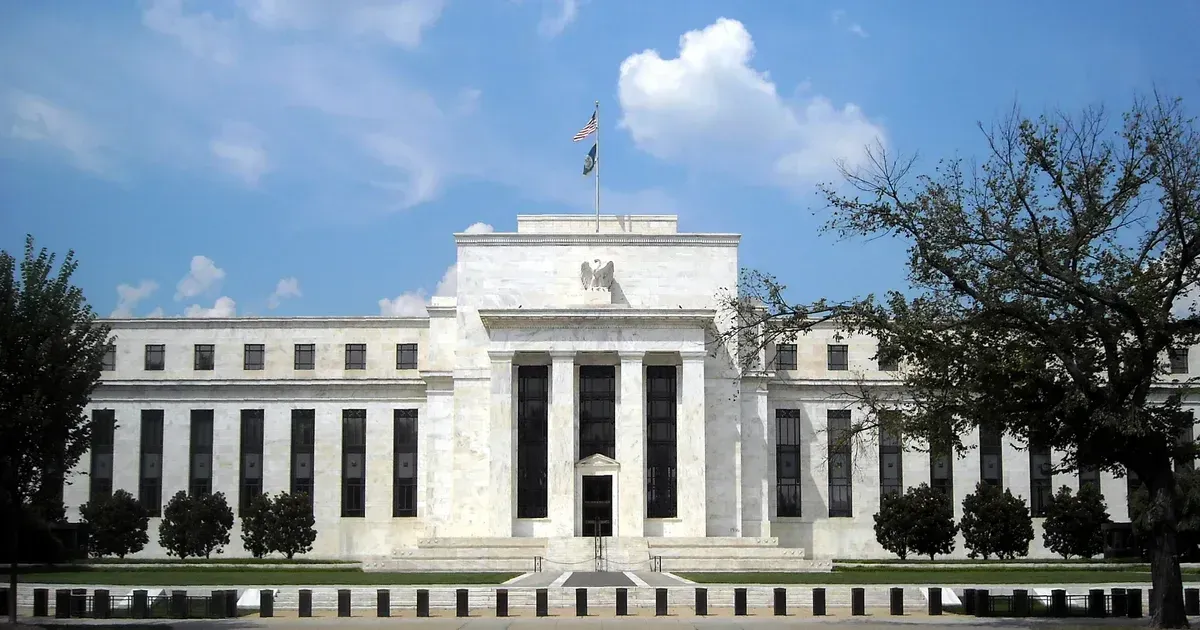
The Federal Reserve left interest rates unchanged, giving investors a pause but not the clear policy turn many markets wanted.
The decision keeps the central bank in a defensive position: unwilling to declare victory over inflation, but also wary of tightening financial conditions too far. The Fed announced the decision on June 18, 2026.
For traders, the headline was simple. The Federal Reserve did not deliver a cut, and it did not offer the kind of clear easing signal that risk assets often demand after a long period of restrictive policy.
A Pause That Still Carries Pressure
The practical effect is that borrowing costs remain high across the economy. Mortgage applicants, small businesses and credit card borrowers still face a financial system priced for caution rather than relief, while banks have to judge credit quality in an environment where households are already stretched. That pressure does not fall evenly; families rolling over debt feel it first, and smaller employers feel it when a routine credit line becomes harder to renew.
Bond markets will now turn back to inflation prints, wage growth and consumer demand. If price pressure cools further, investors will argue that the Fed is late. If inflation proves sticky, officials will say patience was the only credible choice. The result is a market that reacts less to the decision itself than to every clue about whether the decision can survive the next month of data.
That tension matters because policy is no longer just a central-bank story. It is a household cash-flow story, a corporate refinancing story and a political story about whether the economy can slow without cracking. The longer rates stay elevated, the more the burden moves from traders watching screens to families deciding whether to refinance, move, hire help or delay a purchase that would otherwise keep local businesses moving.
Recent market behavior shows how little confidence investors have in a straight path. Equities can rally on the hope of easier money, while longer-dated yields refuse to fall because buyers still want compensation for uncertainty. That split is the market's warning that rate relief and economic strength are no longer being priced as the same thing. It also explains why a single unchanged decision can move currencies, bank shares, household expectations and political pressure almost at the same time.
Markets Wanted Guidance, Not Just Stability
A hold can look neutral on paper, but it rarely lands that way. In practice, it tells investors that the next move still depends on incoming data, not on a calendar promise. That keeps each jobs report, inflation release and retail sales figure loaded with more political and market meaning than a single data point should carry.
That uncertainty also shapes company behavior. A retailer considering store expansion, a manufacturer planning equipment purchases and a developer waiting on financing all face the same problem: the cost of capital is still high enough to make delay rational, even when demand has not collapsed. That is how a soft landing can become fragile without one dramatic shock.
The strongest part of the Fed's position is credibility. The weakest part is patience fatigue. People can accept a difficult policy if they believe it is working; they are less forgiving when the cost is obvious and the benefit feels delayed.
The Real Cost of Waiting
The hard truth is that a steady rate decision is not a neutral event for everyone. It protects the Fed from moving too early, but it transfers the pain of caution to borrowers who cannot wait for perfect data.
The danger is not only recession. It is the slow erosion that comes when families postpone purchases, firms postpone hiring and lenders quietly tighten standards. That kind of slowdown does not announce itself with one dramatic break; it arrives as a series of smaller refusals across the economy. That is the policy trap now. Cut too soon, and inflation credibility is damaged. Wait too long, and the central bank may discover that households and smaller firms absorbed the cost before officials admitted the economy had weakened. The next decision will matter, but the damage or discipline created by this hold starts immediately.