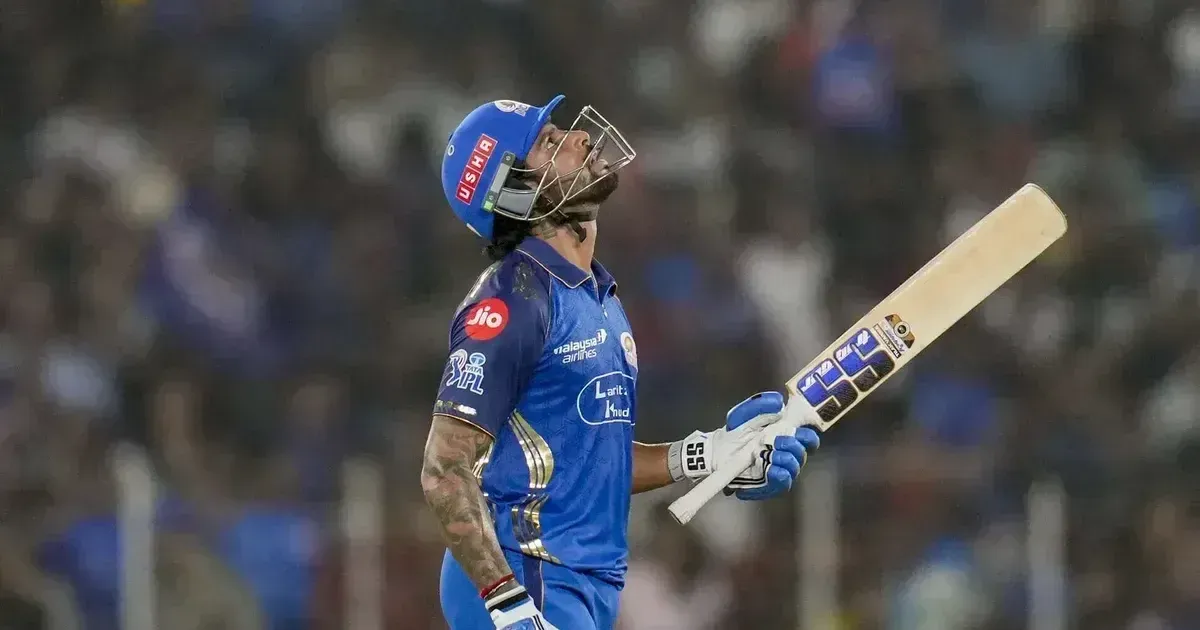
Chennai Super Kings humiliated Mumbai Indians at the Wankhede Stadium on April 24, 2026, as Mukesh Choudhary led a dominant bowling performance. Chennai secured a dominant victory in the high-stakes rivalry, leaving the home crowd in a state of stunned silence. Mumbai Indians faced their worst loss in IPL history during this encounter, finishing 103 runs short of the target. Performance metrics across both innings favored the visitors, who looked composed while the hosts crumbled under sustained pressure. Hardik Pandya stood in the middle of the field during the post-match ceremony, looking at a scorecard that offered no consolation for his struggling side. Spectators witnessed an exercise in tactical execution from the Chennai coaching staff.
Mukesh Choudhary provided the defining moment of the evening by striking on the very first ball of the match. Chennai's left-arm seamer produced a delivery that swung late, dismantling the stumps and setting an immediate tone of desperation for Mumbai. Emotional celebrations followed as Choudhary pointed toward the sky, visibly moved by the achievement. Reporters noted the player seemed to dedicate the dismissal to his late mother, adding a personal layer to the professional brilliance on display. Mumbai's opening partnership vanished before most fans had taken their seats. Disruption of the top order forced the middle-order batters into a defensive shell from which they never truly escaped.
Mukesh Choudhary Secures Early CSK Breakthrough
Early breakthroughs often dictate the flow of T20 cricket, and Chennai used this advantage to the fullest. Mukesh Choudhary finished his opening spell with figures that paralyzed the Mumbai response. Control and precision defined his approach, forcing batters to play at deliveries they would normally leave. Mumbai Indians struggled to find any rhythm as the run rate climbed above twelve per over by the sixth set of six balls. Chennai Super Kings fielders backed their bowlers with several athletic catches in the deep, preventing any potential counter-attack. Professional analysts observed that the humidity at Wankhede assisted the swing, but Choudhary's discipline allowed him to exploit the conditions better than his counterparts.
Pressure mounted on the Mumbai middle order to stabilize an innings that was rapidly disintegrating. Hardik Pandya attempted to anchor the chase, yet his efforts met with stiff resistance from Chennai's spin department. Ball after ball turned sharply on a pitch that many expected to be a batting paradise. Mumbai's inability to rotate strike in the middle overs created a vacuum of momentum. Chennai's captain rotated his bowlers with clinical efficiency, never allowing a single batter to get comfortable. Statistics from the match highlight an enormous number of dot balls, totaling nearly forty percent of the Mumbai innings.
Mumbai Indians Suffer Heavy Wankhede Stadium Defeat
Mumbai Indians recorded their biggest defeat by runs in the franchise's long and storied tenure. Losing by a 103-run margin in a format designed for close finishes indicates a systemic failure in both planning and execution. Wankhede Stadium, usually a fortress for the five-time champions, felt like neutral territory as Chennai supporters took over the stands. Mumbai's batting lineup, featuring several international stars, collapsed for a total that failed to even reach the 150-mark. Fans began exiting the stadium with five overs remaining, signaling a lack of faith in the tail-enders' ability to close the gap. Chennai Super Kings players remained disciplined until the final wicket fell, securing two essential points in the league standings.
Chennai Super Kings delivered an all-round performance to hand Mumbai Indians a 103-run defeat in their IPL 2026 game at Wankhede Stadium.
Chennai's dominance extended to every facet of the game, including their own batting display which set a powerful target earlier in the evening. Openers for the Super Kings capitalized on loose deliveries, building a platform that allowed the lower order to swing freely. Mumbai's bowlers looked listless, lacking the variety required to trouble a settled batting unit. Successive boundaries in the final three overs of the first innings pushed the total beyond 220, a figure that historically proves difficult to chase at this venue. Records show that Mumbai has only chased such a total once in the last four seasons. The 103-run deficit is evidence of the lopsided nature of the contest.
Hardik Pandya Addresses 103-Run Loss
Hardik Pandya faced the media following the conclusion of the match to discuss the tactical errors that led to the rout. Mumbai's captain pointed to the early loss of wickets as the primary driver of the defeat. Credit was given to the Chennai bowlers, but Pandya emphasized that his own unit failed to adapt to the movement of the ball. Observers noted that his tone was uncharacteristically somber during the press conference. Mumbai Indians now face a difficult path to the playoffs, requiring a near-perfect run in their remaining fixtures. Leadership questions have surfaced among fans and former players alike, focusing on the team's inability to compete in high-pressure scenarios.
Chennai Super Kings moved to the top of the table after this result, reinforcing their status as the most consistent team of the 2026 season. Players celebrated the win but quickly shifted focus to their upcoming match in Bangalore. Mukesh Choudhary was named Player of the Match for his three-wicket haul and the emotional impact of his opening strike. Mumbai's coaching staff held a closed-door meeting in the dressing room for over an hour after the final ball. Discussions likely centered on the lack of intent shown by the top-order batters. Internal sources suggest that changes to the starting eleven are imminent before the next round of games.
Cricket historians will look back at this game as one where the gap between the two most successful franchises was most visible. Mumbai's 103-run loss is not just a statistical anomaly but a reflection of a roster that appears out of sync. Chennai's clinical approach contrasts sharply with the chaotic energy currently surrounding the Mumbai camp. Wankhede Stadium lights dimmed as the Chennai bus departed, leaving the home side to contemplate their future in the tournament. Hardik Pandya must find a way to energize a squad that looks increasingly demoralized. This match is a benchmark for Chennai's championship aspirations.
Chennai Rout Reverses IPL Momentum
Mumbai Indians are a franchise in freefall, and the 103-run shellacking at the hands of their greatest rivals is the final proof of a failed leadership experiment. Hardik Pandya was brought in to provide a spark, yet his tenure is still defined by tactical rigidity and an apparent disconnect with the core roster. Chennai Super Kings did not just win a cricket match; they exposed a vacuum of authority in the Mumbai dugout. While Mukesh Choudhary delivered an exercise in swing bowling, his success was made possible by a Mumbai batting lineup that lacks the temperament for elite-level T20 pressure.
The decision to keep the middle order static while the run rate ballooned toward impossibility suggests a team playing with fear.
Can a team with this much capital and talent continue to justify such weak results? Professional sports are a results-oriented business, and the grace period for this current Mumbai iteration is over. Chennai, by contrast, operates with a cold, corporate efficiency that turns every match into a data-driven exercise in victory. They identified the weakness in the Mumbai openers and exploited it with surgical precision. If Mumbai Indians do not initiate a radical overhaul of their tactical approach, they will spend the rest of 2026 as a historical footnote. Chennai is the gold standard. Mumbai is a warning.