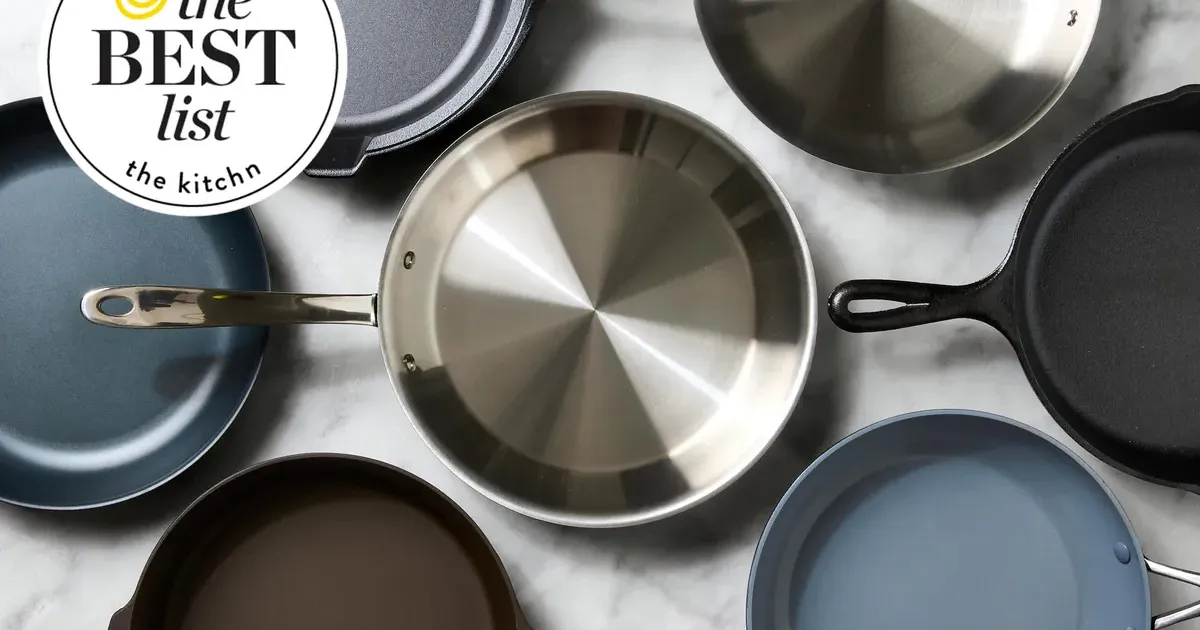
Bon Appetit editors released an exhaustive survey on March 27, 2026, revealing a surprising consensus among top tier chefs regarding kitchen equipment. While the industry traditionally fetishized heavy copper and raw cast iron, modern data highlights a shift toward utility and ease of maintenance. Professional kitchens have long been the testing grounds for durable materials, yet the 2026 results from The Kitchn suggest that consumer preferences are finally aligning with industrial realities. The gap between what a Michelin-starred chef uses and what a home cook requires is narrowing as manufacturing technology improves the lifespan of previously disposable items.
High-end restaurants are increasingly moving away from the rigid dogma that every surface must be stainless steel. Professional environments demand speed and consistency above all else, which has historically made nonstick coatings a liability due to their fragility. Recent chemical advancements in PTFE-free coatings have changed this calculation. Chefs are now integrating specialized pans into their workflows that were once relegated to amateur home use. This transition reflects a broader trend of pragmatism in an industry currently struggling with rising labor costs and the need for operational efficiency.
Professional Kitchens Move Toward Nonstick Technology
Surprising many purists, several elite chefs now admit to relying on nonstick surfaces for high-volume service. Atsushi Kono, known for his precision in yakitori and delicate Japanese cuisine, is a growing cohort of professionals who value the effortless release of modern coatings. For tasks involving eggs, delicate fish skins, or starch-heavy sauces, the risk of sticking outweighs the perceived benefits of a traditional sear. In fact, the sheer volume of output in a modern bistro makes the time spent scrubbing stainless steel pans an unnecessary financial drain.
Our testing process involves rigorous assessments of heat distribution and handle ergonomics to identify truly professional grade equipment, according to The Kitchn editorial staff.
Material science has allowed these surfaces to withstand higher heat thresholds than their predecessors from a decade ago. Older nonstick pans would off-gas or degrade at temperatures exceeding 400 degrees Fahrenheit, making them dangerous for professional searing. Modern versions often use diamond-infused layers or ceramic reinforced matrices to push those limits much higher. But the core appeal remains the reduction in fat required for cooking, which appeals to a more health-conscious 2026 dining public. Chefs can achieve a crisp finish with a fraction of the butter or oil previously necessary.
Durability remains the primary point of contention between the professional and the hobbyist. While a chef may be comfortable replacing a $150 pan every six months as a cost of doing business, the average consumer expects a multi-decade lifespan. This difference in expectation defines the current market split. Manufacturers are attempting to bridge this divide by creating hybrid pans that feature raised stainless steel patterns protecting a recessed nonstick layer. Such designs aim to provide the browning capabilities of steel with the easy cleanup of a coating.
Stainless Steel Performance Metrics in 2026
Standard stainless steel remains the benchmark for heat retention and durability despite the rise of synthetic coatings. Testing conducted by The Kitchn on March 27, 2026, used thermal imaging to track how quickly heat dissipates across different pan diameters. Top-performing models typically feature a 5-ply construction, where aluminum or copper cores are sandwiched between layers of steel. These materials are chosen specifically for their ability to conduct heat rapidly while the outer steel provides a non-reactive surface. Even heat distribution prevents the hot spots that often lead to scorched food in cheaper, thinner alternatives.
Weight plays a major role in how these pans perform during aggressive sautéing. A pan that is too light will skitter across the burner, losing contact with the heat source and slowing down the cooking process. By contrast, pans that are too heavy can cause wrist strain during a long shift. Testers identified a sweet spot between 2.8 and 3.5 pounds for a standard 10-inch skillet. This weight provides enough thermal mass to sear a steak without requiring the physical strength of a weightlifter. Handles must also remain cool to the touch even after twenty minutes on a high flame.
The flip side: the maintenance of stainless steel requires a level of technique that many home cooks find intimidating. Achieving a naturally nonstick surface through proper temperature management, often called the Leidenfrost effect, is a skill that takes time to master. Professional kitchens bypass this learning curve through repetitive training, but the consumer market is increasingly looking for shortcuts. High-end brands like All-Clad have attempted to simplify this by refining the interior polish of their pans to a mirror finish. A smoother surface has fewer microscopic pits for food proteins to grab onto during the heating process.
Cast Iron Durability and Consumer Testing Results
Raw cast iron continues to dominate the segment of the market focused on longevity and high-heat stability. Unlike their coated counterparts, these pans actually improve with age as layers of polymerized fats build up a natural seasoning. The 2026 testing cycles show that cast iron retains heat longer than any other material, making it the superior choice for deep-frying or thick-cut proteins. Yet the trade-off is a far slower response to temperature changes. If a pan becomes too hot, it can take several minutes to cool down, potentially ruining a delicate sauce in the interim.
Weight is the most frequent complaint among consumers using traditional cast iron. Many modern manufacturers are responding by producing lightweight cast iron that undergoes an extensive machining process to thin the walls of the vessel. These pans offer the same seasoning potential but are roughly 30 percent lighter than heirloom brands. For instance, a machined pan might weigh only 4 pounds compared to the 6 or 7 pounds of a traditional skillet. The weight reduction makes the pans more accessible to a wider demographic of home cooks who may have avoided the material in the past.
Cleaning protocols for these pans have also been re-evaluated in recent years. Modern research debunked the myth that soap will immediately destroy a pan's seasoning. Because the seasoning is a plastic-like layer of polymerized oil, mild dish soap cannot easily strip it away. Most damage occurs from leaving the pans in standing water, which leads to rapid oxidation and rust. Professional kitchens often avoid soap not out of fear for the seasoning, but because it is faster to simply wipe the pan with salt and oil. The efficiency is rarely replicated in the home environment.
Modern Materials Impact Cooking Surface Performance
Carbon steel has become a middle ground between the lightness of stainless steel and the seasoning capabilities of cast iron. Often found in French bistros, these pans are becoming a staple in American residential kitchens as well. They require a seasoning process similar to cast iron but offer a more responsive cooking experience. The metal is thin enough to react quickly to adjustments in gas or induction power. The responsiveness is critical for techniques like glazing vegetables where the temperature needs to drop rapidly at the end of the process.
Induction compatibility has become a non-negotiable feature for kitchenware in 2026. As more municipalities move to ban gas hookups in new construction, the demand for magnetic-based cookware has surged. Stainless steel and cast iron are naturally compatible, but many aluminum-based nonstick pans require a bonded steel plate on the bottom to work. These plates can sometimes warp or delaminate over time due to the different expansion rates of the two metals. Engineers are now experimenting with full-body magnetic alloys to eliminate this failure point entirely.
Investment in quality kitchenware is still a calculated risk for the consumer. While the allure of a $200 copper-core skillet is high, the practical benefits only manifest if the cook understands how to manage heat. In fact, many professional chefs suggest that a medium-priced stainless pan will outperform an expensive one if the user lacks basic temperature control. The Kitchn's 2026 data shows that the price-to-performance ratio plateaus sharply after the $150 mark. Beyond that, consumers are largely paying for brand prestige and aesthetic design rather than real cooking improvements.
The Elite Tribune Perspective
Stop treating the kitchen like a museum of permanent artifacts. The obsession with heirloom quality in cookware is a romanticized delusion sold by marketers to people who rarely cook more than three times a week. We are told that a cast iron skillet must be passed down through four generations, as if a hunk of iron is a sacred relic rather than a tool for heating fat. The fetishization of durability ignores the reality that cooking technology evolves. A pan from 1920 was designed for a coal stove, not a modern high-precision induction range.
Professional chefs, who actually have skin in the game, have moved on to high-performance synthetics and carbon steel because they focus on the result on the plate over the longevity of the vessel. If a nonstick pan makes your life easier and your food better for two years, it has fulfilled its purpose. The environmental guilt of discarding a pan is a rounding error compared to the industrial waste produced by the restaurants people frequent to avoid using their own kitchens.
True culinary mastery isn't found in the patina of a century-old pan, but in the pragmatism to use the most effective tool for the task at hand. Efficiency is the only metric that matters in a hot kitchen.