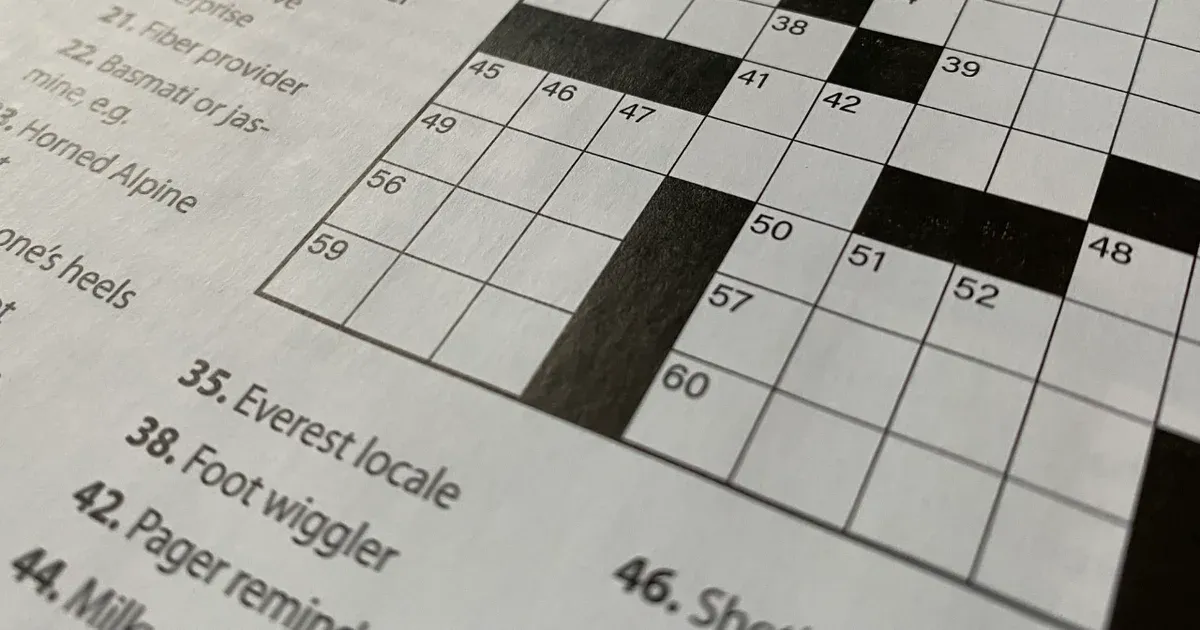
The daily crossword remains one of the most durable habits in British media. Guardian solvers treat the grid as a test of language, memory and wit, not simply as a page feature that survived the print era.
Cryptic No 29,974, released on April 7, 2026, sits inside a larger shift toward puzzle products that keep readers paying for digital access even when news consumption becomes more fragmented.
Cognitive Science Behind Cryptic Crossword Solving
Solving a cryptic crossword involves two distinct cognitive processes: the recognition of the literal definition and the decoding of the subsidiary indication. Scientific studies in 2024 indicated that regular engagement with such puzzles enhances cognitive flexibility in adults. Brain imaging reveals that the 'aha' moment experienced during a solve corresponds with a release of dopamine in the ventral striatum. Cryptic clues often employ anagrams, hidden words, and homophones to obscure the solution. A single word can act as a pointer toward an entirely different category of thought.
Linguistic experts note that the difficulty of Cryptic No 29,974 stems from its deceptive surface readings. These sentences appear to describe one scenario while actually providing the instructions for an unrelated word assembly. Success depends on the ability to ignore the primary meaning of the sentence. This cognitive inhibition is a hallmark of high-level executive function. The average cryptic solver possesses a vocabulary much larger than the general population. Many professional solvers track their daily completion times to measure mental acuity over decades.
History of Guardian Puzzles and Editorial Standards
Guardian crosswords achieved prominence under the editorship of John Perkin and later Hugh Stephenson. The publication adopted specific rules for clue construction that differentiated it from the more rigid Ximenean style of The Observer. These editorial standards ensure that every clue is fair, even if it is exceptionally difficult. A setter must provide a precise definition and a verifiable wordplay component for every entry. This dual-requirement system prevents the use of vague or purely intuitive clues. The first British crossword appeared in Pearson’s Magazine in 1922.
Afrit and Ximenes established the foundational principles of the modern British cryptic style. They argued that the setter must not deceive the solver through grammatical inaccuracy. Every word in a clue should ideally contribute to either the definition or the wordplay. The Guardian allows its setters more creative freedom, leading to a variety of styles that range from the strictly logical to the whimsically narrative. Solvers often develop a preference for specific setters based on their unique linguistic signatures. The 1925 launch of the dedicated crossword feature solidified the paper's reputation for highbrow amusement.
Derrick Somerset Macnutt, who wrote under the pseudonym Ximenes, famously stated, "The solver is the setter's friend, not his enemy."
Publishing houses have discovered that puzzles are more resilient to market volatility than hard news. While political coverage is often perceived as partisan, the crossword is seen as a neutral ground for intellectual exercise. The perception allows The Guardian to maintain a broad international audience despite the regional focus of its reporting. Revenue from digital puzzle subscriptions has grown by an estimated 15% annually since the early 2020s. The cost of a standalone digital puzzle subscription often exceeds $39.99 per year. These funds directly subsidize the investigative journalism departments of many news organizations.
Competition in the puzzle space has intensified as tech companies launch their own gaming verticals. Success in this sector requires more than a functional app; it requires a community of dedicated enthusiasts. Message boards and social media groups dedicated to discussing the daily Guardian cryptic provide a social layer to the solitary act of solving. These communities often dissect clues for hours, debating the elegance of a particular clue or the fairness of a specific synonym. The longevity of a puzzle brand depends on its ability to maintain these high standards of difficulty. High retention rates among puzzle subscribers reduce the churn common in general news apps.
Crosswords from The Guardian are now solved by fans in Australia, Canada, and India. The British style of cryptic puzzling, which favors complex wordplay over the straight definitions common in American puzzles, has become an exportable cultural product. Many American solvers seek out these grids as a more challenging alternative to the New York Times crossword. The cross-pollination of puzzling cultures has led to a hybrid style in some international publications. Despite the rise of AI, the human element of setting a crossword remains essential. AI models still struggle with the subtle puns and cultural allusions required for a top-tier cryptic.
Why the Daily Grid Still Pays
The persistence of the daily crossword in a digital age saturated with short-form video content is not a coincidence but a rebellion. We are looking at a segment of the population that is willing to pay a premium for the privilege of being frustrated. Legacy media brands have successfully weaponized intellectual vanity to build a recurring revenue stream that is largely decoupled from the news cycle. It is a brilliant, if somewhat cynical, exploitation of the highbrow ego. While the world burns in the headlines, the elite are busy debating whether a six-letter word for 'regret' is an anagram or a hidden container.