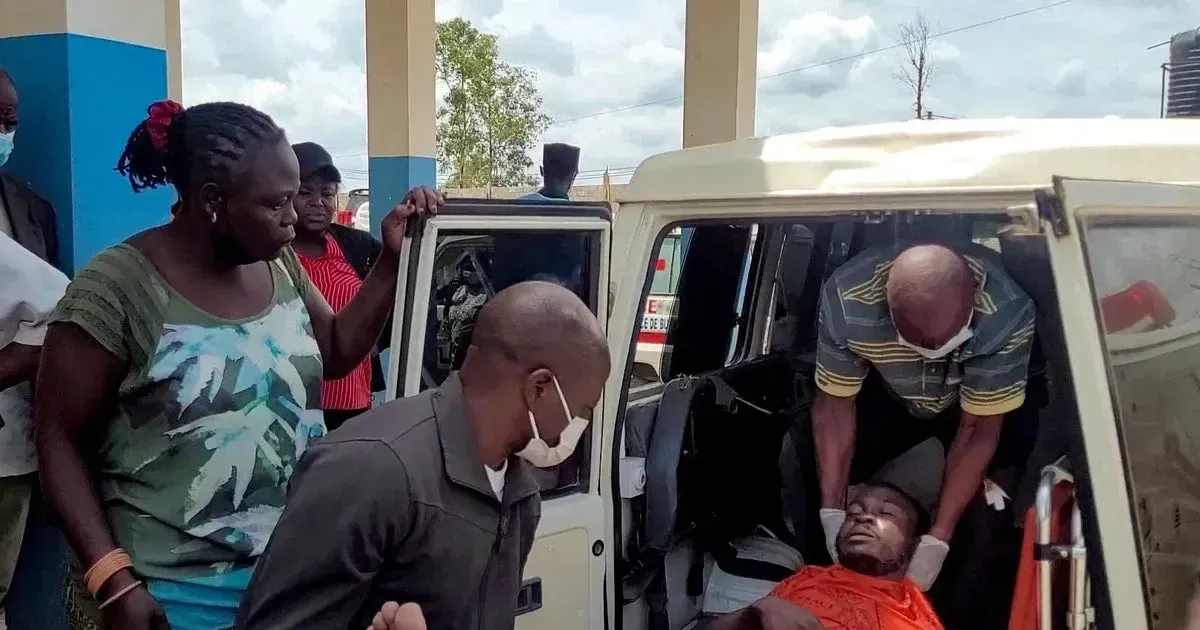
World Health Organization authorities designated the latest Ebola surge an international emergency on Sunday. The emergency declaration raised the stakes for an outbreak already complicated by conflict. Health officials now have to move faster than both transmission and displacement. That leaves logistics as important as laboratory confirmation. The designation, announced on May 17, 2026, follows a rapidly climbing death toll in the Democratic Republic of Congo and Uganda. Public health officials moved to elevate the crisis to a Public Health Emergency of International Concern after confirming the presence of a particularly rare variant of the virus. Early diagnostic reports indicate the Bundibugyo strain is driving the current transmission cycle across Central Africa.
Fatality counts surpassed 80 deaths over the weekend. Health ministries in both nations reported nearly 250 suspected cases as of Sunday evening. Clinical data shows this specific strain lacks an approved vaccine, complicating containment efforts that typically rely on ring vaccination strategies. Previous outbreaks of the Bundibugyo virus disease occurred in 2007 and 2012, but the current geographic spread appears more aggressive than those historical incidents.
Bundibugyo Strain Challenges Medical Response
Clinicians currently lack the primary tool used in recent years to halt Ebola transmission. While the Zaire strain, which caused severe devastation between 2013 and 2016, responded well to the Ervebo vaccine, that pharmaceutical defense is not approved for Bundibugyo infections. Absence of a preventative shot forces medical teams to rely exclusively on traditional barrier nursing, contact tracing, and early supportive care. These methods require a large workforce and strict adherence to isolation protocols in environments where infrastructure is often compromised.
Medical personnel face major logistical hurdles in eastern provinces.
Trish Newport, Emergency Programme Manager for Doctors Without Borders in Ituri, noted the escalating difficulty of managing patient flow without a pharmaceutical buffer. Response teams must establish treatment centers that can handle high volumes of highly infectious patients while protecting local staff. Newport indicated that the lack of a vaccine creates a heightened risk profile for frontline workers who are often the first to come into contact with undiagnosed cases. Mortality rates for this strain have historically hovered around 25 to 50 percent, making rapid identification critical to survival.
Cross-Border Spread Triggers Regional Health Warning
Health alerts now extend across the frontier into Uganda. Monitoring stations at formal border crossings have been instructed to implement temperature screenings and travel history questionnaires for all individuals arriving from affected zones in the Democratic Republic of Congo. Because many residents use informal paths for trade and family visits, the risk of undetected movement is high. Health officials in Kampala have activated emergency operations centers to coordinate with their counterparts in Kinshasa.
Ariel Kestens, Head of the International Federation of Red Cross Kinshasa Delegation, emphasized the need for community engagement to prevent the virus from entering densely populated urban centers. Kestens observed that trust in health authorities fluctuates in regions that have experienced repeated conflicts. Local volunteers are currently working to translate health guidance into indigenous languages to ensure families recognize the early symptoms of the virus, such as high fever and unexplained hemorrhaging. Surveillance teams are focusing on the Ituri province, which is a major transit hub for the region.
"Frontline medical teams are operating in an environment where the standard vaccine protocols simply do not apply to this specific virus variant," stated Trish Newport during a briefing on the operational challenges in Ituri.
Resources are being diverted from other health programs to shore up the Ebola response. In some districts, routine immunization for measles and polio has been paused to prioritize the construction of isolation wards. Logistics experts warn that a prolonged outbreak could deplete regional stocks of personal protective equipment within weeks. International donors were asked on Sunday to provide immediate funding to avoid a total collapse of the local primary care network.
Humanitarian Agencies Mobilize in Ituri Province
Deployment of specialized units began shortly after the World Health Organization announcement. Specialist teams from MSF and the IFRC are establishing transit centers near known hotspots to isolate suspected cases before they can spread the pathogen further into the community. These facilities act as a filter, allowing doctors to test patients and either move them to intensive Ebola treatment centers or release them if they test negative for the virus. Rapid diagnostic kits are in short supply, leading to delays in confirming new cases.
Efforts to contain the virus depend heavily on the ability to track every person who has been in contact with an infected individual. Contact tracers in Ituri must often navigate areas with limited road access and poor telecommunications. They aim to monitor each contact for 21 days, the maximum incubation period for the Ebola virus. If a contact develops symptoms, they are immediately moved to an isolation unit to break the chain of transmission. The current surge in suspected cases has stretched these tracing teams to their breaking point.
Regional markets have seen a sharp decline in activity as residents avoid public gatherings. Small businesses in cities like Bunia report that customers are staying home to minimize their exposure risk. This economic slowdown adds another layer of hardship to a population already dealing with food insecurity and displacement. Local leaders are urging the international community to provide not just medical aid, but also economic support to prevent a wider humanitarian catastrophe. Supplies of chlorine and clean water reached Kinshasa on Sunday morning.
Without a Vaccine, Containment Depends on Trust and Manual Tracing
Could the lack of a vaccine for the Bundibugyo strain turn this outbreak into a long-term regional crisis? Traditional Ebola responses over the last decade have leaned heavily on the success of the Zaire-strain vaccines to create a firewall around infected villages. Without that shield, the burden shifts entirely to the speed and accuracy of human surveillance and the willingness of local populations to comply with intrusive burial and isolation mandates. The shift places enormous pressure on fragile trust between the state and its citizens in eastern Congo, a region where government authority is often contested.
Success in this theater will be measured by the ability of agencies like MSF to maintain operations despite the lack of typical pharmaceutical tools. If the outbreak reaches a major city like Goma or crosses deeper into Uganda, the containment model will face a stress test for which it is currently underfunded. The international community must decide whether to invest in the rapid development of a Bundibugyo-specific vaccine candidate or focus entirely on the expensive, labor-intensive process of manual containment. Failure to act decisively now may allow the virus to establish a permanent foothold in the regional transit corridors.