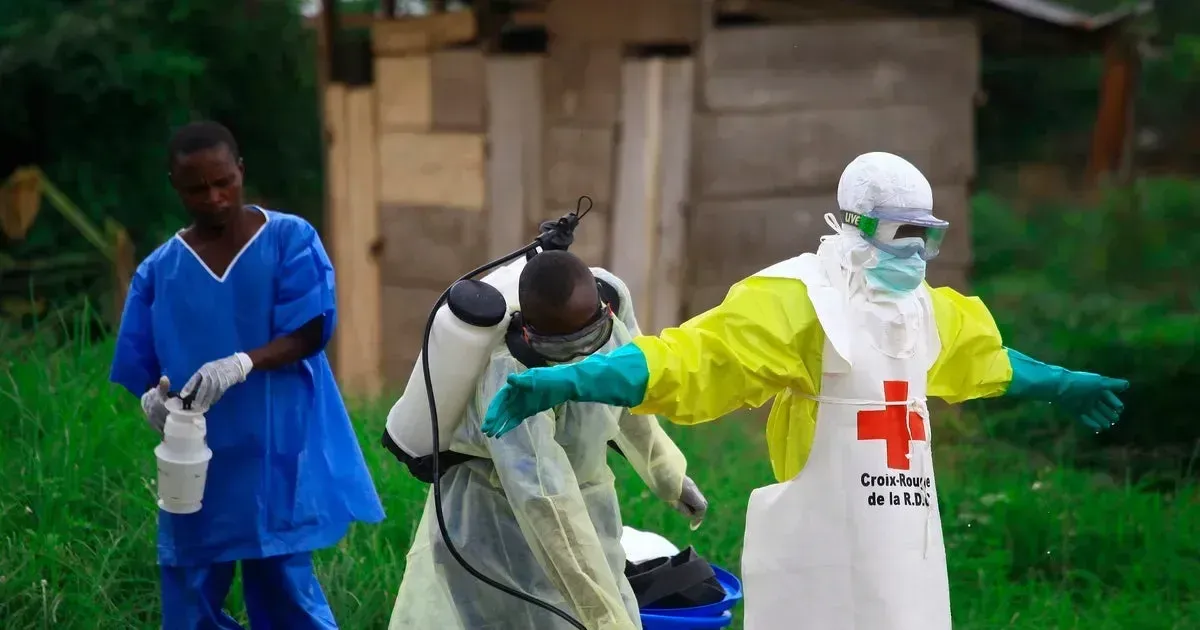
Health authorities in the Democratic Republic of the Congo launched an emergency response after a lethal cluster of Ebola cases appeared in the eastern borderlands. Laboratory results confirmed the presence of the virus in multiple communities where residents initially reported high fevers and internal bleeding. These fatalities represent a sharp escalation in the region's public health crisis. The outbreak, documented by Africa's primary health agency on May 15, 2026, has already resulted in 65 deaths within the remote Ituri province.
Reports indicate approximately 246 suspected infections of the hemorrhagic fever so far. This surge in cases followed several weeks of unexplained deaths in rural villages, which medical teams are now struggling to reach. Surveillance teams are monitoring movement along international frontiers to prevent the virus from entering neighboring East African states. Medical resources are currently being redirected to the regional center of Bunia to handle the influx of patients requiring isolation.
Investigation into Potential New Viral Strain
Genomic sequencing is currently underway to determine if a mutated variant is responsible for the rapid mortality rate seen in recent weeks. Early evidence from the African health agency suggests the pathogen might be a novel strain, which could potentially evade existing vaccine protocols or current diagnostic tools. Scientists at regional laboratories are analyzing samples to confirm the viral lineage and assess its transmission speed compared to previous outbreaks in the nearby North Kivu region. The speed of the spread has caught local clinics off guard, leading to a shortage of personal protective equipment in some remote zones.
Clinical data shows that the virus is highly contagious and often fatal if not treated in the early stages of infection. Parallel to the genomic research, health workers are attempting to implement contact tracing in areas where social distancing is difficult to enforce. Efforts to contain the spread have met resistance in certain communities due to a lack of clear information about the virus. Local leaders are working with international NGOs to improve public awareness and encourage symptomatic residents to seek medical help at designated centers.
Health officials said concerns about a possible new strain are driving international coordination, especially because vaccine and diagnostic assumptions may need to change if sequencing confirms a different lineage. The concern remains preliminary, but it is serious enough to shape how laboratories, border teams, and field clinicians organize the response.
Security Obstacles in Ituri Province
Militia violence in the eastern Congo continues to create major barriers for humanitarian and medical teams. Conflict zones frequently complicate response efforts, as several armed groups control territory where clinicians must track and isolate patients. Health officials warned that active skirmishes between government forces and local rebels prevent surveillance teams from reaching several known clusters of the disease. These security lapses allow the virus to circulate undetected among displaced populations moving through the forest.
Medical teams frequently require military escorts to enter villages located deep within rebel-held territory. This reliance on armed protection sometimes increases tensions with local residents who are suspicious of government intervention. In response to these challenges, the African health agency is negotiating with regional commanders to establish safe corridors for medical personnel. Records released by the agency show that at least three health facilities were temporarily abandoned last week due to nearby gunfire, leaving dozens of patients without oversight.
Regional Transmission and Border Control
Ituri shares direct borders with Uganda and South Sudan, making the current outbreak a high-priority threat for the entire East African region. Cross-border trade and migration remain active despite the health warnings, increasing the probability of the virus traveling beyond the Democratic Republic of the Congo. Security personnel at border crossings have been instructed to perform temperature checks and document the travel history of every individual entering from Ituri. Public health departments in Kampala and Juba are currently on high alert, though no cases have been confirmed outside of Congolese territory yet.
International donors are coordinating with the Congolese government to provide the necessary funding for a large-scale vaccination campaign. Most of the available vaccine stockpiles are designed for the Zaire strain of Ebola, which makes the ongoing investigation into the potential new variant even more critical. If the virus proves resistant to these vaccines, the containment strategy will need a complete overhaul. For now, the response is focused on basic hygiene measures and the strict isolation of suspected cases in specialized tents.
Conflict in Ituri Threatens Ebola Containment
Will biological threats eventually outweigh kinetic warfare as the primary driver of instability in central Africa? Military planners and health experts are beginning to view infectious diseases not just as medical emergencies, but as tactical threats to national sovereignty. In the dense forests of Ituri, the inability to establish a sanitized medical perimeter allows the virus to circulate within mobile rebel populations. The movement creates a persistent reservoir of infection that could spill into Uganda or South Sudan at any moment.
Effective containment requires more than vaccines; it demands a level of territorial control that the Congolese state currently lacks. If health workers continue to face gunfire while attempting to administer treatment, the biological threat will likely intensify. Success depends on whether international mediators can secure health corridors through zones controlled by disparate armed groups. The outcome will define the future of pandemic response in conflict-heavy environments. The response is now a test of whether public health corridors can function during an armed territorial stalemate.