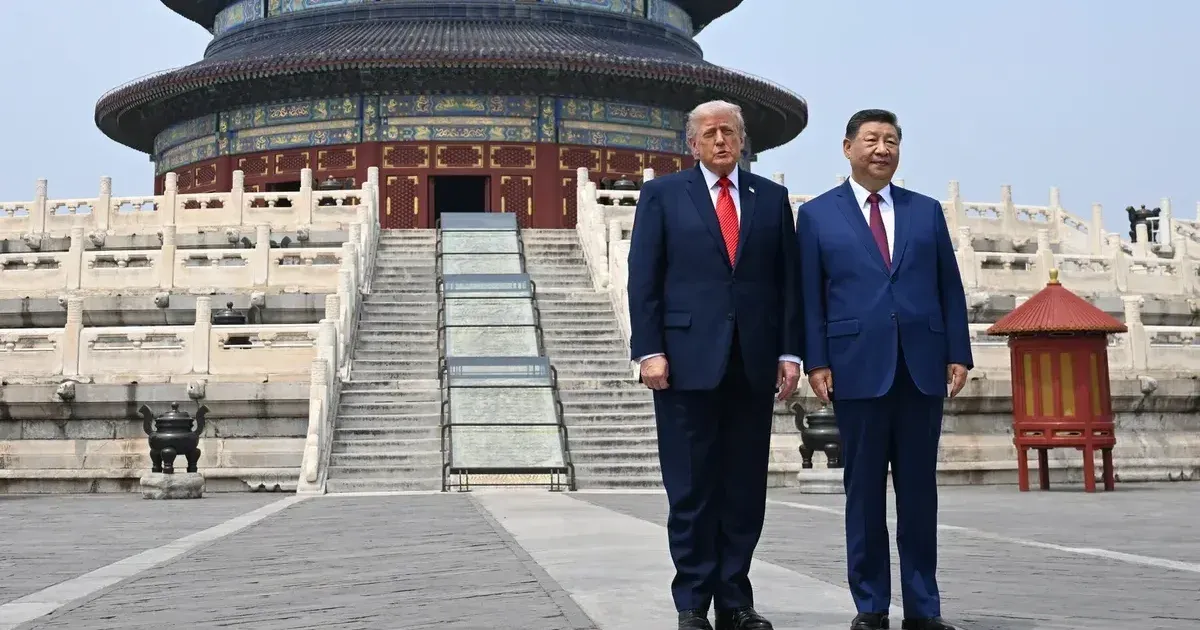
Xi Jinping welcomed Donald Trump to Beijing with military honors and a state dinner, framing the bilateral relationship as constructive and stable while issuing a sharp private warning regarding Taiwan. The warning made clear that ceremony would not erase the central security dispute between Washington and Beijing. The high-stakes summit on May 14, 2026, aimed to stabilize an uneasy truce on trade and security. Both leaders sought to project an image of cooperation for a global audience despite deep institutional friction that has persisted for years. Donald Trump characterized the discussions as productive and emphasized the personal rapport he has maintained with his Chinese counterpart during the initial hours of the visit.
This summit arrives at a moment when the world's two largest economies face intense pressure to resolve enduring disputes over technology and maritime borders. Xi used the first day of talks to establish a framework for future engagement, describing the tie between the two nations as one that must be preserved at all costs. Beijing officials provided an elaborate welcome designed to signal China's status as a peer power to the United States. State media broadcast images of the two leaders walking together, though the substance of their private dialogue suggests a much more cautious alignment.
Taiwan Sovereignty and the Risk of Conflict
Xi Jinping delivered a direct message regarding the status of the self-governed island, asserting that any mishandling of the situation would jeopardize global stability. The Chinese leader spoke candidly during closed-door sessions about the red lines surrounding regional security. He made it clear that while cooperation is the goal, certain geopolitical boundaries are non-negotiable for the Communist Party leadership.
If the Taiwan issue were handled poorly, it could lead to a clash with the United States.
Beijing maintains that any movement toward independence would meet a military response.
The current path of diplomatic support for the island remains a point of severe contention according to the briefing notes shared by the Chinese delegation. The private message came despite the outward displays of flattery and the elaborate fanfare provided to the American delegation, which included a full review of the Honor Guard at the Great Hall of the People. Donald Trump listened to these concerns but focused his public remarks on the necessity of a stable geopolitical environment to protect international commerce. Analysts observed that the tone was noticeably more somber during the security portion of the agenda compared to the festive public greeting.
Failure to manage these tensions could result in a direct confrontation that neither capital currently desires. United States officials noted that the dialogue remained professional even when the topics shifted to sensitive military maneuvers and semiconductor sanctions. Security experts suggest that the "never mess it up" philosophy shared during the first day reflects a mutual desire to prioritize economic stability over territorial disputes. Both sides indicated a willingness to maintain high-level communication channels to prevent accidental escalation in the Pacific theater. Officials spent months preparing for the summit and its discussion of escalating tensions over Taiwan.
Trade Stability and the Great Hall Dinner
Trade officials from both delegations spent hours reviewing the existing tariffs and the fragile ceasefire that has governed the commercial relationship. Economic ties between the two nations continue to serve as the primary stabilizer.
The current truce has allowed global markets to recover from previous years of volatility, but the lack of a permanent agreement leaves many sectors vulnerable to sudden policy shifts. Analysts suggest that the outcome of these Beijing talks will determine the trajectory of global manufacturing supply chains for the next decade. The engagement focused on specific trade imbalances and the protection of intellectual property rights, areas where the two nations have historically struggled to find common ground. Reporters on the scene noted that several major purchase agreements were discussed to reduce the trade deficit.
Aides described the atmosphere as business-like, with Donald Trump pushing for increased agricultural purchases from American farmers to satisfy his domestic constituency. A state dinner at the Great Hall of the People provided a less formal setting for the leaders to discuss long-term strategic goals. Xi Jinping used the occasion to toast to a future defined by mutual respect and non-confrontation, echoing sentiments from earlier in the day. The menu featured a blend of traditional Chinese and American dishes, symbolizing the attempt at cultural and economic synthesis.
Cooperation in areas such as climate technology and public health was a backdrop for the evening’s festivities. Global investors watched the developments closely, as any breakdown in the relationship would likely trigger a sell-off in Asian and American equities. Washington seeks to maintain access to Chinese markets while simultaneously restricting the flow of dual-use technologies that could have military applications. Beijing continues to resist these restrictions, arguing that they infringe upon China’s right to develop its domestic industries without external interference.
Discussions concluded with a joint statement affirming the need for a strategic partnership that avoids the pitfalls of a cold war. United States representatives indicated that while disagreements persist on human rights and cybersecurity, the communication channels remain functional. Taiwan remains the most volatile element of the relationship, yet the summit succeeded in preventing a total diplomatic rupture during a period of high global uncertainty.
Taiwan Stability Test
The summit in Beijing demonstrates that high-level personal diplomacy remains an essential tool for preventing a total breakdown in superpower relations. Xi Jinping and Donald Trump both recognize that their domestic agendas depend heavily on avoiding an external crisis that would derail economic growth. By framing the relationship as strategic and stable, they have signaled to the rest of the world that competition will be managed within defined boundaries. The private warning on Taiwan, however, is a necessary reminder that this stability is conditional and fragile.
If either side miscalculates the other’s resolve on core sovereignty issues, the constructive tone of the state dinner will quickly vanish. Success in these talks is measured not by the signing of new treaties, but by the maintenance of an uneasy peace. The current truce on trade holds for now, but the underlying tensions in the South China Sea continue to simmer. For the global economy, this measured détente offers a reprieve from the immediate threat of a trade war, even as the long-term competition for technological supremacy accelerates between the two giants.