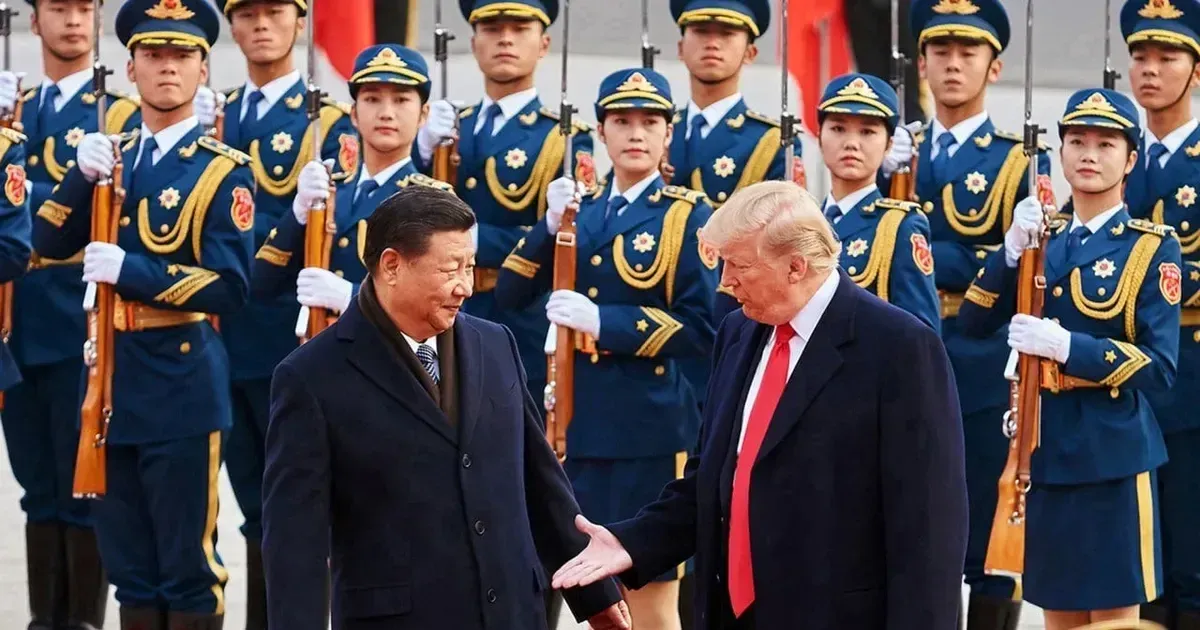
The Beijing summit plan links Taiwan tensions to a broader attempt to stabilize US-China channels. Trump is trying to show that personal diplomacy can manage a dangerous security file. President Donald Trump is preparing to travel to Beijing for a summit with Xi Jinping. The meeting is scheduled for May 14 and May 15, 2026, with Trump expected to arrive in China as both governments try to steady a relationship strained by trade disputes, Taiwan and maritime security concerns. It would be the first American presidential visit to the Chinese capital since Trump's 2017 state visit.
The visit comes after weeks of shifting expectations over the summit calendar. Reports ahead of the trip describe a shortened, tightly managed meeting rather than a broad reset. Energy markets have remained volatile following the blockade of the Strait of Hormuz, a disruption that continues to lift shipping costs and complicate supply chains across the Pacific.
Global inflation and the fragile US-Iran ceasefire have forced both nations to reconsider their economic priorities. Rising energy costs are weighing on the global economy, making bilateral stability a pragmatic necessity for both administrations. While previous encounters between these two leaders focused on symbolic gestures and lavish state dinners, the 2026 summit appears strictly focused on managing immediate crises. Diplomats involved in the planning suggest the primary goal is to prevent a complete collapse of current trade agreements.
Trade Truce and Energy Markets Lead Agenda
American negotiators are prioritizing the extension of the current trade truce to avoid a new round of retaliatory tariffs. Recent reporting suggests that Beijing may offer narrower concessions, including purchases of American agricultural and energy products. Those commitments could include liquefied natural gas and crude oil, potentially easing some pressure created by ongoing maritime disruptions in the Middle East.
Instead of seeking a total overhaul of the existing economic framework, both sides are pursuing limited, achievable objectives. Negotiators are expected to look for narrower purchase commitments and enforcement language rather than a sweeping economic pact. This approach would differ from the 2017 state visit, which was characterized by grand declarations that often failed to materialize into long-term policy shifts. Financial analysts expect market volatility to remain high until the final details of the trade extension are signed in May.
Analysts tracking the visit have warned against expecting a sweeping breakthrough. The near-term focus is more likely to be an extension of the trade truce, clearer purchase commitments and guardrails around the most dangerous security disputes.
Trade officials from the United States have emphasized that any extension of the truce will depend on verifiable purchase data. Xi Jinping has voiced concerns regarding the continued tech rivalry, specifically the restrictions on semiconductor exports to Chinese firms. By contrast, the American administration maintains that these restrictions are necessary for national security. Both governments appear willing to set aside tech disagreements temporarily to focus on stabilizing the broader energy market. Persistent disruptions within the Strait of Hormuz have significantly inflated shipping costs and global energy prices.
Taiwan Remains the Central Flashpoint
Xi Jinping is expected to place the status of Taiwan at the center of his private discussions with Trump. Analysts in Washington and Beijing view the current American posture toward the island as one of the largest obstacles to long-term cooperation. Security experts in Washington have observed increased naval activity in the Taiwan Strait over the last three months. These military maneuvers have led to a series of diplomatic protests from neighboring nations and American allies in the region.
Security analysts argue that the risk of a miscalculation remains at its highest point in twenty years. Frequent naval patrols and aerial interceptions have created an environment where a minor accident could lead to a dangerous escalation. If the Beijing summit fails to produce a de-escalation agreement regarding Taiwan, the recent gains in trade stability could be wiped out. U.S. officials also face domestic pressure to avoid any agreement that appears to soften long-standing security commitments in the region.
Beijing is prioritizing stability over a full diplomatic reset.
High-level meetings between the two presidents will likely conclude with a joint statement on regional security and energy cooperation. However, the depth of the distrust between the two military establishments prevents any immediate withdrawal of assets from the Pacific theater. Each side continues to modernize its naval capabilities while maintaining the current trade truce. Every official document released before the summit emphasizes the need for open communication channels to prevent accidental conflict.
What Beijing Wants Next
Diplomatic success in the coming days hinges on a fragile balance between economic desperation and territorial sovereignty. Both leaders are operating under serious domestic pressure to show strength without triggering a global recession. For the United States, the Beijing summit is a test of its ability to manage a peer competitor while simultaneously dealing with a volatile energy crisis in the Middle East. If Trump can secure energy purchase commitments, it may provide the necessary relief for American consumers currently struggling with inflation. That outcome would require a level of pragmatic cooperation that has been largely absent from the relationship for much of the last decade.
Regional allies are watching the proceedings with extreme caution. Nations such as Japan and South Korea fear that a bilateral trade deal might come at the expense of their own security guarantees. Any perceived softening of the American stance on Taiwan would likely trigger a realignment of security partnerships across Southeast Asia. By contrast, a failure to reach an agreement could lead to an immediate resumption of the trade war, further destabilizing a global economy already weakened by high energy costs. Success will not be measured by the symbolism of the reception in Beijing, but by the specific and enforceable details of the final communique.