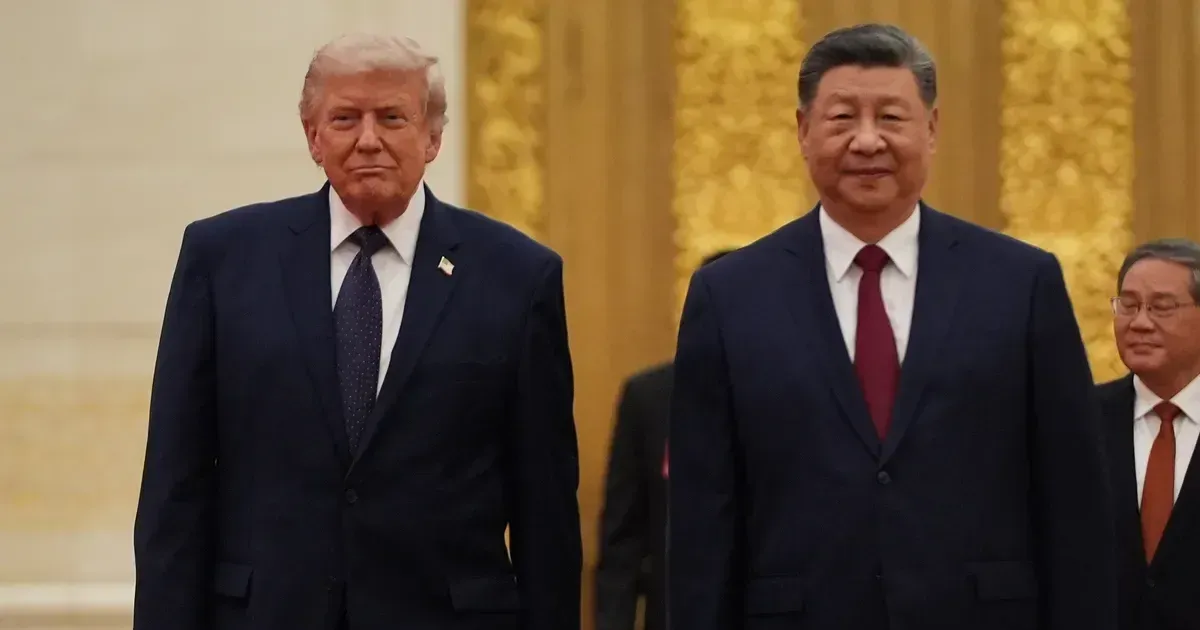
President Donald Trump arrived in Beijing to initiate a series of high-level diplomatic talks centered on trade and national security. The visit paired lavish diplomatic theater with unresolved security questions. Meetings held on May 14, 2026, focused on strengthening the economic bond between the two nations. The American leader characterized the bilateral connection as a rich and enduring partnership during his public remarks. This high-level summit comes during a period of intense scrutiny over trans-Pacific commercial ties and technological competition.
Ceremony dominated the initial phase of the visit, highlighting the personal rapport between the heads of state. Officials in Beijing provided what is known as a state-visit plus treatment, a level of hospitality exceeding standard diplomatic protocols. Evening festivities took place at the Great Hall of the People, where a carefully planned banquet showcased both cultural traditions and the specific preferences of the visiting delegation.
The elaborate menu featured crispy beef ribs and roast duck, traditional staples of Chinese state dinners. For dessert, the kitchen prepared tiramisu and ice cream, a flavor profile specifically chosen for the president. Staff members at the Great Hall confirmed that ice cream remains a favorite for the president, who appeared to enjoy the hospitality offered by his hosts. Such gestures of goodwill are designed to smooth the path for more difficult policy negotiations.
Diplomatic pageantry, however, cannot mask the major friction points involving future capital flows. Trump expressed a willingness to welcome expanded Chinese investment into the United States to strengthen domestic industries. This openness has already encountered solid pushback from various sectors of the American government. National security experts and intelligence officials have voiced concerns that such a pledge could create long-term vulnerabilities in critical infrastructure.
A meal of roast duck cannot resolve structural economic grievances.
Critics in Washington argue that allowing Chinese entities to increase their footprint in the American market poses risks to data privacy and technological sovereignty. These concerns often center on the potential for technology transfers that could benefit foreign military or industrial interests. While Trump remains optimistic about the potential for mutual growth, many lawmakers have signaled that they will scrutinize any proposed deals with skepticism.
Financial analysts are monitoring the situation closely to see if the rhetoric of the summit translates into concrete policy changes. Any significant investment from Beijing would traditionally trigger a review by the Committee on Foreign Investment in the United States (CFIUS). The interagency committee has the authority to block transactions that are deemed a threat to national security. Historical precedents suggest that even with presidential support, large-scale acquisitions by Chinese firms face a difficult regulatory path. Negotiations on regional stability resumed after dinner, with tensions over Taiwan still shaping the wider summit agenda.
Beijing continues to seek foreign capital to stabilize local markets, but Washington remains focused on security reviews.
Investment Review Pressure
Negotiations between the two delegations included discussions on energy, telecommunications, and manufacturing sectors. Under the current framework, $11 billion in potential investment projects is under consideration, according to preliminary reports. Proponents of the deals argue that the influx of capital would support job creation and industrial modernization in the American heartland. Opponents counter that the political price of these investments outweighs the immediate financial benefits.
Despite the positive atmosphere at the dinner, the procedural hurdles for these agreements stay high. Legal experts note that the executive branch has limited power to bypass established security reviews for foreign acquisitions. The Department of Commerce and other regulatory bodies maintain strict guidelines regarding the export of sensitive technologies. If the administration attempts to fast-track these investments, it may face legal challenges from oversight committees in Congress.
Trump asserted that the history of interaction between the two countries provides a foundation for future cooperation. He emphasized that the bond is more than a series of trade calculations. Public statements from the White House suggest a desire to return to a more stable and predictable economic relationship. Whether the American public and the legislative branch will accept this shift remains to be seen. The tension between economic opportunity and national security persists as the primary driver of trans-Pacific policy.
Investment Security Test
Political leaders in Washington now face a dual challenge of managing diplomatic civility and internal security anxieties. While the dinner in Beijing highlighted a moment of cordiality, the underlying tension over technological supremacy is a persistent friction point in the relationship. Trump is wagering that personal rapport can enable investment flows that institutional guards have historically blocked. The political price of failure in these negotiations could be significant for both administrations.
A significant part of the American electorate is skeptical of any deal that appears to trade security for short-term economic gains. Legislators have already begun preparing briefings to address the potential for intellectual property theft or data misuse associated with foreign state-owned enterprises. The tension extends beyond a policy disagreement; it is a clash of strategic priorities between the executive and legislative branches. National security continues to be the primary filter through which all trade must pass.
The resulting fallout from any rejected investment deals could strain the diplomatic progress achieved during this visit. If the administration fails to provide a strong security framework for new Chinese investments, the backlash could undo the goodwill generated by the state-visit plus honors. The answer likely lies in the fine print of upcoming regulatory filings rather than the rhetoric used during state banquets. Stability in the relationship depends on balancing these competing domestic and international pressures. Regulatory filings now matter more than banquet language. Review panels, security agencies and lawmakers will test the promise closely before any approval, because the details will decide whether the investment claim survives public scrutiny over time.