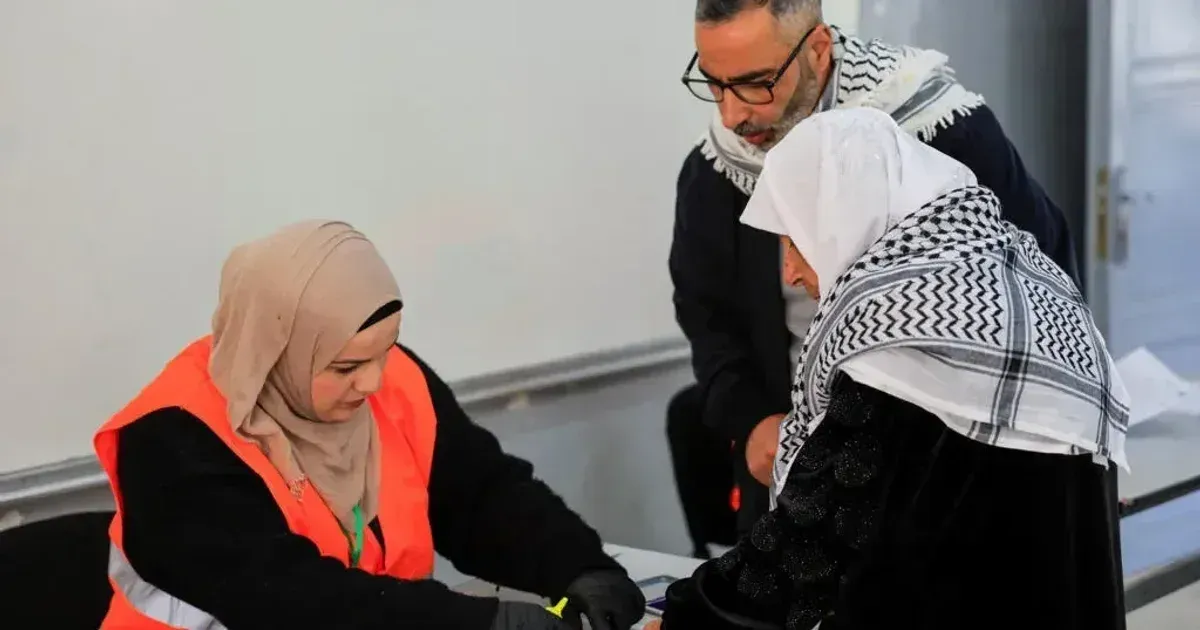
Palestinians across the globe held demonstrations Friday to mark 78 years since the mass displacement of 1948. The anniversary carries political weight because the refugee question remains unresolved across several generations. This commemoration, occurring on May 15, 2026, centers on the Nakba, an Arabic term meaning catastrophe. Events in the West Bank and Gaza Strip joined large-scale vigils in London, Santiago, and Amman to emphasize a collective demand for historical justice. Modern estimates indicate that millions of people currently identify with this heritage of dispossession, which began with the conflict that led to the founding of Israel.
Events during the 1948 Arab-Israeli War forced approximately 700,000 Palestinians to flee or face expulsion from their ancestral homes. Zionist militias and the early Israeli military cleared hundreds of villages, creating a permanent refugee population that has grown to 5.9 million people registered with the United Nations. Records from the period show that more than 500 towns and villages were depopulated or destroyed during this transition. Palestinian families, many still holding the physical metal keys to their original homes, describe the event as an ongoing process of ethnic cleansing rather than a singular historical incident.
Millions of people took to the streets in major urban centers to reiterate calls for self-determination and the legal right to return. In Ramallah, sirens sounded for 78 seconds to represent each year of exile, bringing traffic to a complete halt as residents stood in silence. Protests in European capitals focused on the lack of progress regarding international resolutions intended to address the refugee status of the diaspora. Local organizers in Gaza City coordinated marches toward the perimeter fence, emphasizing that the demographic reality of the region remains a central point of contention.
Persistent Calls for the Right of Return
International legal frameworks continue to serve as the primary basis for Palestinian demands regarding their ancestral lands. United Nations General Assembly Resolution 194, passed in December 1948, states that refugees wishing to return to their homes and live at peace with their neighbors should be permitted to do so. Legal scholars noted during Friday’s events that this resolution has been reaffirmed over 100 times by the United Nations but never implemented. Israel continues to reject the right of return, citing concerns that a large influx of Palestinians would compromise the Jewish majority of the state.
Families in refugee camps across Lebanon and Jordan used the anniversary to display historical deeds and mapping records passed down through four generations. Displacement created a diaspora where the youngest members often maintain the most vocal commitment to the return movement. Modern technology has allowed these younger generations to document the ruins of their grandparents' villages using satellite imagery and oral histories. Collective memory functions as a political tool that keeps the 1948 boundary lines alive in the public consciousness. Incidents in the West Bank involving settler violence continue to underscore the ongoing struggles for land and security.
"Nakba commemorations serve as remembrance and a call for justice, self-determination and the right to return," Al Jazeera reported during the global events.
Critics of the current status quo argue that the absence of a political settlement has only deepened the resolve of the displaced population. Protests in the United States and Canada highlighted the role of the international community in failing to broker a solution that addresses the 1948 grievances. Demonstrators carried banners listing the names of villages that no longer appear on official maps, asserting that the Palestinian identity is tied to the land independently of current administrative borders.
Historical Miscalculations and the Persistence of Identity
Archives from the early years of the Israeli state reveal a belief among leaders like David Ben-Gurion that the Palestinian national movement would eventually dissipate. Ben-Gurion famously suggested that the old would die and the young would forget, assuming that integration into other Arab nations would solve the demographic problem. Recent data from the 2026 commemorations suggests this prediction was incorrect, as third and fourth-generation refugees lead the majority of advocacy groups. Palestinian identity has actually strengthened in exile, becoming a cohesive force that goes beyond geographical fragmentation.
Political analysts observing the 78th anniversary noted that the Palestinian question has not faded into the background of Middle Eastern diplomacy. Historical efforts to bypass the refugee issue through economic incentives or partial regional peace deals have consistently failed to gain traction among the diaspora. Identity persists through educational programs, cultural preservation, and the continued existence of the camps, which are semi-permanent reminders of the original displacement. Resilience despite nearly eight decades of exile continues to define the geopolitical priorities of the Palestinian leadership.
The Refugee Question Remains Central to Regional Peace
Assessing the longevity of the Palestinian movement reveals a persistent failure of 20th-century geopolitical projections. The assumption that regional integration would erase 1948 claims has been replaced by a reality where the Nakba is more central to global discussion than it was fifty years ago. This endurance shifts the burden of stability onto any future diplomatic framework, which cannot succeed by ignoring the refugee status of nearly six million people. Without addressing the core grievances of the 1948 displacement, regional peace remains a distant prospect.
The demographic weight of the diaspora ensures that Palestinian national aspirations will continue to influence the foreign policies of neighboring states. Future security arrangements must eventually account for the fact that nearly a century of conflict has not weakened the demand for the right of return. Stability in the Middle East is closely linked to the resolution of these historical claims. That makes the anniversary an active diplomatic issue rather than a ceremonial date on the regional calendar.