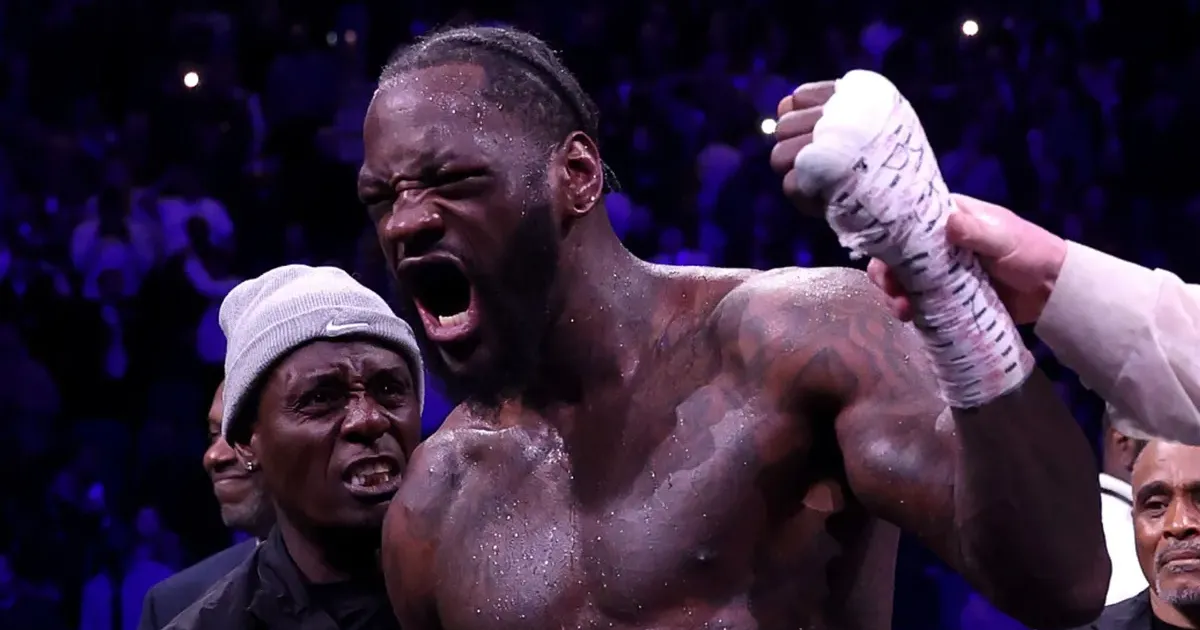
Deontay Wilder beat Derek Chisora by split decision at London's O2 Arena, closing a bruising heavyweight contest that doubled as Chisora's farewell. The fight took place on April 5, 2026, after 12 rounds in which Wilder's cleaner power shots narrowly outweighed Chisora's pressure and volume. Chisora entered what was billed as his 50th and final professional bout with the crowd firmly behind him. Wilder, still one of the division's most dangerous punchers, needed a result that kept him relevant after recent setbacks. The night gave both fighters something useful: a win for Wilder, and a defiant exit for Chisora. That narrow margin matters because Wilder needed a credible late-career result more than another highlight-reel finish.
Wilder Edges a Bruising Scorecard
The scorecards reflected the fight's uneven rhythm. Wilder landed the sharper individual punches, especially when he found space for his right hand, while Chisora forced exchanges, worked the body and made the American uncomfortable along the ropes. The result was less a clean technical win than a survival test between two aging heavyweights. The eighth round delivered the clearest Wilder surge. He hurt Chisora with heavy straight shots and appeared close to forcing a stoppage, but the Londoner survived and pushed the bout into the late rounds. That recovery shaped the mood of the arena even though it did not change the final decision.
"Chisora's farewell threatened to turn into a nightmare," The Guardian wrote of the one-sided start to that dangerous spell.
There were no official knockdowns, which helped keep the scoring tight. Wilder's accuracy carried weight with two judges, while Chisora's volume and stubbornness preserved the drama. The split decision matched a fight that never settled into one obvious story.
Chisora Leaves as a British Boxing Fixture
Derek Chisora confirmed after the fight that he was leaving professional boxing. His career never produced a world title, but it did produce a long list of major opponents, including Tyson Fury, Vitali Klitschko and Oleksandr Usyk. That willingness to fight anyone became the core of his reputation. The farewell mattered because Chisora's value was never measured only by belts. He was a reliable draw, a durable test for elite fighters and a recognizable figure in British boxing's heavyweight era. The standing ovation at the O2 reflected that broader respect, even after a night that showed why retirement was sensible.
For boxing audiences, the value of the fight sat in the contrast between risk and nostalgia. Wilder needed proof that he could still handle a long, uncomfortable night, while Chisora needed a final performance that did not reduce his career to a farewell ceremony. The scorecards were close enough to preserve debate, but the night still gave the division a usable result.
What Wilder Can Still Sell
Wilder leaves London with leverage, but not with every question answered. The win keeps him in the market for large heavyweight events in the United States, Britain or Saudi Arabia. It does not prove that his reflexes and timing have returned to their peak.
The distinction matters for matchmakers. Wilder's right hand still makes him dangerous, but Chisora's success in forcing long exchanges will encourage younger contenders to test him. A narrow win over a retiring opponent is useful, not definitive.
The immediate ranking effect is modest, but the matchmaking effect is real. Wilder can now be sold as a known risk rather than a faded name coming off another defeat, while Chisora can leave without the humiliation of being overwhelmed early. That balance is why the fight worked commercially even without a highlight knockout.
The heavyweight division can still use Wilder's name because he sells jeopardy. Any future title run will require careful matchmaking, sharper defense and more activity than he showed in London. For now, the split decision keeps his career commercially alive while closing one of Chisora's most durable chapters.
Wilder also leaves with a clearer negotiating position than he had before the bout. He can point to conditioning, late-round concentration and the ability to win without relying only on an early knockout. Those are useful signals for promoters trying to sell another major fight, even if they do not erase the concern that a fresher contender could crowd him. Chisora, meanwhile, exits with the rare privilege of finishing in front of a crowd that understood exactly what his career represented: durability, risk and a refusal to make easy choices. Wilder's next step will depend on opponent choice as much as ranking. A slower name keeps the commercial runway open, while a younger pressure fighter would test whether the Chisora problems were age-related or stylistic. The London win is therefore useful but not definitive.