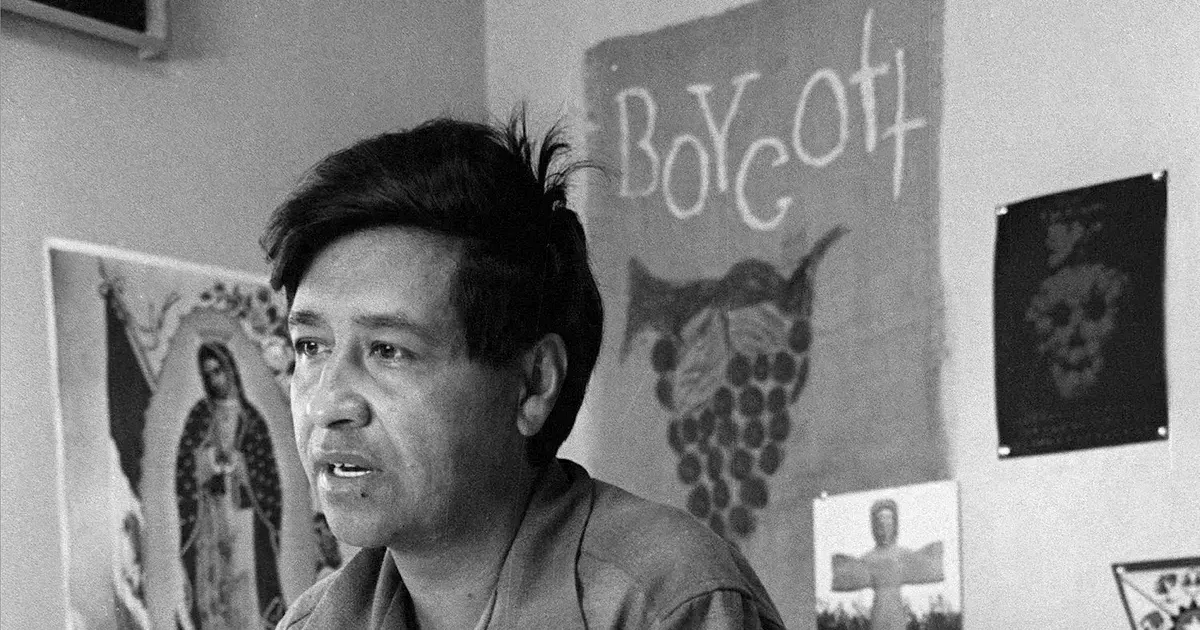
Dolores Huerta broke decades of silence that week by accusing her late United Farm Workers co-founder, Cesar Chavez, of systematic sexual abuse. In a statement that has rattled through the American labor movement, Huerta revealed that her long-standing partnership with Chavez was defined by patterns of coercion and violence. The account was current again on March 13, 2026, as renewed reporting pushed it back into public view. She disclosed for the first time that Chavez raped her during their years of activism, an act that resulted in the birth of two children. This revelation challenges the legacy of a man long considered the moral compass of the Latino civil rights struggle in the United States.
But the fallout from these allegations extends far beyond Huerta's personal testimony. A major New York Times investigation released on Wednesday describes a broader culture of sexual misconduct involving girls and women within the United Farm Workers leadership. These findings suggest that the organizational structure of the union was frequently used to enable and then conceal the predatory behavior of its most famous figure. Sources within the investigation indicate that witnesses began coming forward after decades of internal pressure to protect the movement at any cost.
And the specific nature of the abuse described by Huerta points to a profound betrayal of the non-violent principles Cesar Chavez publicly championed. Huerta noted that she felt constrained by the political importance of their work, fearing that a scandal would dismantle the fragile gains made by migrant farm laborers in California and beyond. She characterized her previous silence as a burden carried for the sake of the union, a choice that forced her to raise two children fathered by her attacker in total secrecy. Her public admission signals an end to a silence that had held firm since the height of the farmworker movement in the 1960s and 1970s.
Dolores Huerta Details Exploitation at United Farm Workers
Meanwhile, the details of the NYT report provide a harrowing look at the power dynamics at the Delano headquarters. Investigators reviewed internal memos and personal diaries that correlate with the testimonies of several women who worked closely with the UFW leadership. These documents suggest that Chavez maintained an environment where personal loyalty to the leader was conflated with loyalty to the cause of labor rights. For many young volunteers, refusing Chavez’s advances was framed not just as a personal rejection, but as a lack of commitment to the plight of the workers.
In fact, the pressure to maintain the image of a saintly, ascetic leader was a primary tool of suppression. NBC News reports that legal representatives for several other survivors are now preparing to seek reparations from the Chavez family estate and the union’s remaining assets. These women allege that the union used a network of confidants to discourage reporting and to isolate anyone who questioned Chavez’s conduct. One former organizer recounted being told that the movement was larger than any single individual’s trauma.
My silence ends here.
According to the recent filings, the abuse was not limited to Huerta but spanned multiple decades and involved victims who were minors at the time of the encounters. This expansion of the allegations moves the conversation from an isolated private affair into a systematic pattern of institutional failure. Legal experts suggest that the United Farm Workers could face notable litigation if it can be proven that union funds or resources were used to pay for the silence or relocation of victims. Such a development would likely bankrupt the organization that is still a foundation of agricultural labor advocacy.
Legal and Cultural Fallout of the Chavez Investigation
Separately, the California Department of Justice is being pressured to open an inquiry into whether any active cover-ups constitute criminal obstruction of justice. While Chavez himself is deceased and cannot face prosecution, any living accomplices who helped hide the abuse could potentially face legal scrutiny. Legislators in Sacramento have begun drafting a bill that would allow for a longer statute of limitations for sexual abuse survivors in cases involving non-profit or labor organizations. This legislative movement highlights the gravity with which the state is treating the Huerta testimony.
The scandal forces a confrontation with the Great Man theory of history. For decades, the narrative of the Chicano movement was centered almost exclusively on the personal charisma and sacrifice of Chavez. The focus effectively erased the contributions of women like Huerta while simultaneously providing Chavez with the social capital needed to silence his victims. The discovery that Huerta bore two of his children in secret adds a layer of biological and emotional complexity that shatters the sanitized image of his domestic life.
Yet, the impact on the Latino community is perhaps the most profound consequence of this investigation. Chavez was not just a labor leader; he was a cultural icon whose image was often blended with religious symbolism. The loss of such a figurehead creates a vacuum in a community that has historically faced intense marginalization and political pressure. Many young activists feel a sense of betrayal, noting that the very person who taught them the power of speaking out was allegedly the person who most effectively silenced others.
Public schools named after the labor leader are seeing immediate protests from parents and students alike. In Los Angeles, a petition to rename the Cesar Chavez Avenue has gained over fifty thousand signatures in less than twenty-four hours. Critics of the renaming efforts suggest that erasing the name also erases the history of the movement itself. Proponents of the change argue that honoring a rapist is a daily insult to the survivors of sexual violence who live in these neighborhoods.
Institutional donors who have long supported the United Farm Workers foundation are also reconsidering their ties. Several major philanthropic organizations announced they are pausing their grants pending a full independent audit of the union’s historical conduct. If these funds are permanently withdrawn, the union’s ability to conduct field operations will be severely compromised. The current leadership of the UFW has promised full cooperation but remains defensive about the organization's current culture.
Historical records are now being combed for any other discrepancies. Archivists at the Walter P. Reuther Library, which houses many UFW records, have reported an influx of requests for access to restricted files. These files may contain more information about the internal investigations conducted by the union during the late 1970s. Every new document that emerges seems to confirm that the internal architecture of the movement was designed to prioritize the protection of the leader over the safety of the workers.
What the Labor Movement Must Reckon With
The account forces a reassessment of organizing history without flattening the movement that farmworkers built. The legal question may be old, but the cultural question remains current: who gets protected when a revered institution depends on silence. Huerta’s testimony makes it impossible to separate the moral language of the movement from the power structure that allegedly shielded its leader.
The harsh lesson is that righteous politics do not automatically produce righteous institutions. A movement can fight exploitation in the fields while reproducing coercion inside its own hierarchy. If the allegations are borne out by records and survivor testimony, the UFW’s legacy cannot survive as a clean monument. It has to become something more honest: a history of labor courage, female erasure and the terrible cost of protecting a myth.