Donald Trump announced on April 24, 2026, that his administration feels no urgency to secure a peace deal with Iran despite the escalating maritime hostilities in the Persian Gulf. Iranian naval forces recently intercepted and seized two commercial container ships within the narrow confines of the Strait of Hormuz. Tehran continues to challenge international shipping norms while the White House maintains a stance of calculated patience. National security officials in Washington are currently assessing the implications of these seizures on global energy supply chains.
Iranian leadership rejected accusations from the White House regarding internal political fractures. Trump argued that Tehran is currently unable to negotiate effectively due to deep divisions within its ruling clerical and military circles. Officials in Tehran countered this claim, asserting that their command structure is unified and prepared for a protracted confrontation. Maritime security experts note that the seizure of civilian vessels marks a shift in Iranian tactics. Previous encounters involved harassment by small speedboats, but the current operations involve full boarding and detention.
Iran Asserts Control Over Strait of Hormuz Shipping
Tehran recently reported its first revenue from a newly implemented toll system for vessels passing through the Strait of Hormuz. This regulatory move follows the outbreak of active conflict on February 28, 2026, which fundamentally altered the legal status of the waterway in the eyes of Iranian authorities. International maritime law generally guarantees transit passage, yet Iran claims the right to charge for security and environmental protection services. Shipping companies now face a choice between paying the fees or risking seizure by the Islamic Revolutionary Guard Corps.
Vessel tracking data indicates a sharp decline in traffic from Western-flagged tankers. Insurance premiums for any ship entering the Persian Gulf have surged by 400 percent since the start of the conflict. Several Greek and Japanese shipping firms have suspended operations in the area entirely. This economic blockade by proxy creates a severe bottleneck for global oil markets. Crude prices reacted by climbing 8 percent in early trading on the London exchange.
Military analysts point to the vulnerability of large container ships when navigating the chokepoint. Iranian small boats, despite their size, carry sophisticated anti-ship missiles and boarding parties trained for rapid deployment. The capture of two ships in a single day suggests a high level of operational coordination by the Iranian navy. Intelligence reports indicate that several other vessels are currently being shadowed by Iranian patrol craft.
Pentagon Weapons Stocks Depleted by Iran War Costs
Military expenditures related to the ongoing conflict have soared for the United States. A study by the American Enterprise Institute reveals that the US has already spent $25 billion worth of critical weapons supplies. Much of this cost stems from the heavy use of interceptor missiles and high-tech munitions required to neutralize Iranian drone swarms. Defense contractors are currently struggling to keep pace with the demand for replacement hardware. Air Force officials warn that the current burn rate is unsustainable for a multiyear engagement. The recent seizure of civilian vessels underscores the escalating maritime danger.
Budgetary constraints are becoming a primary concern for lawmakers on Capitol Hill. Defense spending accounts for a growing portion of the federal deficit as the conflict extends into its second month. Reallocation of funds from other regional commands has triggered debates regarding national readiness in the Indo-Pacific. Analysts at the American Enterprise Institute suggest that the sheer volume of ordnance expended in the Persian Gulf may limit the Pentagon's ability to respond to simultaneous crises. Naval inventories of the SM-6 interceptor are particularly low.
"I am not rushing into a peace agreement with Iran because they have too many internal problems to make a deal right now," said Donald Trump during a briefing at the White House on April 24, 2026.
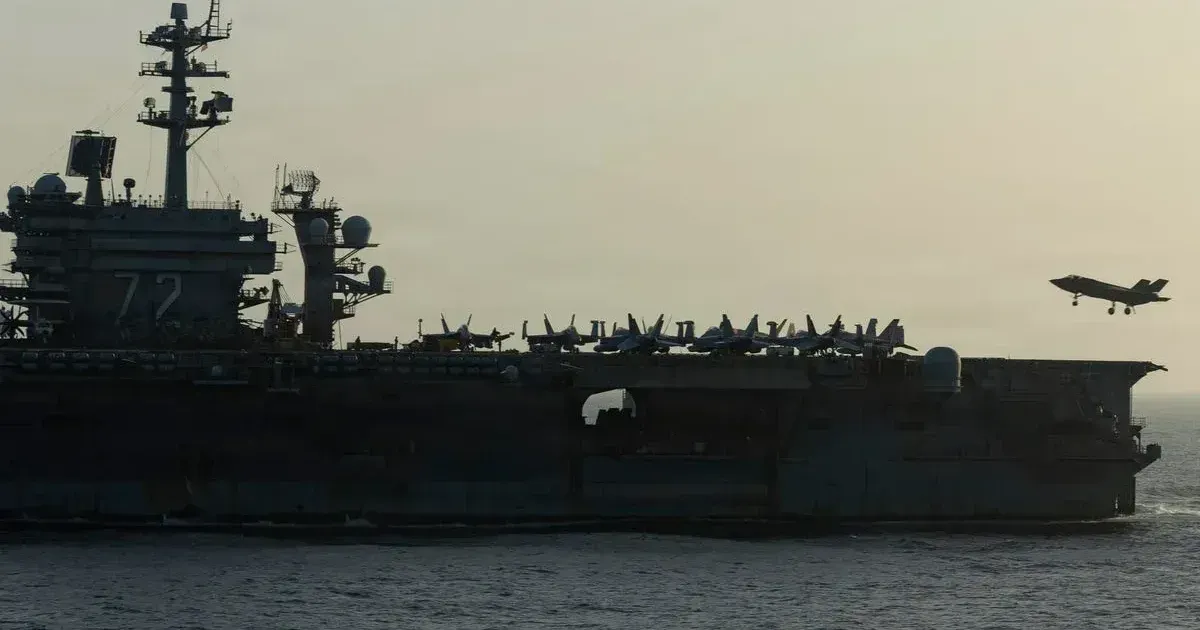
Pentagon officials are reviewing the cost-benefit ratio of providing constant escorts for commercial shipping. Every carrier strike group deployment costs millions of dollars per day in fuel, maintenance, and personnel. The depletion of precision-guided munitions has forced the Navy to prioritize which vessels receive protection. Private security firms are attempting to fill the gap, but they lack the legal authority to engage sovereign military forces. Logistics chains for the US military itself are also facing delays due to the heightened risk in the region.
Donald Trump Rejects Rapid Peace Negotiations
Presidential rhetoric regarding the conflict emphasizes a strategy of maximum pressure rather than diplomatic concessions. Trump continues to downplay the threat posed by Iranian small boats, characterizing them as a nuisance to be managed. This stance draws criticism from maritime industry leaders who demand more aggressive intervention. Iranian officials, meanwhile, insist that peace is impossible as long as US naval assets remain in the Persian Gulf. The stalemate shows no signs of resolving through traditional diplomatic channels.
White House advisors believe that the Iranian economy will buckle under the weight of sustained military spending before US stockpiles are fully exhausted. Iranian citizens are already feeling the impact of hyperinflation and restricted access to imports. Civil unrest has been reported in several provincial cities, though state media denies any instability. Trump maintains that the Iranian government is too fractured to agree on the terms of a ceasefire. The assessment of Iranian domestic politics is a central foundation of current US foreign policy.
Evidence of Iranian naval buildup continues to emerge from satellite imagery. New bases are being established along the southern coastline to enable faster deployment of fast-attack craft. Iran has also increased its stockpile of sea mines, which pose a persistent threat to both military and civilian traffic. The US Fifth Fleet remains on high alert, conducting constant surveillance of known Iranian naval berths. Every movement by an Iranian vessel triggers a corresponding reaction from American sensors.
Warfare in the Persian Gulf Creates an Unprecedented Fiscal Drain
Maritime security in the Strait of Hormuz is effectively non-existent for non-compliant ships. Vessels that refuse to pay the Iranian toll find themselves targeted within minutes of entering the channel. The system of forced revenue generation provides Tehran with the hard currency it needs to sustain its war effort. Western nations have so far failed to coordinate a unified response to the toll system. Each nation is pursuing its own diplomatic or military workaround, which weakens the overall collective security of the waterway.
Hormuz Escalation Drains US Weapons and Credibility
Washington is currently entangled in a fiscal and military trap of its own design. The $25 billion price tag calculated by the American Enterprise Institute is merely the opening ante in a conflict where the adversary utilizes inexpensive, asymmetric tools to deplete high-value Western assets. Every time a million-dollar interceptor is used to down a thousand-dollar drone, the economic victory belongs to Tehran. Trump's refusal to rush into a peace deal ignores the reality that time is not an American ally in this theater.
How long can the US Treasury support a conflict that drains munitions faster than factories can produce them? The depletion of SM-6 and Tomahawk stocks creates a vacuum of power that rivals will eventually exploit. Iran has successfully converted the Strait of Hormuz into a revenue-generating asset, effectively forcing the international community to fund the very military that threatens global trade. It is not a stalemate; it is a slow-motion transfer of wealth and military readiness away from the United States.
The Iranian clerical regime is far more resilient than Trump's rhetoric suggests. Internal divisions in Tehran are a permanent feature of their political system, not a temporary bug that prevents diplomacy. By betting on a domestic collapse that never comes, the White House risks a permanent loss of maritime hegemony in the Middle East. US naval power is being neutralized by a combination of high-volume low-cost attacks and a clever, illegal toll system. The current strategy is a recipe for strategic bankruptcy.