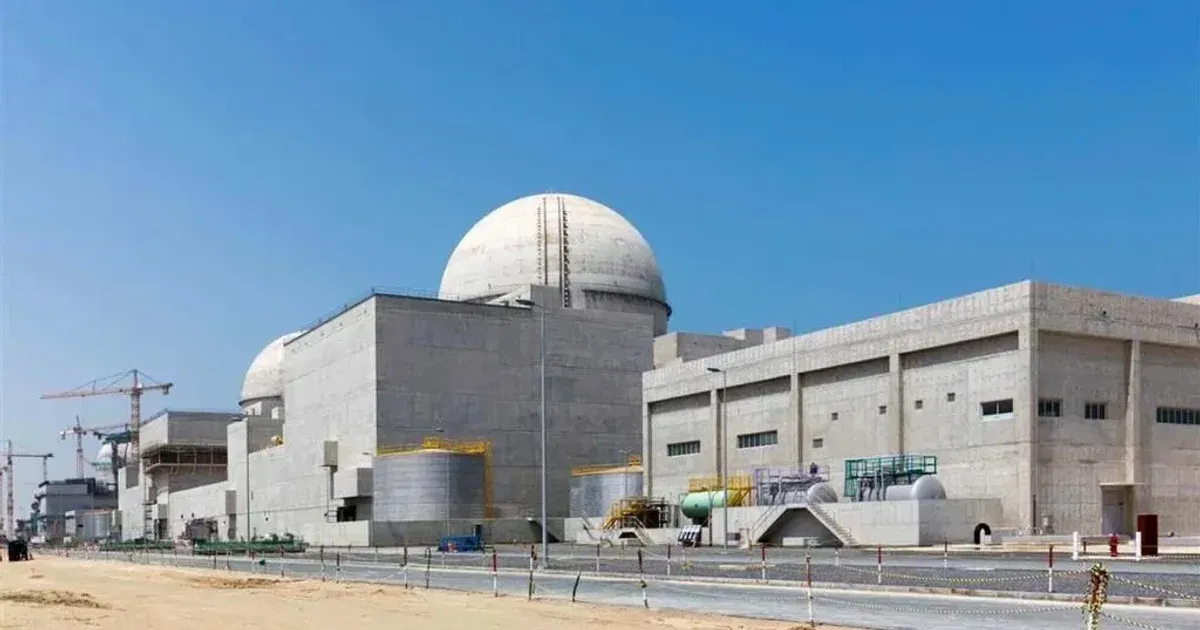
Officials in the United Arab Emirates confirmed that a drone strike caused a fire at a nuclear power facility on Sunday. President Donald Trump reacted by warning that Tehran was running out of time to change course after a call with Israeli Prime Minister Benjamin Netanyahu. Security forces reported the incident at the Barakah Nuclear Power Plant on May 17, 2026, turning a fragile regional standoff into a direct infrastructure crisis.
Reports from Abu Dhabi said the fire affected an electrical generator outside the plant's inner perimeter. Emirati authorities stated that emergency crews contained the blaze and that there were no reported injuries, radiation leaks or damage to reactor cores. Even without a radiological release, a drone strike near a nuclear facility carries unusual weight for Gulf security and energy planning. The location matters because Barakah is the UAE's flagship civil nuclear project and a symbol of the country's long-term energy strategy.
Barakah Nuclear Power Plant Sustains Damage
Abu Dhabi authorities spent the early hours of Monday assessing the fallout from the Sunday attack. The strike hit a generator unit linked to the plant's support infrastructure rather than the reactor buildings themselves. That distinction matters because the immediate safety consequences appear limited, while the strategic message remains severe. Regional coverage described the attack as part of a wider pattern of drone activity affecting Gulf infrastructure.
Saudi Arabia also reported hostile aerial activity across its borders. Defense batteries in the kingdom intercepted three drones targeting infrastructure, according to regional reports. Riyadh has not specified every location involved, but the timing suggested a wider attempt to pressure Gulf states while efforts to negotiate a ceasefire remain deadlocked. The Saudi interceptions also widened the story beyond one facility, turning it into a Gulf air-defense test.
"For Iran, the Clock is Ticking, and they better get moving, FAST," Trump wrote.
White House officials characterized the president's tone as urgent. Trump is expected to discuss a set of conditions for Iran during a key meeting on Monday, with missile proliferation, proxy activity and maritime security among the issues under pressure. The warning signaled that Washington is keeping military options visible while still pressing for concessions.
Trump Increases Pressure Following Netanyahu Call
Israel and the United States have maintained a unified front throughout the current hostilities. Netanyahu and Trump discussed the Barakah strike during their Sunday conversation, according to reports on the regional crisis. Their approach combines economic pressure, military deterrence and demands for a diplomatic shift from Tehran.
U.S. officials have not publicly detailed a new target list tied to the Barakah incident. Still, the administration's language has hardened after weeks of stalled back-channel communication. Defense planning remains relevant because drone and missile attacks on Gulf infrastructure can rapidly widen the conflict beyond Iran, Israel and U.S. forces. The public warning also raises the cost of diplomatic ambiguity, since Tehran and Washington are both signaling that patience is running out.
Tehran maintains a posture of defiance. Iranian state media carried statements from military figures asserting that the country's armed forces are prepared for any scenario. Iranian officials have dismissed the latest American pressure as a violation of sovereignty and have shown no public sign of accepting Washington's terms.
Iranian Resistance and Stalled Diplomatic Channels
The deadlock in peace talks has left a vacuum filled by escalating military strikes. Diplomats from the United Arab Emirates and Saudi Arabia have warned that critical infrastructure is absorbing the risks of a broader geopolitical confrontation. Previous rounds of negotiations have not produced a workable framework for de-escalation.
Market analysts are watching energy prices closely. Oil futures reacted to the Barakah news with a brief spike before stabilizing as reports of the contained fire reached the public. Continued threats to Persian Gulf energy sites, however, keep volatility high because shipping, production and power infrastructure are tied together across the region. The Strait of Hormuz risk channel remains central for traders because any disruption there can move fuel prices far beyond the Gulf.
Iran's military continues to emphasize readiness. Commanders in the Revolutionary Guard have said that any further U.S. aggression would draw a calculated response. Those statements coincide with reports of increased military movement around the Strait of Hormuz, where maritime disruption remains one of the most serious risks for global markets.
The Barakah Strike Narrows the Gulf’s Margin for Error
The targeting of infrastructure near Barakah removes a previous layer of restraint in Middle Eastern warfare. Nuclear energy sites are treated as uniquely sensitive because even limited attacks can create public fear, emergency costs and diplomatic fallout. The shift forces the UAE and Saudi Arabia to invest even more heavily in missile defense systems such as THAAD and Patriot batteries.
Trump's deadline-driven rhetoric leaves little room for the subtle maneuvering that usually characterizes Persian Gulf diplomacy. By tying his warning to stalled negotiations, he increased pressure on Tehran while also raising expectations that Washington will act if talks continue to fail. Netanyahu has similar incentives to keep military pressure visible while Iran remains defiant.
Regional powers now face a choice between deeper alignment with Washington and riskier independent mediation. Given the direct strikes near UAE soil, the appetite for quiet diplomacy is shrinking. The margin for error is narrowing because every new drone incident can be read as a test of national defenses, alliance commitments and political will. Inspectors will watch reactor-adjacent claims closely.