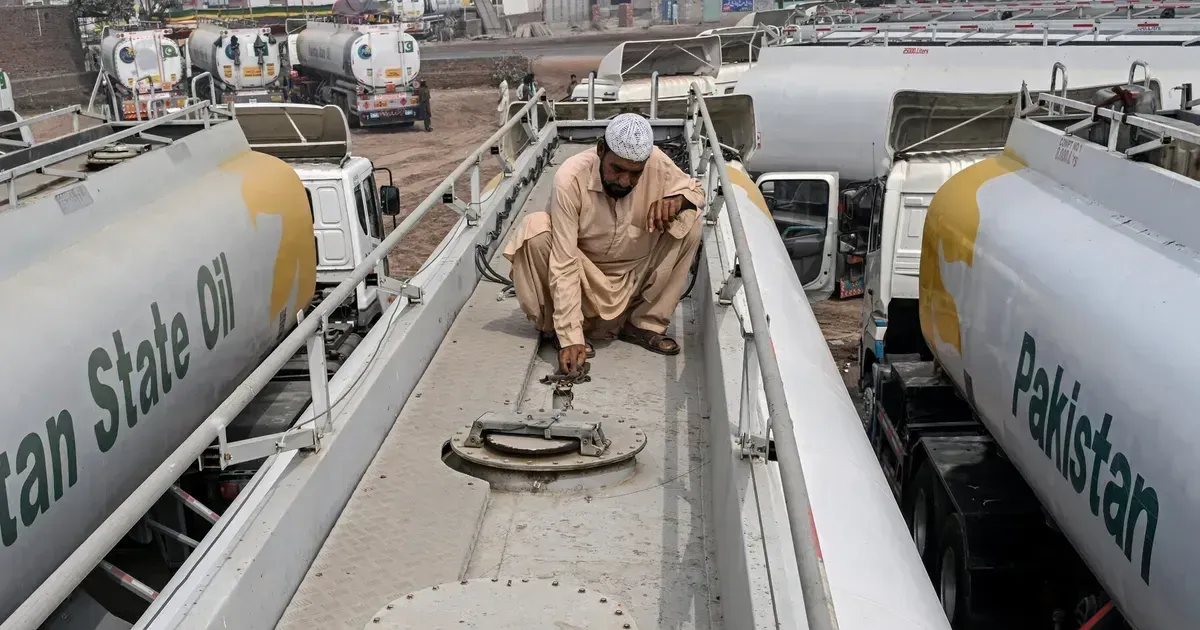
Karachi markets usually bustle this time of year as shoppers prepare for the arrival of Eid al-Fitr. But the traditional surge in commerce has stalled because of a spike in global crude prices that has sent the cost of essential goods skyrocketing. Families across Pakistan find themselves caught between the religious obligations of the holiday and the brutal reality of an energy-induced inflation crisis that shows no signs of abating. Crude prices are keeping pressure on import-dependent economies, turning Pakistan's holiday commerce into a visible measure of global energy stress. For many, the choice is now between purchasing a new set of clothes for their children or ensuring there is enough fuel to reach their places of work. Rising crude prices have rippled through the local economy with devastating speed. Because Pakistan imports nearly all of its petroleum through the narrow shipping lanes of the Persian Gulf, any disruption or price hike there manifests almost instantly at the domestic pump. Farmers in the Punjab region are particularly vulnerable right now. They are entering the critical harvest season and rely on diesel-powered machinery to bring in the wheat crops that feed the nation. Higher fuel costs mean smaller margins for these producers, which translates to higher bread prices for urban dwellers in Lahore and Islamabad. Pakistani officials have struggled to insulate the public from these global shifts. The country's foreign exchange reserves have dwindled, leaving little room for the government to subsidize energy costs. The state has been forced to pass the full weight of international price hikes onto a population that already earns less than $1,500 per capita annually. This economic squeeze is not occurring in a vacuum, but is rather part of a broader global reconfiguration where energy exposure determines national stability.
For developing nations, oil volatility is not an abstract market chart but a direct tax on food, transport and holiday spending.
Pakistan Absorbs the Oil Shock
Traders in the oil pits of London and New York are watching the situation in the Persian Gulf with increasing anxiety. Any threat to the flow of tankers through the Strait of Hormuz sends a jolt through the global supply chain, but for nations like Pakistan, the impact is existential. Unlike wealthier Western nations that have built up strategic reserves or diversified their energy mix, Pakistan remains tethered to the spot market. This dependency makes it a captive audience to every geopolitical tremor in the Middle East. Inflation in Pakistan has surpassed 25 percent in recent months, largely driven by the cost of energy and food. The relationship between the two is direct. Fertilizer production requires natural gas, and transport requires diesel. When the price of a barrel of oil climbs, the price of a bag of rice in a village market follows closely behind. For a country with a fragile balance of payments, these spikes are more than a nuisance. They are a threat to the social contract. Families preparing for Eid al-Fitr and farmers ready for harvest are being squeezed in a country that gets nearly all its oil through the Persian Gulf.
Persian Gulf shipping routes are the lifeblood of the Pakistani economy. The geography that provides access to energy also creates a permanent state of vulnerability. Any local conflict or maritime incident can trigger a price shock that the State Bank of Pakistan is ill-equipped to handle. The central bank has raised interest rates to historic levels, yet the currency continues to lose ground against the dollar, making oil imports even more expensive.
Investors Price Energy Exposure
Investors are now engaged in a ruthless triage of the global economy. They are separating nations into two categories: those that can withstand a sustained period of high energy costs and those that will buckle under the pressure. The focus has shifted from general growth prospects to specific energy import dependencies. Countries with high debt-to-GDP ratios and a lack of domestic energy production are being sold off by major hedge funds. This capital flight worsens the problem by further devaluing local currencies.
Brent crude futures have remained stubbornly above $95 per barrel for several weeks. The inflationary pressure is no longer seen as transitory by most analysts at Goldman Sachs or Morgan Stanley. They point to a structural imbalance where supply cannot keep pace with the rebounding demand in several sectors. In this environment, the winners are often nations that have either large domestic production or a sophisticated infrastructure for alternative energy. The losers are the emerging markets that failed to modernize their grids during the low-cost years of the previous decade.
London-based fund managers are increasingly looking at energy resilience as a primary metric for sovereign risk. The shift in sentiment has hit South Asian and African markets particularly hard. Capital is flowing back toward the United States and other developed economies where energy security is viewed as stronger. Even within the emerging market sphere, a clear divide has emerged. Nations with large manufacturing bases that are still powered by imported coal and oil are seeing their competitive advantages vanish as energy costs eat into their export profits.
China Gains From Electrification
Beijing has spent the last two decades preparing for exactly this type of global energy shock. While other nations remained focused on securing long-term fossil fuel contracts, China poured hundreds of billions of dollars into its renewable sector. The strategy was not born solely from environmental concern. It was a calculated move to reduce the country's reliance on foreign oil, which must travel through maritime chokepoints controlled by the United States Navy. That investment is now yielding a major strategic dividend.
Chinese electric vehicle (EV) adoption has reached a critical mass that is starting to impact global oil demand projections.
Global energy analysts are taking note of this divergence. Electric cars now represent a growing portion of the global vehicle fleet, particularly in Europe and East Asia. Washington and Brussels are watching these developments with a mix of envy and concern.
Crude oil remains the primary driver of global transportation costs. Any increase in the price of a barrel eventually finds its way into the price of a shipping container or a truckload of produce. In Karachi, this means the price of onions and tomatoes has doubled in a month. In London, it means higher electricity bills for households already struggling with a cost-of-living crisis. The energy market is no longer just a sector of the economy. It is the filter through which all economic activity must pass.
Energy Dependence Becomes the Fault Line
Geopolitical power no longer flows solely through a pipeline. For decades, the West and its allies operated under the delusion that securing oil flows was the only requirement for economic stability. We are now seeing the fallout of that intellectual laziness. China did not invest in renewables because of a sudden desire to save the planet. Beijing realized that a nation dependent on the Persian Gulf is a nation that can be brought to its knees without a single shot being fired. The tragedy in Pakistan is not just a story of high prices. It is a story of a state that failed to anticipate the obvious end of the fossil fuel era.
Western leaders who complain about Chinese dominance in the EV supply chain are the same ones who subsidized the oil industry for a century. They are now surprised that the largest technological pivot of the twenty-first century was won by a rival. High oil prices are a brutal tax on the unprepared. While families in Karachi can no longer afford to celebrate Eid, the bureaucrats in Beijing are watching their gamble on green energy pay off. The current energy crisis is not a temporary disruption. It is a permanent sorting of the world into those who control their energy future and those who are owned by it.