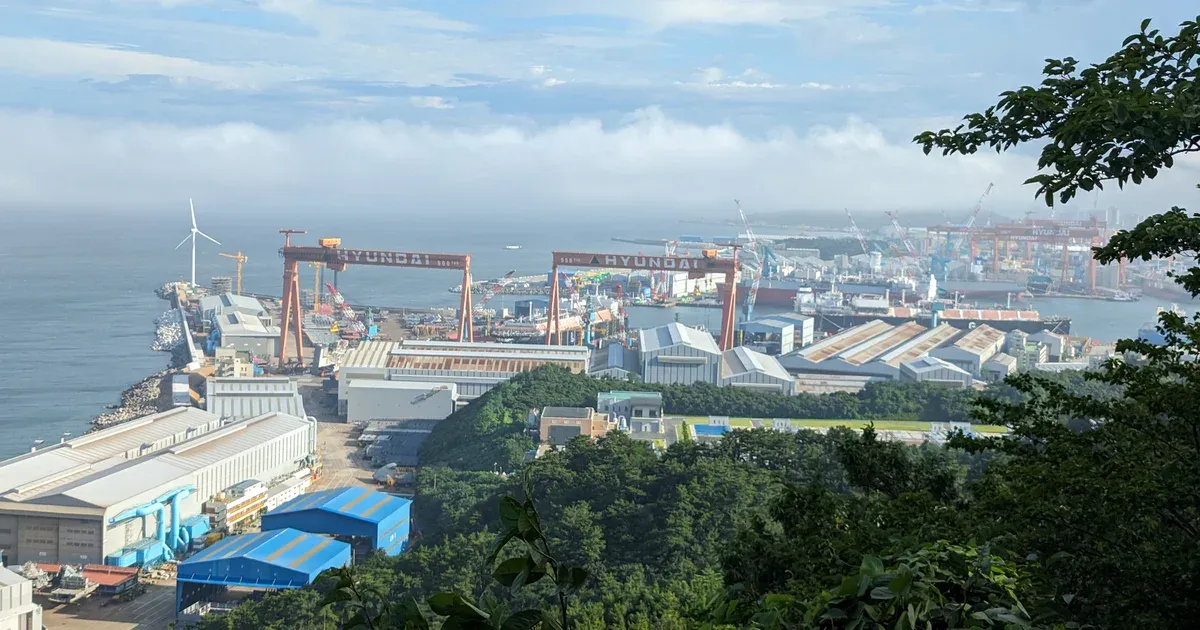
South Korean Navy officials reported a fire aboard a submarine undergoing maintenance at the Ulsan shipyard. Emergency crews searched for one worker who vanished after flames erupted inside the pressurized hull. Smoke and heat complicated entry through the vessel's narrow hatches. The April 9, 2026, incident raised immediate questions about industrial safety during naval repair work.
First responders faced significant hurdles entering the narrow hatches of the diesel-electric vessel. Intense heat and dense toxic fumes from burning insulation materials limited visibility for the search teams. Naval command centers in Seoul monitor the situation closely to determine if the structural integrity of the submarine was compromised during the incident. Initial reports indicate the fire started in a section of the boat where electrical wiring and hydraulic systems are densely packed. Safety protocols for naval maintenance facilities require strict monitoring of hot work, yet accidents during major overhauls persist across the global maritime industry.
Personnel at the shipyard identified the missing individual as a civilian contractor involved in the structural refitting process. Divers and rescue specialists remain on standby while interior teams vent the hull to clear the lingering chemical haze. Shipyard security cordoned off the dry dock to prevent unauthorized access and protect sensitive military technology housed within the vessel. Maintenance cycles for these complex machines often involve hundreds of workers operating in cramped conditions simultaneously. Coordination between the military and civilian fire departments focused on containment to prevent the fire from spreading to adjacent naval assets.
Rescue Efforts Focus on Missing Maintenance Personnel
Search operations intensified as evening approached at the Ulsan shipyard on April 9, 2026. Teams used thermal imaging technology to scan for heat signatures through the thick steel plating of the submarine. Rescue workers must navigate ladders and hatches that were never designed for rapid group transit during an emergency. Such environments trap heat efficiently, creating a furnace-like atmosphere that persists long after the visible flames are extinguished. The oxygen supply for anyone trapped inside would be a primary concern for the medical staff waiting on the pier.
Naval investigators began interviewing coworkers who were on the same shift as the missing technician. These witnesses provided conflicting accounts regarding the exact location where the fire originated. Some cited a short circuit in the forward battery compartment, while others pointed toward a welding mishap near the engine room. Every second spent debating the cause delays the physical search of the lower decks. Ventilation fans are now running at maximum capacity to ensure the air is safe for rescuers wearing breathing apparatus. Marine engineers are calculating the buoyancy of the vessel to ensure the water used to extinguish the fire does not cause a list.
Technical Risks During Naval Vessel Repair Operations
Modern submarines like those operated by the South Korean Navy are among the most complex machines ever built. Repairing these vessels requires thousands of miles of cabling and thousands of high-pressure valves to be inspected or replaced. Sparks from a single grinder or a malfunctioning electrical tester can spark industrial cleaners or hydraulic fluid. High-density battery systems, necessary for silent underwater propulsion, pose a specific risk because they can enter a state of thermal runaway. Once a battery fire begins, it often requires specialized chemical suppressants rather than standard water-based systems.
Maintenance schedules for the ROK Navy are notoriously tight due to regional security requirements in the East Sea. Ships are often pushed through overhauls with minimal downtime between deployments. This pace increases the risk of human error or mechanical failure during the repair process. Industrial accidents in naval yards have historically led to months of delays for critical defense projects. The cost of a single submarine can exceed $1 billion, making any fire a significant financial and strategic concern. Replacement parts for these vessels are often custom-made and require months to manufacture.
"Firefighters are searching for one worker who disappeared after the fire broke out inside the vessel," Yonhap News reported on April 9, 2026.
Industrial Safety Standards at Ulsan Marine Facilities
Ulsan is the backbone of the South Korean shipbuilding industry and handles a major portion of the nation's naval production. Safety audits at these facilities have been a point of contention between labor unions and shipyard management for years. While the companies maintain that they exceed international standards, the complexity of naval work creates unique hazards. Large-scale fires in shipyards are rarely caused by a single failure. Instead, they result from a chain of small oversights that culminate in a disaster. Records from previous years show a steady frequency of minor fires during the installation of electronic warfare suites.
Labor representatives in Ulsan expressed concern over the safety of civilian contractors working on military vessels. These individuals often work in the most dangerous parts of the ship under immense time pressure. Management at the yard has not yet commented on whether safety protocols were fully observed on the morning of April 9, 2026. The Navy has launched its own independent board of inquiry to look into the incident. This board will focus on whether the fire suppression systems on the submarine were deactivated for maintenance purposes. Standard procedure often involves disabling automated systems while people are working in the vicinity to prevent accidental discharge.
Shipyard Safety and Naval Readiness
Maintenance is the hidden vulnerability of any modern blue-water navy. While policymakers focus on the procurement of advanced hulls and missile systems, the true bottleneck of naval power lies in the dry docks of places like Ulsan. A fire on a submarine is not just an industrial accident; it is a degradation of the state's strategic posture. When a single vessel is removed from the rotation, the burden on the remaining fleet increases rapidly, leading to accelerated wear and tear on other hulls. This creates a feedback loop of mechanical failure and human exhaustion that no amount of defense spending can easily solve.
Industrial safety in military shipyards is frequently sacrificed at the altar of operational necessity. The South Korean Navy operates in one of the most volatile maritime environments on the planet, requiring a high tempo of repair and refit. However, the current incident highlights the fragility of relying on a few highly centralized industrial hubs. If a fire can incapacitate a billion-dollar asset during a routine maintenance window, the resilience of the entire naval infrastructure must be questioned. Skepticism toward official safety reports is warranted given the immense pressure to maintain the appearance of readiness. The fire is a symptom of a system running too hot.
Failure to protect the lives of the civilian technicians who maintain these vessels is a moral and logistical disaster. Without a skilled and confident workforce, the sophisticated machines of modern warfare are nothing more than expensive steel monuments. The South Korean government must decide if its priority is the speed of its naval expansion or the integrity of its industrial base. Hard choices are coming. The era of consequence-free rapid mobilization is over.